
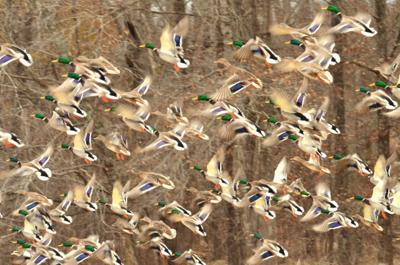
Duck hunters are concerned. Duck hunting has changed dramatically in some regions over the last decade or more and duck hunters aren’t happy.
“I’ve been duck hunting for many years and things have changed a great deal in the last few years,” said Corey Manjarrez from Rolla, Missouri. “Ducks simply don’t visit the areas in south central Missouri like they used to. I now have to travel further and hunt more often to get ducks. It’s frustrating.”
Manjarrrez’s voice seems to be echoing across much of the nation. Duck populations across North America are stable to slightly below long-term averages overall, but the distribution and migration patterns are changing due to persistent drought in key breeding areas, habitat loss, and warmer winters.
According to the 2025 data on duck populations, overall breeding duck populations in the traditional survey area were estimated at around 34 million in 2025, similar to 2024 numbers, but remaining slightly below the long-term average.
Regional variation
Conditions are highly variable by region.
• Prairie Pothole Region (US & Canada): This vital "Duck Factory" has seen severe drought conditions, with May pond counts in 2025 the lowest since 2004, leading to expected poor production in this area.
• Eastern US & Canada: Habitat conditions remain healthy and stable, with good production prospects in this region.
• Pacific Flyway & Boreal Forest: Conditions vary, with some areas experiencing drought while others had good habitat, leading to mixed production results.
Species-specific trends
Some species are doing better than others.
• Declining/Below Average: Mallards (especially in some areas), northern pintails, and blue-winged teal populations are generally below their long-term averages.
• Increasing/Above Average: Canvasbacks and redheads have shown notable increases in 2025
• Duck migrations: migration patterns are shifting significantly, driven by climate change and changes in the landscape.
• Northward shift: Ducks are wintering farther north than in previous decades because warmer winters mean food sources and open water remain available in mid-latitude regions.
• Delayed migration: The timing of the fall migration is often delayed, as birds will stay in northern areas until forced south by severe cold, snow, and ice.
The expansion of corn and other agriculture in northern states (like North Dakota and Minnesota) provides new food sources, encouraging ducks to stay put.
Conversely, the decline of traditional resources like rice agriculture in the southern US (e.g., Texas and Louisiana coasts) has pushed some populations like snow geese to shift their wintering grounds northeast to the Mississippi Alluvial Valley
These changes mean less predictable migrations for hunters in southern states, with successful hunting often depending heavily on timely cold fronts.
Duck populations and migrations in 2025 are characterized by stable but historically low numbers and a significant northward shift in wintering ranges due to changing climates.
Duck populations: 2025 status
According to the 2025 Waterfowl Population Status Report, breeding duck numbers remained steady compared to 2024, but many species are still recovering from long-term drought.
Total Breeding Ducks: Estimated at 34 million, which is unchanged from 2024 but remains 4% below the long-term average (LTA).
Species trends
• Mallards: Estimated at 6.6 million, similar to 2024 but still 17% below their LTA.
• Northern Pintails: A major bright spot, increasing 13% from 2024 to 2.2 million, though still 41% below their LTA.
• Divers: Canvasbacks (+22%) and redheads (+17%) saw notable gains.
Habitat challenges
The 2025 May pond estimate fell to 4.2 million, a 19% decrease from 2024 and the lowest since 2004, indicating severe drought stress in the "Duck Factory" (Prairie Pothole Region.)
• Migration: shifting patterns—migration patterns are increasingly "short-stopping," where birds stay further north for longer periods.
• Range shifting North: warmer winters and less frequent ice cover allow ducks to winter closer to their northern nesting grounds. Research indicates the core of the mallard wintering range may reach the great lakes region by 2050.
• Delayed timing: record-breaking warmth in late 2024 and 2025 delayed migrations for many species, with significant "pushes" only occurring when severe cold fronts hit in late January.
• Agricultural influence: increased corn production in northern states provides a steady food source, reducing the incentive for ducks to travel to traditional southern wintering grounds like Louisiana or Texas.
• Boreal overflight: when prairie habitats are dry, ducks often bypass traditional nesting areas and fly further north to the western boreal forest. While this "buffer" helps populations survive, production in these areas is often lower than in healthy prairie wetlands.
The facts are real. The face of duck hunting is changing across the North American continent. What does that mean to duck hunters?
They will have to change, too, if they want to continue to enjoy their beloved pastime of chasing ducks. All one has to do to realize the growing frustration among the nation’s duck hunters is to follow some of the duck hunting forums. Ducks taken per trip are dropping in traditional places. More Missouri duck hunters are flocking to the duck hunting refuges resulting in longer poor man lines, the lines that form when far more duck hunters are trying to be drawn into a hunt for the day than there are available spaces. Duck hunting will only improve for the die hards as others drop out due to frustration.


