The push to reinstate Missouri’s presidential primary suffered a defeat Tuesday when the House Elections Committee voted to remove it from a wide-ranging elections bill.
On a voice vote, the committee removed the provision from the bill. The measure also extends the period for “no-excuse absentee” voting from two to four weeks.
The committee then voted 13-1, with two abstentions, to send the bill to the full House for debate.
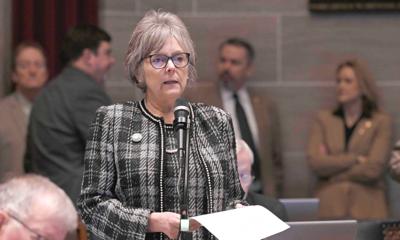
The primary is unpopular with well-organized groups who prefer the caucus system traditionally used to select Missouri’s delegates to presidential nominating conventions, said the bill’s sponsor, state Rep. Peggy McGaugh, a Republican from Carrollton.
A caucus is easier to control than the primary, she said. Even though Missouri’s primary is just a popularity contest — no delegates are pledged based on the result — opponents don’t want evidence they are not the majority of their party’s voters, she said.
“You can see from the people who either voted no or present that there’s a super right wing
faction that would prefer to continue doing it the caucus way,” McGaugh said in an interview after the vote.
McGaugh said she will try to restore the primary through an amendment to the bill when it reaches the House floor.
The House approved a bill re-establishing the primary last year but it died in the state Senate.
Missouri conducted its first presidential primary in 1988 but did not have a regular primary until 2000. The law authorizing the primary was repealed in 2022.
In 2024, Republicans met in caucuses to select the delegates that renominated Donald Trump, while the Democratic Party held a private primary on a Saturday morning to start the process that nominated Kamala Harris.
Under the caucus system, adherents to a party must attend a meeting where voters are grouped based on the candidate they prefer. In the Republican Party, a majority of the meeting can choose all the delegates; at Democratic Party caucuses, every candidate with 15% or more of the voters gets a share of the delegates elected at that level.
While Missouri’s primary has, at times, determined the delegate pledges, by 2012, when former Pennsylvania Sen. Rick Santorum won, it was only a popularity contest.
State Rep. John Voss, a Republican from Cape Girardeau, sponsored the amendment that stripped the primary from the bill. He said the reinstatement may be lost in the bill that makes several other changes to election procedure at the request of local election authorities.
“It should be something as a standalone piece of legislation,” Voss said. “I’m also concerned with the $9 million fiscal notes that’s attached to that, given our current financial situation.”
State Rep. David Tyson Smith, a Columbia Democrat, accused unnamed opponents of “browbeating individuals” on the committee to remove the primary.
The primary was repealed in a big elections bill in 2022, Smith said, and many legislators didn’t even know it was in the bill.
“I didn’t like how that was handled then and I was glad to see that we were putting it back in,” Smith said. “And I’m again, disappointed that it’s being kind of muscled out of here.”
While he voted against Voss’ amendment, Smith voted for the final version of the bill.
The committee also removed another provision in the bill which would have moved the line protecting voters from solicitations like last-minute candidate appeals or petition signature gathering from 25 feet to 50 feet from the entrance to polling stations.
The bill would also change where a small number of voters, eligible under federal law to register on election day, must report to cast a ballot. Instead of a local polling station, the bill would change the location to offices of the election authority.
The clerks wanted that change for better election management and they wanted to extend the no-excuse absentee, or early, voting period, McGaugh said.
The ability to cast a ballot anytime in the weeks prior to Election Day gives clerks the chance to help voters with issues in their registration or other problems that could prevent voting, said McGaugh, who is a former clerk.
The early voting period was included in the 2022 bill that ended the presidential primary. That law also required voters to show a government-issued ID card, with photo, date of birth and an expiration date, prior to voting.
Republicans at the time opposed early voting and wrote the bill to end it if a court struck down the identification requirement. It was upheld by a Cole County judge in November 2024 but the decision was appealed and a ruling is pending from the Missouri Supreme Court.
McGaugh’s bill would not remove the link between the provisions of law.
The early voting period has proven immensely popular, with thousands of voters daily taking advantage of the convenience.
The presidential primary occurs just weeks before April municipal elections. Clerks were willing to support it if it was on a convenient date and lawmakers extended the no-excuse absentee period to four weeks, McGaugh said.
“They asked me to put it as part of the bill in exchange for the additional weeks of no excuse, which has been an absolute win,” McGaugh said. “It stretches out the days for people, the voters loved it, and so I was happy to have the bill for them.”