Every time 19-year-old Kim Jackson tried to work her hands out of the handcuffs, the sheet metal roofing she was held captive on rocked back and forth. Every time it moved, she worried that one of four men who had spent much of the past 15 hours raping and brutalizing her would wake up, and her nightmare would start all over again.
She had been handcuffed to the same man during most of the 15 hours, and now he was passed out from the effects of alcohol and drugs. If he woke up, if he saw Jackson trying to escape, what would he do?
An hour went by, and she kept trying to work her hands out of the cuffs. The skin around her wrists was tearing, frustration and fright mounting, as little by little, fraction of an inch by fraction of an inch, she forced her hands from the cuffs. Lucky for her she has small hands and wrists.
Once free from the cuffs, Jackson then had to escape the loft of the barn where the men held her captive, at times strangling her out of consciousness. She used rafters to pull herself up, then swing out and drop onto the barn floor. As soon as she landed, she looked up, fully expecting the man to be coming after her. He didn’t wake up, though, and Jackson was a step closer to freedom.
She vomited a few times, then, half nude, hid in some nearby brush. She followed the brush line until she saw a house, and she remembers there were toys in the yard. She went to the house and begged for help. The police and her family were called.
Stories like this don’t end with the escape from the “monsters” who did this to her, she says today. She can never turn back the clock to 2 a.m. June 6, 1990, and go home after work instead of out to eat with a friend at a Perkins Restaurant.
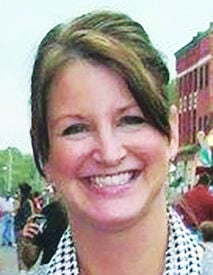
Kim Jackson’s greatest escape was yet to come. She is 43 now. She is Kim Case now. She is the mother of two girls now. She fights for victim’s rights now. She tells her life’s story at conventions and churches now. She has escaped so much more than four men and a pair of handcuffs, and calls her story one of “hope and healing.”
•••
Kim Case has been fighting back ever since that night. The four men followed her home from the Perkins Restaurant in North Kansas City and abducted her after she pulled in her driveway. The assault took place in their car, the side of a gravel road, under a bridge, and finally in the abandoned barn in Cass County, south of Kansas City. In all, the crimes were committed in three different counties. That meant four men were tried separately in three different counties and a long, long prosecution.
She has no idea how much time she spent in a courtroom, dealing with the legal process and emotionally reliving the brutal attack over and over and over again in what she terms re-victimization.
“Thus began my journey for justice and my work to assist victims,” Case said. “I am someone’s sister, daughter and friend. This crime and the after effects challenge each of us to find our own source of healing. For me, that has been my faith in God and to lean into that source until hope again appears.”
Case has spent much of the past 23 years working with the legislature, law enforcement, the courts, the press, victims and their families to ensure victim’s constitutional rights. She has often worked behind the scenes, but her handiwork is everywhere. She works with the Missouri Victims Assistance Network and now has a fulltime job as the Crime Victim Advocate Case Manager for the Missouri Sheriff’s Association.
Case, who is from mid-Missouri, is scheduled to be in Salem 6:30 tonight (Tuesday) and is the featured speaker for the Dent County Ladies Soup and Salad Dinner at First Baptist Church. The $10 a ticket dinner benefits the Dent County Women’s Crisis Center, which serves victims of abuse.
Case says she tells her story about once a month at conferences, universities, churches and various groups. She never tires of telling her story, hoping it will make a difference. She has no web site, no prepared biography or facebook page. People hear about her riveting, horrid-yet-uplifting story, and give her a call.
“There was a level of strength that developed throughout the incident in 1990,” Case says. “While they took so much from me, I didn’t want to be defined by that. I knew I had to pull myself through it. A lot of that strength came through my faith.
“When I was plunged through the system I saw there was a lot that could be done to help. There was a lot of hurt. I saw there could be so much done to help victims. A victim could have a life and feel supported and understood and believed, but it wasn’t happening.”
Case poured herself into re-victimization, literally. She studied criminal justice in college and focused on victim’s advocacy. When there was a hearing about victim’s rights in Jefferson City or a committee formed to study the problem, she put her two cents worth in.
She is really getting serious about it now. A friend is planning to help her create a web site that tells Case’s story and offers information about victim’s advocacy and rights. Her story is scheduled to appear on the series “I Survived” on the Biography Channel sometime early in 2014.
“When I got the call from the Biography Channel last year I was apprehensive at first,” Case said. “I don’t want to sensationalize the case, but rather focus on my work from then forward.
“It’s more about providing encouragement to others who have gone through something like this, or see that they can get help. I don’t want it to be about me. It happened, and I had to fight hard to get through it. I want people to know they can, too.”
•••
Kenneth Thornburg, 25, Andrew Harper, 19, Lee Ross, 21, and James Lutes Jr., 23, all of Nevada, Mo., were found guilty on all charges of the gang rape of Kim Jackson. They are still in prison. Three of the four were sentenced to nearly 100 years in prison, while the other got about 75.
One was arrested walking along a highway, one in his home and the other two during a traffic stop in Florida.
Earlier on the day of June 5, 1990, one of the men was sentenced to five years in prison for burglary and vandalism. The judge gave him 30 days to get his affairs in order before reporting to prison, and that night he and three friends decided to party in Kansas City.
While the young men partied, Case was working as a waitress on Antioch Road in Gladstone. When she got off work, she changed out of her waitress uniform and went to meet a friend who was also a waitress. Around 2 a.m. they decided to get something to eat at Perkins.
The four men found their way to Perkins at the same time, in a twist of fate that changed all of their lives forever. After the four men made a drunken scene at Perkins and got thrown out, they waited outside. Case and her friend said goodbye and parted ways. Case drove out last, and the four men followed her home.
Thornburg grabbed Case and forced her into a car with the other three men. The nightmare was under way.
The handcuffs were placed on her soon after she tried to jump out of the car. She could see the handle of a gun on the front seat. At one point Case took the nametag off her waitress uniform and pushed it down into the seat in hopes that, if she was killed, someone would find it and provide a clue as to what happened.
After the night of abuse and rape, one of the men left in the morning for work. The two men Case describes as the “most violent and scary, left me for dead” later in the afternoon and hitchhiked back to Nevada. The lone remaining “monster” remained handcuffed to Case in the barn loft above a hay pit with a nest of black snakes in it.
Within a week all four men were arrested, and she identified them all. They were charged separately, so she got to know her way around the courthouses in all three counties, recounting and reliving, facing the monsters time after time after time.
She still goes to every parole hearing for each of the men, telling the parole board how those crimes impacted her life. She tells them of that night, of what she’s done with her life, how her friend felt guilty because it was Kim who was abducted instead of her.
After the trials and the sentencing, Case made a life’s work of victim’s advocacy. About 89,000 rapes are reported annually in America, and 60 percent more go unreported, according to the Department of Justice. Ninety-five percent of college rapes go unreported. She can do little to stop abuse and rape, but she can do a lot to help the victims.
“If you choose to be scared and angry and not forgiving, you are stuck with it the rest of your life,” she says. “ I made that choice to turn away from the hurt and face forward. It is important to share that there can be hope after something like this.”
Facing forward isn’t always easy. Case has two daughters, ages 18 and 20. Every time they walk out the door, there is “constant worry,” she says. About five years ago she and her daughters were on a bike ride, and she thought it was time they found out why their mom was so dedicated to helping victims. She told them the whole story, a story that defines her very life.
“Rescuing women’s stories and encouraging hope has become my focus, my mission, my calling,“ Case said.
•••
A few months before Kim Jackson was abducted, she was saved and baptized. Her message now is as much about the role of faith in her battle as victim’s advocacy.
She was a typical young woman. She loved playing softball with her friends, home decorating and gardening. She was busy decorating her first home.
Jackson’s plans were to become a flight attendant and see the world. She had several interviews with TWA, and the company was serious enough to fly her to St. Louis for one of the interviews.
She grew up a Jehovah’s Witness, giving her a deep understanding of not only worship but religious sacrifice. She says she hated delivering tracts door to door but “loved revival meetings and singing old hymns.”
What Case says she missed out on is the story of salvation. After her parents divorced she visited a Baptist church with a neighbor a few times, and in Sunday School learned about Jesus and the story of His birth. The feelings she had after the divorce were “soothed in church,” she says, “where I felt truly whole.”
Then came the teenage years, and though she believed she was saved, something was missing. Case attended church off and on and met women who seemed to “exude a sense of well-being and joy.”
Then, at 19, she met Susan, who invited her to attend a Christian church. Quickly, Case decided to give her life to Jesus and be baptized. Just a few months later, four men spotted her at the Perkins Restaurant. As her body was tortured and evil was all around her, Case says something else was present, too.
“When it happened, I felt like I was being held by God, the Holy Spirit,” she said. “I don’t want to turn people off by talking like that, but it was real. My escape was out of the norm. I worked my hands out of handcuffs. That’s impossible, but it happened. I got some help, maybe so I could go on with this mission.”
Part of what drives Case now is that faith, her feeling that this is her calling and the calling comes from God. How else, she asks, can a person overcome the emotional scars such an experience leaves behind?
‘“I realized I could really get through this,” she said. “You read about healing in scripture, and I had to realize I still had a lot to offer the world. I did not want to hold on to the bitterness and hurt and anger. I spent a lot of time in counseling with a great therapist. I confronted it and was allowed to make choices. I did not want to be stuck in that for my entire life. I did not want them to win, and God had another role for me.”