There are places throughout the Ozarks where families live without running water or electricity, and when it rains, often no way to escape. It’s a situation becoming more and more common in Missouri’s rural countryside, as well as 16 other states.
The people are those who signed contract-for-deed arrangements for small-acreage lots in what websites present as rural subdivisions. For those who dream of owning land but can’t obtain any the traditional way due to poor credit scores or lack of resources, entities like Classic Country Land, Online Land Sales and others will allow land seekers to put down as little as $99 to reside on lots and pay monthly installments toward formally obtaining a property deed. Their advertising claims it’s a great option for those who can’t get approved for loans and who yearn to embrace the tiny home or homesteading lifestyle.
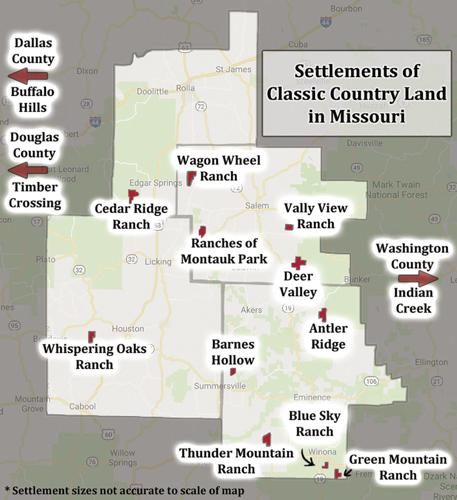
Those signing such deals with Classic Country Land are placed in 14 settlements across Missouri, according to a months-long investigation by Phelps County Focus and The Salem News. These properties are collectively surveyed into nearly 400 individual lots, most of which the company’s website claims are currently under contract or sold. The advertised land is all owned in the name of Classic Country Land or its Texas-based owner, Scott Wigginton. A separate land broker, Online Land Sales, also works to keeps these lots filled.
Phelps, Texas, Dallas, Douglas and Washington counties each have one of these contract-for-deed settlements, while Dent County has four and Shannon County five. Classic Country Land additionally advertises online for lots in 16 states ranging from Montana to Kentucky, and Texas to Michigan.
Since first coming to Missouri a decade ago, these Classic Country Land settlements have been a source of controversy among many of their residents, nearby neighbors and officials whose duties bring them to the properties. Lawsuits, fires and shootings have all been connected to these settlements in recent years, according to law enforcement. During the investigation, residents said they signed on hoping to build a better life. For most, residing on the property means making do with no utilities, as well as their entry or exit limited to when dirt trails or primitive bridges aren’t washed out or iced over. Some say such isolation is exactly what they want, while others say the situation is far from what they expected upon signing their contract-for-deed agreements.
Dream turned nightmare
“All they care about is their business and making all that money. . . they don’t care about the people who are living out here,” says Gloria Sanchez, a resident of Phelps County’s Cedar Ridge Ranch settlement off Highway K. “I’ve called the company many times, and I tell them sometimes there are women out here with babies who can’t get out in an emergency if it rains, or go to school, but every time they say it’s not their responsibility because it’s up to the residents to fix the roads. In all our years with them, I have only seen someone from the company to come out here once and fix anything.”
If the Cedar Ridge Ranch settlement were a town, Gloria would be its mayor. She and her husband, Jose, own a body shop in Puerto Rico and came to Missouri hoping to build their dream home.
“We like watching ‘Mountain Men’ on the History Channel, and we wanted to have a place in the country just like on the show,” Gloria says.
She and Jose eventually found Classic Country Land while searching online. The lots near Beulah looked like a perfect fit. Pictures online showed a flowing creek, forest and sunny pastures. A map of the property also displayed winding roads leading to each of its 40 lots.
All of the Classic Country Land residents interviewed during the investigation say they signed their contract-to-deed agreements sight unseen after completing the process online. Gloria and Jose still have the original contract mailed to them, although it was water damaged when Hurricane Maria hit their house in Puerto Rico.
It was only after first arriving at Cedar Ridge Ranch that Gloria and Jose say they learned their neighbors were living in shacks, the creek only flowed after rainfall, the unpaved roads were plagued by mud pits and access to utilities meant a $30,000 charge to have electric lines stretched to their lot. They also discovered entry into the property meant traversing a creek by crossing over a bridge that is a repurposed railroad car.
“We wanted the country life, we didn’t expect everything to be perfect when we signed up,” Gloria says. “But the roads and bridge are so awful. They are the worst we have ever been on. Worse than anything we’ve seen in Puerto Rico. When we first moved in, we had to pray we didn’t get stuck in the mud. Now, whenever it rains, no one can get out of here. Everyone is stuck until the roads dry, and even then, some of the potholes left are two-feet deep.”
Contract for Deed
Gloria and Jose say they can speak out because they enjoy a privilege others at the Cedar Ridge Ranch don’t – full ownership of the land on which they live. They bought their seven acres from Classic County Land in 2017 after first signing a contract-to-deed agreement. They have another five acres still under contract with the company. They say they paid off their parcel early for fear of losing all they were investing.
“We took out a loan to pay off the contract because we knew any improvements we made could be lost if the company terminated our contract,” Gloria says. “We didn’t want to start building on the property only to lose it.”
Under the legal terms of contract-for-deed agreements, those signing on have no right to keep their land even after completing improvements or submitting thousands of dollars in monthly payments. Termination can stem from nonpayments or violating covenants signed in connection to contracts. One covenant reviewed by Phelps County Focus covers matters ranging from banning disabled vehicles unless kept in a garage to limiting the number of dogs to three per kennel.
Potential abuse of contract-for-deed agreements has led some states to issue consumer protection warnings. The website for the Minnesota Department of Commerce warns it is a high-risk option that can be both mutually beneficial and vulnerable to predatory practices. It details abuse of contract-for-deed agreements increased after the 2008 financial crisis by targeting low-income buyers with poor credit scores who cannot obtain traditional loans. It advises the public that companies offering these agreements can terminate contracts, evict residents and quickly reclaim property without a foreclosure sale or judicial action if a payment is missed or other contract conditions not met.
Phelps County Focus and The Salem News interviewed 14 residents at Classic Country Land settlements across Missouri. Discontent existed among the majority on a spectrum between feeling defrauded to conceding they had no better option. Some also expressed gratitude to Classic Country Land for the opportunity to obtain a property deed.
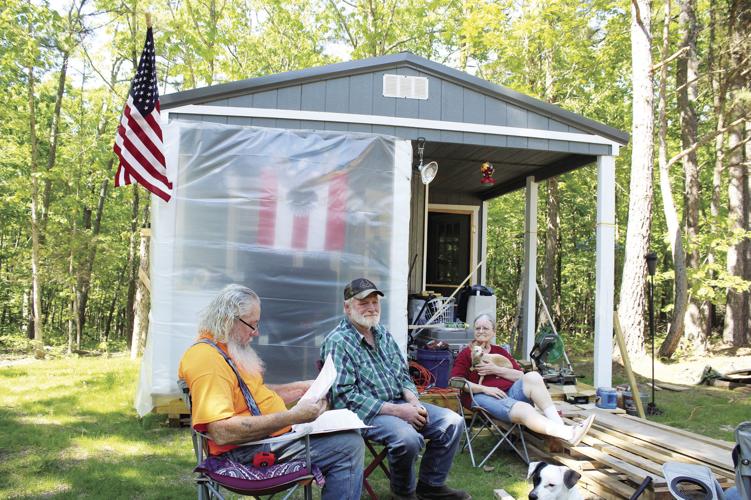
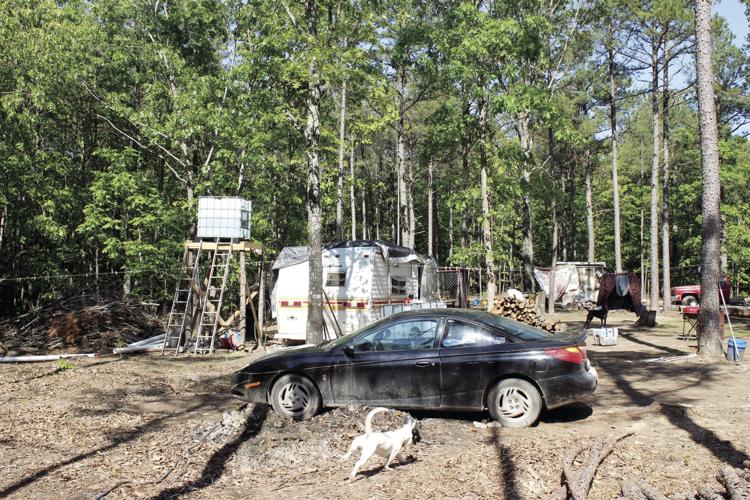
A common theme among those who live in these settlements is a self-sufficient vision to live free, which is hampered by personal and financial obstacles. Of those interviewed, some were on disability, ailing from medical issues, of advanced age, detached from a working spouse or parents to young children. Their dwellings were observed to be mobile homes, RVs, buses or shacks aspiring to be tiny homes.
Most of Classic Country Land’s lots have no access to electricity or running water, but the residents interviewed say they know workarounds. A gasoline generator or solar panels can be used to power a few appliances. Water is regularly trucked in using giant plastic tanks.
Many residents say the roads are their biggest concern. In addition to limited accessibility, residents say the conditions increase costs for vehicle maintenance and lead to loss of economic opportunities. Gloria and Jose additionally say they’ve not been able to have some materials delivered as part of their land-improvement plans.
“We were going to have gravel delivered so at least we could get into our driveway, but no, they said they couldn’t take the risk because the roads are so bad,” Gloria says.
A copy of a Classic Country Land contract obtained during the investigation absolves the company from responsibility in reference to road maintenance or any other upkeep on the property. Disclaimers on the company’s website also state land seekers should visit properties before signing agreements, and that lots are for sale strictly on an “as is” basis.
Purchase terms offered by Classic Country Land are generally for 10 to 20 years with interest rates up to 12 percent, plus residents must pay an annual share of the land’s property tax. Some contracts additionally have a larger balloon payment which must be submitted prior to a deed changing hands, residents said.
Classic County Land’s business practices have been the source of past litigation in Missouri. A couple who’d signed a contract-for-deed agreement in Shannon County sued Wigginton in 2012, according to court documents. A judgment in that case by Judge David P. Evans obtained during the investigation affirms Classic Country Land violated Chapter 407 of the Missouri Merchandising Practices Act and ordered more than $200,000 be paid in total compensation, plaintiff legal fees and punitive damages. Plaintiffs nor attorneys in the case can speak publicly about the verdict, according to the agreement.
Gloria, Jose and other residents say they have no interest in filing lawsuits. They just want Classic Country Land to make the roads passable and are speaking out in hopes it forces repairs. Some settlement residents have also approached their local county commissions in hopes their private lanes can be made public, however, those efforts haven’t been successful. The Missouri counties in which Classic Country Land operates additionally have no zoning ordinances which would mandate improvements.
A constant flow
Having lived on the land for years, one current Classic Country Land resident who did not want his name used told Phelps County Focus and The Salem News they’ve become accustomed to a regular routine at their settlement. Unfamiliar faces will pull into a lot with a truck or camper, and after a few days, never be seen again.
“I’ve seen that happen a dozen times or so,” the resident said. “I think they see just how bad it really is here and decide to give up and cut their losses.”
Sharing that observation is Gary Koch, a long-time neighbor of the Ranches of Montauk Park settlement in Dent County.
“There have been so many come and go; the properties each turn over four, five times or more,” Koch says. “They’ve come from Oregon, Florida, Kansas and Texas where they bought sight unseen. They mostly don’t last through the winter after they move in. Their trucks get torn up on these roads when the snow and ice hits, and they can’t get their water.”
Daniel Hellmuth lives next to the Antler Ridge settlement in Shannon County. He says Classic County Land showed up after it bought an 800-acre tract that was previously clear-cut of timber.
“What they’re doing may not be strictly illegal, but it’s certainly unethical,” Hellmuth says. “If you look at their website they make it look like a nice subdivision, but those roads through the property are just old logging trails, and the pictures they display look nothing like what’s on the ground. There are all these up-close images of cattails and leaves with a valley and sunset over a ridge. Being familiar with the area, I can tell you those cattails were growing from a water-filled rut left off Highway CC by a big logging truck. It’s technically showing their property, but not truthful at all, and all these desperate people see that and think they’re getting a great deal only to show up and discover the deplorable conditions.”
Dealing with traffic into contract-for-deed settlements has also become a constant reality for the county offices where Classic County Land operates. Shannon County Assessor Jimile Voyles reports she receives phone calls weekly from new contract signers who haven’t visited their properties but need to know its physical address. Douglas County Assessor Alicia Miller-Degase reports she gets similar calls nearly daily from those with Classic Country Land contracts, along with those from other companies.
Phelps County Recorder Robin Kordes reports she only has evidence that one lot of the 40 surveyed at Cedar Ridge Ranch has switched hands with a property deed exchange, and that was the seven acres sold to Gloria and Jose Sanchez. She also says only one contract-for-deed agreement has ever been put on record with her office. Without that documentation, she advises nothing prevents a property owner from contracting lots to multiple people at the same time.
New state, new rate
“I was not even told.”
That’s what Donald Shaw says about news this month that the five acres he is living on was being advertised as available for purchase by Online Land Sales. “I didn’t believe it at first because I’d made all of my monthly payments just like they wanted me to, but my neighbors told me, and sure enough, I looked and they were advertising it as foreclosed property."
Shaw is a 71-year-old Vietnam Veteran who last fall moved with his wife Betty from Texas to Classic Country Land’s Wagon Wheel Ranch in Dent County. They arrived by way of Online Land Sales after signing a 30-year contract. Donald said he chose the Ozarks because he wanted his mind to be at peace.
“I didn’t come back from Vietnam the same person,” Donald says of his time as a helicopter crew chief and gunner. “I can’t stand to be around groups of people, so I need a place away from everybody where I can hide. Plus, the crime was so bad where we were you almost had to go outside with a gun on your hip.”
Donald is 100 percent disabled, unable to work and lives on a fixed income. He’s also survived colon cancer and right now has an undiagnosed tumor on his kidney. He assumes it’s from Agent Orange.
Facing such limitations, Donald thought the deal offered by Online Land Sales seemed perfect. To live in what appeared to be a piney grove, all that was required was $121 down and $245 per month for three decades. After first signing a contract-for-deed agreement last year, Donald and Betty drove up from Texas to find their lot three months later.
“I could not find my land anywhere,” Donald says upon first arriving. “Nothing looked like what I saw on the website, and the map they showed was all wrong. So, I got an Online Land Sales person on the phone for help, and all they said was ‘Well, I don’t know where it is either.’ After that they just kept telling me ‘We’ll call you back’ over and over again. Thankfully, some neighbors out here helped me find the right spot.”
Donald and Betty ended up on the immediate east side of the Dent/Phelps county line. They lived in a camper through the first months of winter and later bought a $9,000 prefabricated shell for a tiny home. They also regularly mailed in their payments by money order, but this month got a notice their payment was late. It was confusing, Donald says, because he’d kept all the receipts, and still has them in a folder with his original contract.
Donald says that late notice is the last he or Betty has heard from Online Land Sales. Without notification, the company foreclosed and put their lot back up May 1 as for sale online. It was also around that time Donald learned Classic Country Land was the actual property owner.
“The deeper I got into this with Online Land Sales the less they answered my calls,” Donald says. “So, I called Classic Country to ask what I could do to get my land back from Online Land Sales, and they said ‘nothing,’ it was foreclosed and had reverted back to them. I then said what do I need to do to get the land back from you, and they said we would have to start all over again.”
Donald says Classic Country Land offered a new deal of $99 down with $322 per month for 10 years. He and Betty never got an explanation from Online Land Sales, and they estimate they lost around $2,600 in total payments to the company.
“I am thankful Classic Country explained everything to us all the way down the new contract, and they answered all my questions over the telephone,” Donald says. “So far, I am happy with them, and things are working out great. I just don’t understand why they’d do business with people like Online Land Sales. I hope they never work with them again.”
Public safety concerns
County officials with jurisdictions including Classic Country Land settlements say the conditions create public safety concerns.
A shooting at Phelps County’s Cedar Ridge Ranch in December last year nearly killed one of its residents and led to the arrest of another. The victim in that case was airlifted to Columbia after first having to drive off the property. Phelps County Sheriff Richard Lisenbe reports deputies faced great difficulty responding to the scene.
“The road conditions are definitely a problem, and the reason why is they are simply not being maintained,” Lisenbe says. “The roads are very treacherous to any officer needing to respond to an emergency on that property.”
Dent County Sheriff Bob Wells shares that sentiment.
“The private roads leading into these places are by far the worst in this county, and I hesitate to even call them roads, they are more like logging trails,” Wells says. “A patrol car is simply not going to be able to make it in. You’ll need a four-wheel drive to have any real chance of getting through, which the sheriff’s office does not always have readily available.”
As part of this investigation, Phelps County Focus and The Salem News rode along during a recent patrol of Dent County’s settlements with Wells. During one stop, a resident quizzed the sheriff extensively as to the circumstances under which he could legally shoot a neighbor. The resident explained many threats had been recently exchanged from behind a shotgun. He added his only criticism of Classic County Land wasn’t so much the roads but that property lines aren’t adequately marked, so disputes emerge as to where borders exist, with only GPS coordinates printed in contracts providing guidance.
Shannon County Sheriff Darrin Brawley reports at least one of his department’s patrol cars was temporarily forced out of service due to damage sustained responding to a Classic Country Land settlement.
“We’ve had to respond to these places regularly on calls ranging from the drug trade to domestic violence,” Brawley says. “Last year we had a group who came here from out of state, and we discovered they intended on using the land for a marijuana growing operation. Luckily, it was deer season and they got in a land dispute with a neighbor. After that, we found out what they had going on.”
Deputy chief Lloyd Thompson of the Duke Rural Fire Protection District in Phelps County reports its heavy primary response vehicles cannot access Cedar Ridge Ranch due to its railroad-car bridge, so only lighter brush fire trucks can be used for firefighting. Thompson says wildfires have been sparked by those living in the settlement, but flames have not yet spread off the property. He adds that to his knowledge at least one of its residential structures has burned to the ground.
Phelps County Assessor Bill Stoltz reports he’s instructed his staff not to attempt in-person property appraisals due to the hazardous road and bridge conditions. Assessors in other Missouri counties confirm they’ve also given similar orders. Stoltz adds that one of his staff members was menaced with a shotgun on the property, and he’s personally been threatened to have dogs maul him while there.
Classic Country’s view
Phelps County Focus and The Salem News called Classic Country Land’s Texas-based office May 13 requesting to speak with company owner Scott Wigginton. Wigginton was not available for comment, and office manager Lori Murphy subsequently agreed to an interview.
Murphy said matters pertaining to roads or living conditions are not the responsibility of Classic Country Land. As to road conditions, Murphy cites the company’s contracts state road maintenance is the responsibility of those signing agreements, and that covenants are available to review online prior to purchases. She also reiterated the company’s website advises potential residents to visit the land they’re interested in before signing a contract.
As to living conditions, Murphy said Classic Country Land has no control over the life choices of those who sign contracts with the company.
“We are selling land, we are not in the business of selling electricity or digging wells,” Murphy said. “The moment a contract is signed, that land does not belong to us, it is owned by whoever signs that contract so long as they make their payments toward obtaining a deed. If they want to make any such improvements, we highly encourage that.”
Murphy also said, “We are not here to judge people. They can choose to live however they want to live. Many tell us they want to live off grid and in a rural setting. If so, we are here to work with them to help them secure land if they cannot get a loan.”
Murphy said she and Classic Country Land have not been contacted by public officials who shared concerns with Phelps County Focus and The Salem News during its investigation, and are unaware of any public safety issues. As to Phelps County’s Cedar Ridge Ranch, Murphy said its rail-car bridge was across the creek prior to Classic Country Land acquiring that property.
“We cannot help if there are some bad apples who buy land from us,” Murphy said. “If one of our land owners is creating an issue for law enforcement, we do not hear about that, just like how Wells Fargo is not informed if one of its customers commits a crime.
“We put a lot of work into what we do, and we are not the bad guys in any of these unfortunate situations. In the past, if a land owner has had an issue with a piece of property, we’ve moved them to another one if it’s a better fit for them and its available at the time. We do what we can to make sure they’re happy.”
Conclusion
Classic Country Land says it does not own the land on which the settlements exist, while county officials cite the company’s name remains affixed to local property deeds and say tax bills are sent to Classic Country Land’s Texas headquarters. The debate over who is right and what responsibilities exist will continue for as long as individuals are willing to sign contract-for-deed agreements. Emergency responders will also press forward through whatever hurdles the situation creates.
In good times and hard, the American Dream remains an ever-present ambition. It’s a vision to own a piece of land, build a life and be the boss on a patch of ground. For an increasing number of people, realizing that goal means lowering expectations. That triage can sometimes mean taking to the backcountry, forgoing a modern quality of life and paying thousands of dollars for only the hope of one day having a property deed.
Hundreds of families live such a way now in Missouri according to Classic Country Land’s website. Of the company’s more than 380 lots listed in the state, the company claims approximately 94 percent were under contract as of Monday morning. Of the more than 2,100 lots listed nationwide, the website claimed more than 1,900 were under contract at that time.