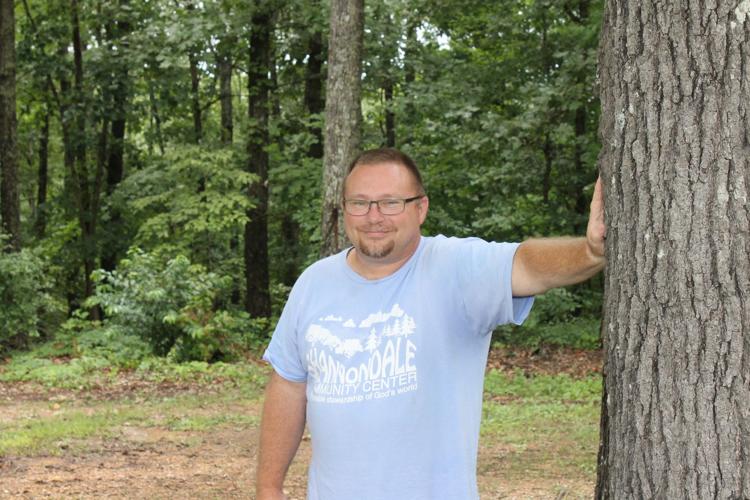
Seven years ago Shannondale Minister Jeff Fulk was full of desperate prayers. His rural mission in north Shannon County had a proud history, but was teetering on the edge of ruin. Although its tree farm had stood since 1949, its future was in question due to the tough times created by the Great Recession.
“After the economic downturn hit in 2008, donations went down for not only us but for our entire conference, the Missouri Mid-South Conference of the United Church of Christ,” Fulk says. “There was serious talk of Shannondale being sold like many other outdoor ministries. I remember sitting up here one day and praying ‘God I need a miracle, I need you to tell me what we are going to do.’”
Fulk says his plea was answered three days later in the form of a forester with the L-A-D Foundation who told him about a new innovation, carbon offset credits.
“I’d never heard about any such thing before. At first I was thinking what’s the catch, this sounds too good to be true,” Fulk says. “But now, after a lot of hard work getting through red tape, we are remodeling our chapel and making other emergency repairs thanks to our conference receiving $900,000 by selling carbon credits, while still having some in the bank… This program has really been our savior.There’s a good chance Shannondale would not be here today if it weren’t for the carbon offset program.”
Shannondale’s success has been made possible by California passing the Global Warming Solutions Act in 2006. The law’s goal is to cap the total amount of greenhouse gas emissions allowed in that state to 1990 levels by the year 2020. It works by giving California corporations the option to account for a small amount of their total greenhouse gas emissions by purchasing carbon offset credits from registered tree farms, managed forests and other entities that absorb some of the carbon dioxide these corporations produce.
“The whole idea behind the program is to put a cap and a price on greenhouse gas emissions and to help carbon emitters meet their cap by funding forest landowners to practice sustainable forestry and thereby store extra carbon in their forests,” says Dylan Jenkins, vice president of Portfolio Development for Finite Carbon, a Pennsylvania company which specializes in developing forest carbon offset projects.
In 2013, Shannnondale was able to enter into a partnership with Finite Carbon to register 3,982 acres of forest with the Climate Action Reserve, which is the official registry of carbon offset projects and determines how many credits each project will receive. As part of registration, Shannondale has adopted improved forest management at the tree farm, which increases its carbon offset ability through activities that maintain or increase its performance relative to common practice baseline levels.
“The forests are managed in such a way that as to maximize the amount of carbon they capture, such as growing bigger trees for a longer period of time,” Jenkins says. “All of this is done voluntarily by the property owner, and they can still actively produce wood products through a sustainable harvest. It’s not an all or nothing kind of deal.”
Jenkins says since the Shannondale Tree Farm’s establishment in 1949, it has offset 120,000 metric tons of carbon pollution, and will annually offset another 2,000 tons per year.
With Finite Carbon’s guidance, Shannondale also became the first religiously owned entity in the United States to complete a carbon offset project.
“What we are doing with carbon credits I believe is in line with our religious mission,” Fulk says. “God placed us here to be stewards of the Earth, he wants us to take care of our environment. We need to keep the trees and not cover everything with pavement so our forests can not only provide us oxygen, but clean our air.”
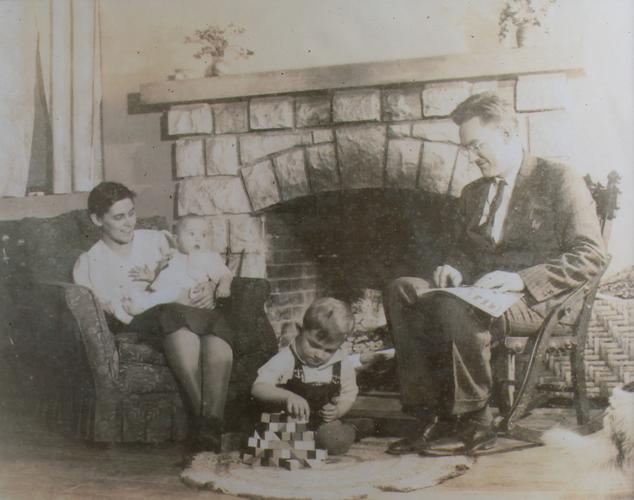
Although entering into the carbon offset program is a big change for Shannondale, it is just the latest action to fulfill a legacy of pioneering and innovation. Shannondale was originally founded in 1929 by Reverend Vincent Bucher. In the beginning Bucher was the ultimate outsider to the Ozarks. He was of German origin in a post-World War I United States who preached what many called a utopian message. Among Bucher’s tenants were that a community should share its resources amongst its members, that every resident should work communally for the common good and human beings should live in harmony with their environment.
“Shannondale started out as a true mission, Bucher had a commune mindset of helping a poor area develop to become self-sufficient while also discovering God,” Fulk says. “Bucher would teach locals sustainability, like they shouldn’t burn their land every year and grow only crops suited to their soil. There are also a lot of old timers who still today can remember learning lessons from Bucher while helping him to pick strawberries or cucumbers to make pickles.”
In 1949, Bucher established his enduring legacy when he founded the Shannondale Tree Farm, a nearly 4,000 acre forest of black, white and scarlet oaks. The tree farm was dedicated to abandoning the clear-cutting methods of earlier generations and providing local jobs and resources through sustainable management. Shannondale today is the oldest continuously owned tree farm in Missouri and the last surviving of the first 10 tree farms designated by the state in 1949.
“Bucher became something of a legend in his own time. The people of this community came to love him. Many probably thought he could walk on water. He even became known by many as ‘The Shepherd of the Hills.’” Fulk says. “We are really lucky he had the foresight to create the tree farm. When we entered the program, we received not only the promise of carbon credit payments for the future, but for every year since Bucher created the tree farm in 1949. That totaled up to be more than $900,000.”
Bucher wouldn’t have known it at the time, but decades after his passing his tree farm not only saved Shannondale but will last at least until the 23rd Century.
“As part of our agreement with the program we signed a 199-year commitment with the Climate Action Reserve, meaning the forest will be here long after we are all gone,” Fulk says “That means more to me than the money, knowing that Shannondale will thrive well into the future and the forest is safe. This land is protected. No one will be able to come in here and clear cut the trees for any kind of big new development.”
In addition to generating $900,000 from previous years, Fulk estimates participating in the program will annually yield $12,000 to $20,000 for the Missouri Mid-South Conference of the United Church of Christ.
“All of the money received will be invested by our conference, but Shannondale will also be receiving a percentage of that total,” Fulk says. “One thing I want to say is none of the money we’re receiving is taxpayer dollars. We are selling credits direct to carbon emitters. There is no government involvement in that process what-so-ever.”
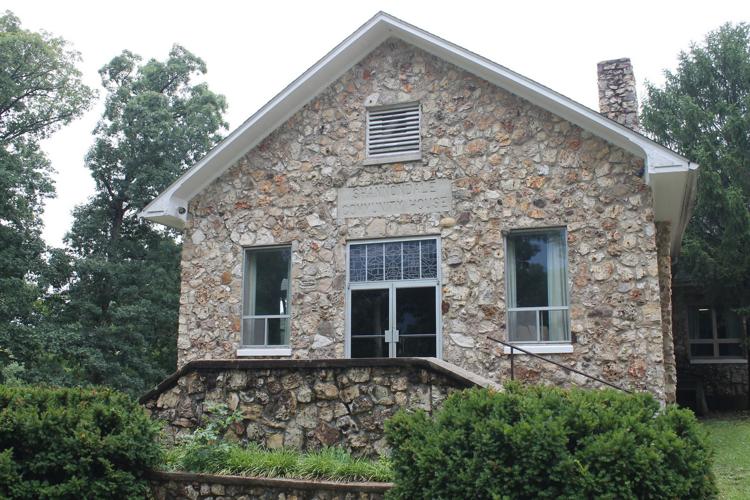
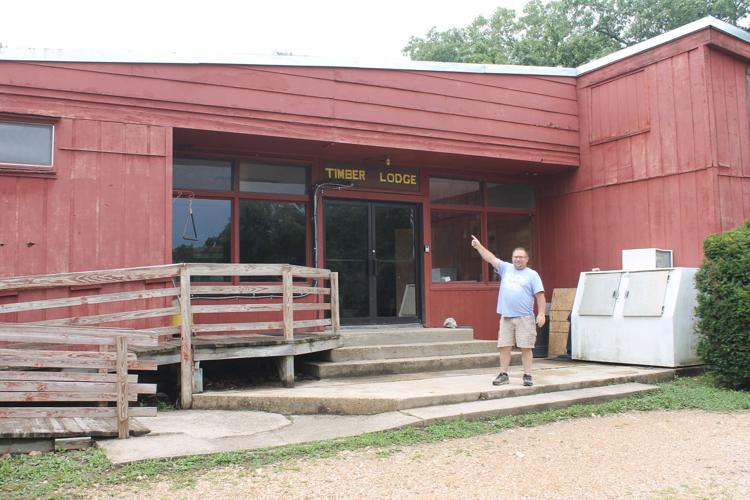
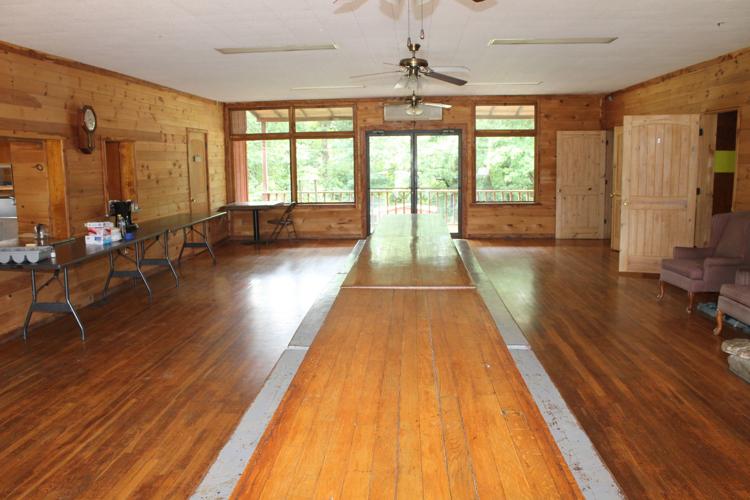
There are many exciting things happening at Shannondale these days. With support from the carbon credit program its campgrounds and lodges are being fixed up and remodeled. Fulk says his current plans are for all the original 1930s era buildings to be restored and no longer in need of major repairs. The popular Timber Lodge is also receiving repairs, including installation of a central air system. Fulk is further looking into the opportunity of having solar panels installed onto the lodge’s roof to make Shannondale even more environmentally friendly.
“It’s all about furthering our mission,” Fulk says. “We will continue to do whatever we can to serve God and honor the memory of Vincent Bucher.”
Shannondale is open for the public and available for lodging and camping. For more information visit Shannondale’s Facebook page or call (573) 858-3284. Shannondale also operates a craft store on Highway 19 which features various crafts for sale made by local artisans. Its webpage is available at www.shannondalecraftcamp.com