
After the testimony of two forensic scientists and two law enforcement investigators, 76-year-old Donald “Doc” Nash took the stand to say he is an innocent man, nine years after his 2009 conviction for murdering Judy Spencer on March 11, 1982.
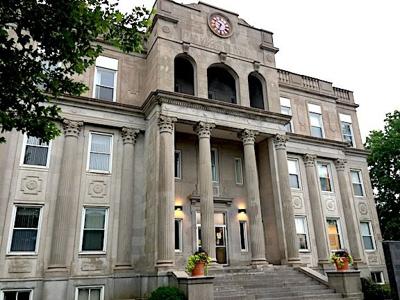
Such was the scene Tuesday at the St. Francois County Courthouse in Farmington at the conclusion of a day-long evidentiary hearing stemming from a habeas corpus petition filed by Nash’s St. Louis-based legal team. A jury convicted Nash of first-degree murder in 2009, and he was subsequently sentenced to life imprisonment without the possibility for probation or parole for 50 years. He’s been in Bonne Terre at the state’s Eastern Reception, Diagnostic and Correctional Center since the conviction.
Judge Shawn McCarver convened the hearing to determine if recent evidentiary developments in the case warrant a retrial. The primary focus of the hearing fell into two general areas, the significance of DNA linked to Nash having been found under Spencer’s fingernails after her death, and physical data which the defense claims points to other suspects in the murder.
McCarver told the court his decision rests on whether reasonable jurors would still convict Nash given the preponderance of currently available evidence. He advised at the end of the hearing that he won’t have a ruling prepared for several days.
The first witness called by defense attorney Stephen R. Snodgrass was Dr. Moses S. Schanfield, currently a professor of forensic science and anthropology at George Washington University in Washington, D.C. Schanfield said it was his opinion no significance should be given to the Nash DNA found under Spencer’s fingernails since the two were living together and involved in an intimate relationship at the time of her death. He pointed to research indicating 30 to 40 percent of cohabitating couples had their partner’s DNA under their fingernails. He said physical contact alone could account for the transfer of such “touch DNA” and cited several potential vectors, such as sleeping in the same bed and using a same towel or utensil.
Schanfield also challenged a key argument presented during the 2009 trial that Spencer having washed her hair prior to her murder means she would have removed DNA left under her fingernails. He cited a 2012 study which found that even after tested subjects used soap and a nailbrush to clean under their fingernails, DNA from other people was still found there 13 percent of the time. He said that although not decisive, the findings allow for an estimate that DNA from an individual’s intimate partner could be left under their fingernails even if they washed them vigorously with soap and water. A criticism of the study he offered was that no pretesting of subjects was done to determine which ones did or did not already have such DNA present before the experiment.
Following Schanfield, the defense called Criminologist Supervisor Ruth Montgomery of the Missouri State Highway Patrol’s crime lab in Jefferson City. Montgomery was the technologist who helped test Spencer’s fingernails, which led to the discovery of Nash’s DNA. During the 2009 trial, Montgomery testified that Spencer washing her hair previous to the murder would have had “great effect” on removing any DNA there, which the prosecution presented as evidence the DNA found must be that of her killer.
On Tuesday, Montgomery withdrew her claim that shampooing would have had great effect on DNA removal and instead said that such activity would have “more than no effect.” She said in a sworn deposition taken October of 2017 that “some” effect could be expected, citing the same study as Schanfield on the topic is what led to her revision, as well as other similar studies on the subject presented Tuesday.
Montgomery also affirmed her previous assertion that shampooing would not remove all of the DNA from under a subject’s fingernails and agreed with the defense’s position that the prosecution mischaracterized her 2009 testimony in its closing arguments by claiming she’d testified such activity would have removed all DNA from under a subject’s fingernails.
Montgomery disagreed with Schanfield that the volume of DNA found under Nash’s fingernails could have come from incidental contact, or touch DNA. She also agreed with the state that withdrawing her claim of great effect in reference to shampooing is the only change she’s making from her 2009 testimony.
Following the weighing of the DNA evidence, two former law enforcement officers testified on several items of data they felt implicated others in Spencer’s death.
Former Dent County sheriff’s deputy Tim Bell testified he believed the guilty party is Anthony Feldmen, who was a college student in Rolla at the time of Spencer’s death. He pointed to a fingerprint linked to Feldman having been found on the driver’s side of Spencer’s car after it was found abandoned on State Route FF in Dent County after her body was discovered. Bell also presented Feldmen’s long criminal history and circumstantial evidence as proof of his suspicions.
Former Dent County sheriff’s deputy Steven Lawhead testified another fingerprint linked to John Hyer III was found on the passenger side of Spencer’s car. Lawhead also presented additional circumstantial evidence as proof of his suspicions.
Assistant Attorney General Michael J. Spillane objected repeatedly to the deputies’ testimony on grounds of relevance and hearsay. Judge McCarver sustained Spillane’s objections and allowed him to enter a continuing objection to the officer testimonies, but allowed them to continue as an offer of proof for the record pending his ruling.
The defense further offered for consideration that a male DNA profile has been recovered from a shoe Spencer was wearing when she was killed. Defense attorney Charles A. Weiss said Nash has been excluded from being tied to the shoe DNA, as has the highway patrol trooper who recovered it. He said no known individual has yet been associated with it. Before leaving the stand, Montgomery touched on the subject by saying she tested the laces from the same shoe and did not find any male DNA, only that of Spencer.
The final act in the proceedings was Nash’s testimony. He confirmed he and Spencer had been in an argument the night of her death during which he threatened to break up with her, however, he said he was innocent of taking her life. When asked directly if he was guilty Nash said, “No sir, no, no way, if I did I wouldn’t be able to live with myself.”
Nash ended his testimony by claiming he couldn’t even kill an animal and again asserted, “I’m an innocent man.”


