






“You don’t turn to drugs unless you can’t find satisfaction in another way, in your own life.”
-Richard Nixon, first president to declare a “War on Drugs” in 1971
Part II in a three-part series on the drug problem in Salem and Dent County. Part I can be read here.
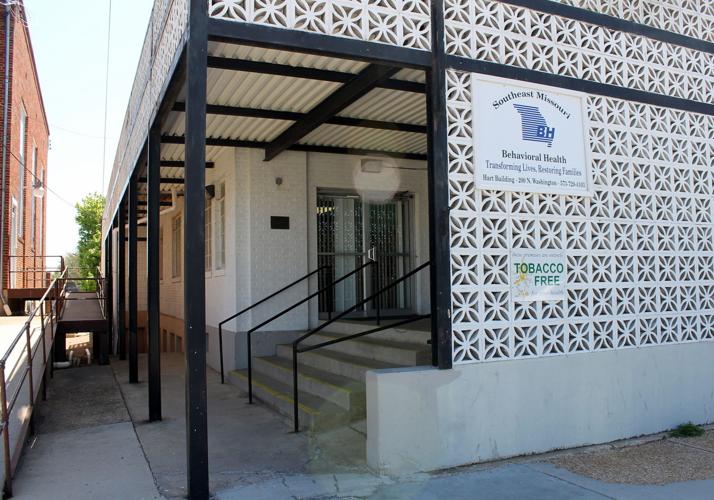
Sitting in on an afternoon meeting about spirituality in a Southeast Missouri Behavioral Health meeting room, the conversation quickly turned to what God thinks of greed.
“It’s all about the money,” said a man in his mid-30s on the front row. “When you put poison into the community, you look to the leaders.”
“They can spend a billion dollars on a playground – a sports stadium – while people like us in here can’t get the help, level and duration of treatment that we need,” responded another 30-something man next to him.
A mid-20s man in the back discussed problems with insurance not covering him long enough to fully get better, that he’ll be let go because he can’t afford to pay. Without insurance, a stay at the SEMO-BH treatment center in Salem costs around $100 a day.
“Are drugs sold by people to make ends meet?” asks Prosecuting Attorney Andrew Curley. “At times, yes. Do people abuse substances when they are not economically successful? Yes. Do we have to differentiate between violent substance abusers and those who are nonviolent due to the limited nature of treatment options? Yes. So we have to treat drug dealers harsher than users? Yes.”
But there was one telling point that Curley emphasized.
“Interestingly, the vast majority of my inmates share two traits in common: 1) lack of education and 2) lack of employment opportunities.”
A special report by the U.S. Department of Justice published in 2002 showed that:
• 24.7 percent of local jail inmates across the county were incarcerated for drug offenses – 75 percent of those for marijuana.
• Of the violent offenders among them, about 20 percent were on drugs at the time of the crime, while double that amount – nearly 40 percent – were abusing alcohol when the crime was committed.
• 71 percent were employed, 24.6 percent of those with a monthly income of $1,000 to $1,999.
• 14.3 percent had been homeless in the past year.
• Only 4.4 percent had been raised by their father alone growing up, and 39.2 percent were children of single moms.
• Almost half (46.3 percent) had a family member in prison.
• One in five was raised by a parent with a substance abuse disorder.
• Only 61 percent of the total inmates had graduated high school.
• Only 2.9 percent of those in jail had a college diploma.
So, would logic dictate that providing a college education for all might reduce the prison population by 97.1 percent?
Curley, who holds much of the weight of this prevalent Dent County issue on his shoulders, obviously doesn’t take his responsibility lightly. Talking with him about it, it’s apparent that he’s thought deeply about the ins and outs.
“A stagnant economy leads to increased substance abuse,” says Curley. “That is common knowledge now.”
Social science backs up this notion. A national household survey on drug abuse, conducted in 1994, found that 82 percent of men age 18-40 who had used either cocaine or marijuana on a regular basis throughout their lives (12 times or more for cocaine and 100 times or more for marijuana) had a family income of less than $12,000 a year. Adjusted for inflation, that comes out to $19,119 a year in 2015.
Long-time renowned PBS journalist Bill Moyers wrote in 2013 that, “For the money spent so far on the 10 years of war in Iraq and Afghanistan, we could provide completely free public higher education at every single two- and four-year school in the country – for the next 52 years.”
With $1 trillion spent on the War on Drugs since the 1970s, that money could’ve provided a fully paid college degree for everyone in the country for more than a decade – 11 years to be exact.
Curley suspects that those who perform poorly in society, be it academic or otherwise, sometimes feel hopeless and resort to drug use as an escape from the harsh reality of their situation. He suspects that this might lead to those unsuccessful individuals having poor decision-making skills and intentionally choosing drug use over being a positive, participating member in the community and the economy. He suspects that this also makes them more likely to end up in the criminal justice system as a result.
Echoing the statements of the men in the center’s spirituality class and the effects of poverty on addiction, Curley points out an often unspoken truth understood in America today, especially when headed to court.
“That’s not to say that drug use doesn’t occur with the economically successful,” says Curley. “They just appear to have more available options and incentives to combat addiction than their counterparts.”
And, one can assume, more available options and incentives to combat the legal repercussions of addiction than their less economically advantaged counterparts.
“Importantly,” Curley continues, “non-violent drug offenders typically have early parole dates if sent to prison and are given credit for all time served in the county jail. Also, the prisons are not sufficiently equipped to fully address substance abuse and addiction.”
The scared-straight nature of drug court has helped some, and with more Americans in prison than ever before, it’s a common go-to option for prosecutors.
“By the end,” a recovering addict at a Primer service at New Harmony said, “I would shoot up anything, water even. I was addicted to the needle. Being told by the judge, ‘Either get your life together, or go to prison,’ was the thing that finally made me take a serious look at what I was doing to myself and seek help. Through Christ, I’ve got more than a year of sobriety under my belt, and my life’s better than it’s ever been.”
So what’s the answer? Is a bigger jail the best option, so we can get more addicts off the streets? Do we need to take a long, hard look at the laws presently leading to an overcrowded jail? (Not an altogether radical view, a Pew Research Center survey from 2014 found that 63 percent of Americans polled thought that moving away from mandatory prison sentences for non-violent drug crimes is a good thing, up from 47 percent in 2001). Or a middle way perhaps, like a reallocation of resources? All could be accomplished through organization and the ballot box.
One example of possibility is Medicine Hat, a Canadian town, which recently placed a major emphasis on providing a place to live for every one in its city limits through its program, Housing First. According to a Canadian Broadcasting Corporation story published May 14 titled “Medicine Hat becomes the first city in Canada to eliminate homelessness,” if an individual spends more than 10 days in an emergency shelter or on the streets of Medicine Hat, they’ll be provided with housing.
Mayor Ted Clugston said that the main reason for the push was not entirely moral. It was economic.
According to Clugston, it costs the city $20,000 a year to house someone, and up to $100,000 if they’re on the street.
The $100,000 figure reminds one of something Salem Memorial District Hospital Administrator Dennis Pryor said in a previous article in The Salem News on the Affordable Care Act, “We have to see every patient who comes on our campus anyway, as far as the emergency room goes,” said Pryor. “There's already universal health coverage.”
As anyone who’s ever received an insurance-less emergency room bill in the mail knows, expenses there can add up quickly.
“This is the cheapest and most humane way to treat people,” said Clugston. “Housing First puts everything on its head. It used to be, ‘You want a home, get off the drugs or deal with your mental health issues.’ If you’re addicted to drugs, it’s going to be pretty hard to get off them if you’re sleeping under a park bench.”
As a result of the plan, not only are the homeless not homeless anymore, but emergency room visits and police interactions have dropped. But an interesting, unforeseen consequence was that court appearances went up as a result.
“They end up dealing with their past,” Clugston was quoted as saying. “Atoning for their sins.”
Dan Adams, Director of Care Coordination at Southeast Missouri Behavioral Health, shared that programs like Housing First are not without precedent in this country, although support for them has faltered in recent years.
"In the U.S." wrote Adams in an e-mail correspondence, "most of the current housing projects are the result of the McKinney/Vento Act of 1987. A lot of federal dollars were spent and programs started, but funding has declined. HUD section 8.913 (Section 8 housing) was a popular program. HUD (Housing and Urban Development) loans financed construction of housing for substance abusers and the mentally ill, if the housing was used for this purpose for a set number of years, the loan was forgiven, so the cost of the building was free."
Either way, addiction is a hometown problem, and if things are to change, Salem citizens must continue to engage in the conversation about how best to move forward.
“In my position,” says Curley, “I have the opportunity to review the residential address of the parolee after release. More often than not, the address ends with ‘Salem, MO 65560.’ These people are our citizens, and I believe we should make all reasonable efforts to combat this problem at home. The treatment center is part of that equation.”