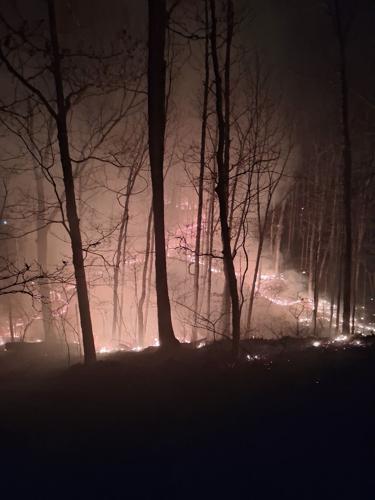

The municipal election, April 8, will determine plenty of local issues—one of which is Proposition Fire. The bond issue for the Dent County Fire Protection District (DCFPD) would not just be used for replacement vehicles, but also toward the replacement of expired gear, such as air packs, which help ensure firefighters stay safe in emergency situations and have what they need to save lives. Firefighters’ helmets, coats, and pants must be replaced every 10 years, while air packs expire every 15 years. Proposition Fire will allow the department to make major investments in protective gear, ensuring firefighters stay safe while they protect the community.
What is Proposition Fire?
Proposition Fire is a $3.5 million general obligation bond. It implements a debt service tax levy of 23 cents for every $100 of assessed valuation. For most people, this will be less than $90 a year, even as low as $25, or lower. Local investors will be given priority in purchasing bonds, and interest from bonds is exempt from state and federal taxes.
The proposition hopes to address three critical priorities, including the purchasing of up to five new trucks; completely paying off the department’s debt; and purchasing new gear, equipment, and tools. If the funds allow, the district may pursue complete renovations to the fire station.
There are three main reasons that these priorities have been identified: the increasing age of trucks in the fleet; financial strain and debt; and expired gear, malfunctioning equipment, and needed tools.
Fire Chief Dennis Floyd shared that discussions regarding a bond entered conversation at the DCFPD in early 2024. It was brought up in order to tackle aging equipment, and the need to replace big ticket items necessary for DCFPD’s operations. The department weighed out ways to mitigate the costs, including a tax levy versus bond issue.
“The bond issue fits our current needs better, since the funds would all come in at one time compared to a tax levy that would take many years to replace the five trucks and other equipment that need replacement as soon as possible,” said Floyd in an email to The Salem News.
To better get the word out to the public on Proposition Fire, the DCFPD have employed various avenues of educational distribution to ensure utmost transparency, including posts to social media on the DCFPD Facebook page; several meetings with local organizations, including the Rotary Club of Salem; hosting the Chamber of Commerce luncheon at the DCFPD station; and DCFPD staff are working with local media outlets to distribute ads and a video.
There has already been an open house at the DCFPD, but another one is planned for April 3, along with a town hall meeting March 24 (yesterday). DCFPD staff will be distributing bi-folds and door hangers to the public. If there’s an avenue to get the word out and inform the public on how important the issue is, the DCFPD has gone down it.
About the DCFPD
The Dent County Fire Protection District (DCFPD) was founded in 1983 with an original tax levy of 30 cents, where it was later lowered to 20 cents in 1992, recalled Floyd. It’s stayed at that amount ever since.
The personnel of DCFPD employ 25 firefighters. Nine of the firefighters have state certifications, while all others are trained to a minimum standard to perform interior firefighting and search and rescue services. Each fire department is responsible for setting their own minimum training standards to fit their needs and cover the type of emergencies they respond to. DCFPD does its own in-house training for firefighters. The nine firefighters have Hazmat Awareness, Hazmat Operations, and Fire Fighter I & II from the Missouri Division of Fire Safety.
DCFPD’s fleet includes 11 trucks, with six over their recommended replacement age of 25 years.
The district averages about 240 calls for service yearly, with 91 of those calls—or 38% —being fire related. Missouri’s average number of fire related calls is 5%. The district covers 127 square miles, which includes the entirety of the City of Salem and five to six miles in each cardinal direction. Crew members respond to a variety of emergencies that include hazardous material incidents, ambulance assists, vehicle crashes, building fires, grass fires, missing person searches—and everything in-between.
DCFPD are actively involved in various community activities such as teaching fire safety to school children, completing fire inspections at nursing homes, and helping with the 100 Acre Wood Rally.
The replacement of trucks and equipment
The National Fire Protection Association (NFPA) is the authority on fire, electrical, and building safety. Six trucks in the DCFPD’s fleet are out of NFPA compliance, which states that trucks should be replaced after 25 years of service. The increasing age of trucks in the fleet means decreasing reliability and increasing maintenance cost. Should the proposition pass, the DCFPD hopes to add to its fleet a fire engine to be used as its primary response to structure fires outside city limits. It also seeks to add two 3,000 gallon pumper tankers also to be used for structure fires outside city limits.
Since there are no fire hydrants in the rural setting, DCFPD must haul all of its water to fight fires. As such, the pumper tankers will be utilized to perform the task by going back and forth to town to get more water. The DCFPD would also like to add two brush fire trucks for fighting wildland fires, as these calls have increased in number and severity the last several years, further shared Floyd.
The top priority for equipment is to purchase 12 Self Contained Breathing Apparatus (SCBA) to replace the remaining 12 that are 20 years old. The current age of the SCBA causes a great safety risk to firefighters. At 20 years old, manufacturers developed newer models and are no longer making replacement parts for the DCFPD’s current SCBA's.
With the older trucks on hand, the DCFPD have a lot of issues with pumps, with Floyd stating there are a lot of moving parts with the pumps causing them to break or start leaking, causing the pump to not function well. With the age of the trucks, parts are becoming more difficult to find as the older technology is no longer made. On the brush fire trucks, the pumps are run by small engines similar to lawnmower engines—as these engines age out, they grow unreliable with carburetor issues, oil leaks, spark plugs, and head gaskets.
Common issues with fire trucks are alternators and belts. With all the lights and electronics on fire trucks, it takes a toll, said Floyd.
“Older vehicles in general just have maintenance issues that pop up out of nowhere and eat up a lot of our budget on repairs and parts to get them back in service,” asserted Floyd.
As recently as March 14, the DCFPD faced equipment failures. While fighting the large wildland fire on County Road 4090, Truck 8026, which was being used as a command post, started smoking from under the hood. The truck was shut off as DCFPD thought it was about to catch fire. After the same call on County Road 4090, Truck 8028 failed after returning to the station. It was discovered that one of the batteries was swollen and leaking. The DCFPD put a different battery in the truck, but it would not start. The next day the DCFPD were able to get the truck going after locating a couple of blown fuses.
“Luckily these failures did not greatly change the outcome of this fire, but it would have been a problem if there were other calls that the trucks would have been needed to respond to,” informed Floyd.
Along with benefiting the citizenry of Salem and keeping the firefighters of the DCFPD safe, the fire service uses "Mutual Aid" often, which could lead to benefits for surrounding fire departments. When there’s a bigger incident that one department doesn’t have enough equipment or personnel to handle, it will call on neighboring departments to come and assist. “With volunteer departments, personnel is always an issue. All the other outlying departments in Dent County work off of very small budgets and cannot afford to have a large number of trucks or newer model trucks,” said Floyd. “With the passage of Proposition Fire, we will be better equipped to help our neighbors should the need arise.”
Availability of equipment
When replacing equipment, the DCFPD has to consider many things, such as the needs of the department at the time but also what the future needs might be. The DCFPD keeps most equipment for 10 to 30 years, so it has to try to predict how the community and fire service might change over the years, said Floyd.
If the bond passes, the funds should be available in 30 to 60 days, said Floyd. The DCFPD has already located several trucks to purchase, so it hopes to have the first few trucks in service within four or five months.
“The brush trucks will probably take a little bit longer as we are going to build them ourselves using different items from several different manufacturers,” Floyd further relayed. “The breathing apparatus will probably arrive within a couple of months of ordering them, but that all depends on the supply chain.”
Paying off debt to stabilize the budget
DCFPD currently has a total of $936,000 of debt, requiring payments of $89,000 a year. Debt payments take up 31% of tax revenues, which is $286,000. Paying off this debt will stabilize the budget and ensure that DCFPD is able to complete repairs to trucks as they occur. Since 2002, DCFPD has lost $26,000 of its buying power—while prices for trucks, gear, and equipment have skyrocketed.
In 2018, the DCFPD did a renovation project at the fire station. It knew when purchasing the building in 2005 that the flat roof would need to be replaced at some point. In 2017, the DCFPD started to have numerous leaks in the roof that were causing damage to the inside of the building. The parking lot was also a big issue. As it was originally a car lot, the asphalt was not very thick, so the weight of the fire trucks had taken a toll. The asphalt was crumbling.
The project to tackle the roof repair and parking lot created about one million in debt, shared Floyd.
Among the debt of the roof and parking lot repair, the DCFPD was down to one functioning fire engine in 2024. As such, it had to borrow money to purchase a used fire engine. Along with that, in 2024 all SCBA’s expired. The DCFPD was forced to borrow money to purchase 12 new units to get the DCFPD up and running and back in service. All of these dominoes have brought the department to its current amount of $936,000 in debt.
To add to that, firefighters need new gear, equipment, and tools. Firefighting gear has expiration dates between 10-15 years. The cost to fully equip a firefighter is over $12,000. Using expired gear places the firefighter’s life in danger, as well as the citizens. Equipment failures have already started to happen more frequently. DCFPD lacks the finances to replace these items in a timely manner, requiring the use of Proposition Fire.
If Proposition Fire passes
• The district will purchase up to five new trucks.
• All of the district’s debt will be completely paid off
• New gear will be purchased to replace expired sets
• Additional air packs will be purchased
• Other miscellaneous equipment, tools, and necessary items like firehose, generators, etc. will be purchased
The DCFPD will be in a far better situation financially, which will allow the DCFPD to actually save money and make investments for the future. It will lower the chance of the DCFPD needing additional tax increases in the near future. The overall situation of the DCFPD will have improved from these actions so that future generations can enjoy the peace of mind of a fully equipped and functioning fire department.
If Proposition Fire does not pass
Maintenance and repairs on trucks and equipment will be delayed due to deteriorating finances. Trucks will be out of service for longer, making them unavailable for emergencies. More firefighters will be forced to wear expired equipment that places their lives and the citizens’ lives at risk. The district will eventually start operating at a deficit.
The DCFPD’s Insurance Services Office (ISO) rating could increase due to out of service trucks and equipment. If your insurance carrier uses ISO for helping determine property insurance premiums and the DCFPD’s rating increases, premiums would also increase.
Due to all of this, the capabilities of the DCFPD will be so severely impacted that the effects will be felt not just by members of the DCFPD, but also by nearby fire departments who benefit greatly from our expertise, equipment, and capabilities.
Ballot language
Shall the Board of Directors of the Dent County Fire Protection District, Missouri issue general obligations bonds in the amount of Three Million Five Hundred Thousand Dollars ($3,500,000) for the purpose of acquiring and equipping fire trucks; purchasing fire protection fire-fighting apparatus, auxiliary equipment, and emergency medical equipment for first responders; retiring existing lease financings; and to the extent funds are available; repairing the existing fire station?
The voters will answer “yes” or “no”.
Frequently asked questions
Q. Does everyone in Dent County get to vote on this?
A. No. Only voters that live within the DCFPD, which is the entire City of Salem and roughly 5-6 miles in each direction from town, can vote on this measure.
Q. How much will this increase my property and real estate taxes?
A. For most people, the increase will be less than $90 a year. Some are even saying their increase is $25 a year or lower. For those that don’t own real estate (renters) or personal property (cars, trailers, boats, etc.), you won’t be affected.
Call the Dent County Collector’s Office at 573-729-3911 to find out your exact amount.
Q. How do we (taxpayers) know that the funds are going to be spent on what you’re saying they are?
A. Bond money cannot legally be used to purchase items that are not specified by the ballot language.
Q. How long will it take to pay the bonds off?
A. 20 years at most but the district is expecting to pay them off sooner. Paying off the bond early is a possibility by looking at the average increases in property assessment over the last several years. Using that average increase, it appears that it is possible the bond could be paid off in 12 to 13 years. Q. What happens once the bonds are paid off?
A. The issue will appear on the ballot again and voters will have two options: to either reissue another bond and keep the debt service tax levy in place; or to not reissue another bond and the debt service tax levy will drop off.
Q. Does the DCFPD pursue grants?
A. Yes. The DCFPD actually has firefighters who volunteer even more of their time to write grants and help get needed equipment.
Q. Why are grants/fundraisers not a feasible route for assisting the DCFPD, rather than pursuing a bond?
A. The DCFPD does actively seek grants on a regular basis; however, most of these grants have a cap of $10,000 to $50,000, preventing the DCFPD from replacing much needed items, such as trucks, with grants. The largest grant available is the annual Assistance to Firefighters Grant from the Federal Government. This grant is very competitive as it is available to every fire department in the nation, so getting a big-ticket item like a truck in is very unlikely. This grant also has a list of priority items that will be awarded first, and fire trucks are usually not on the list. Fundraisers are a good supplement for small projects but would never generate the amount of money needed. Volunteers spend countless hours away from their families and home responding to calls and doing training—it’s hard to ask them to give up even more time to do fundraising to buy equipment for the department.
Upcoming events
The department will be hosting an Open House 5-7:30 p.m. Thursday, April 3 at DCFPD, 2 South Main Street.
The election will be 6 a.m.-7 p.m. Tuesday, April 8. For any questions, call the county clerk’s office at 400 North Main Street at 573-729-4144.