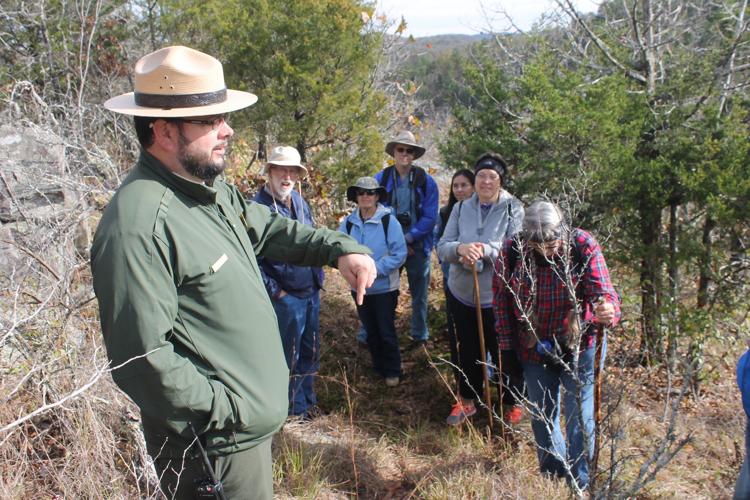
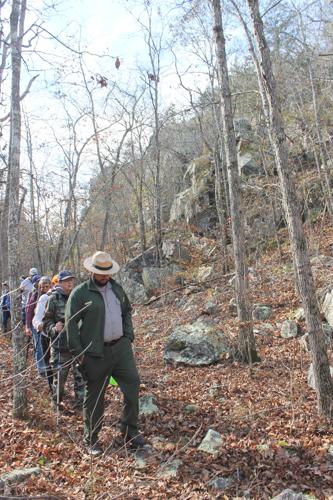
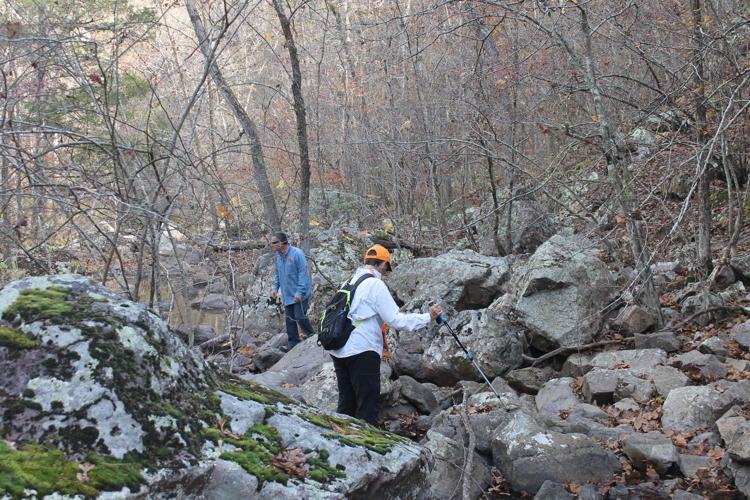
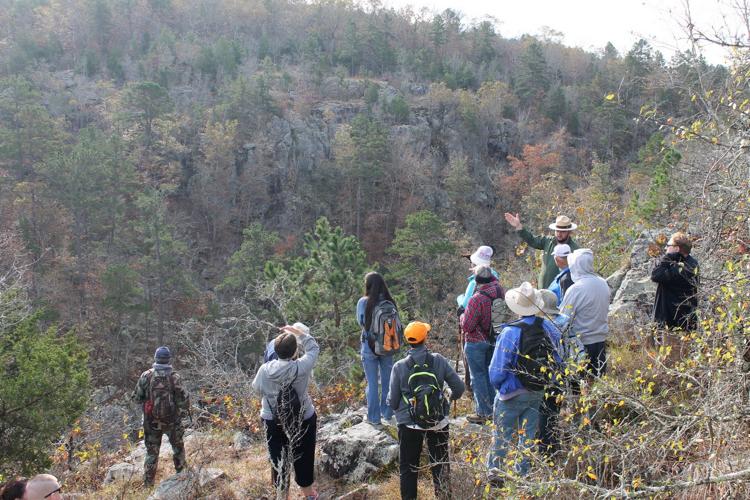
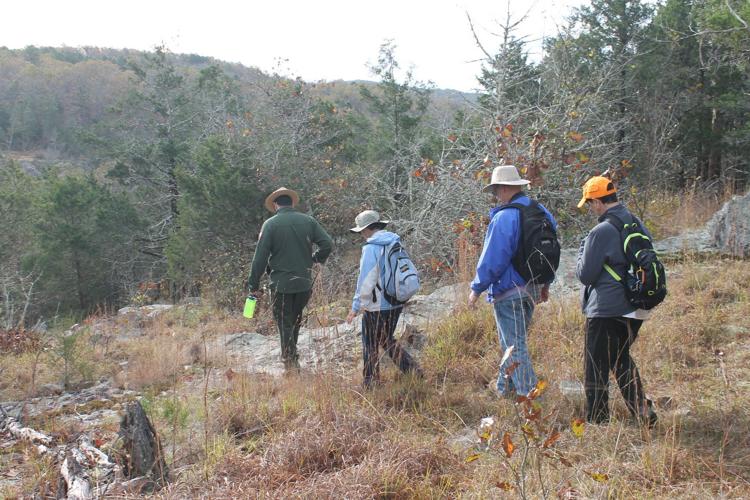
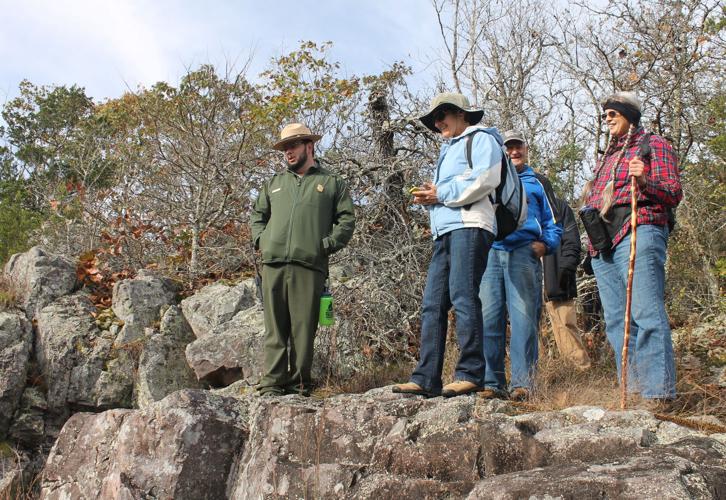
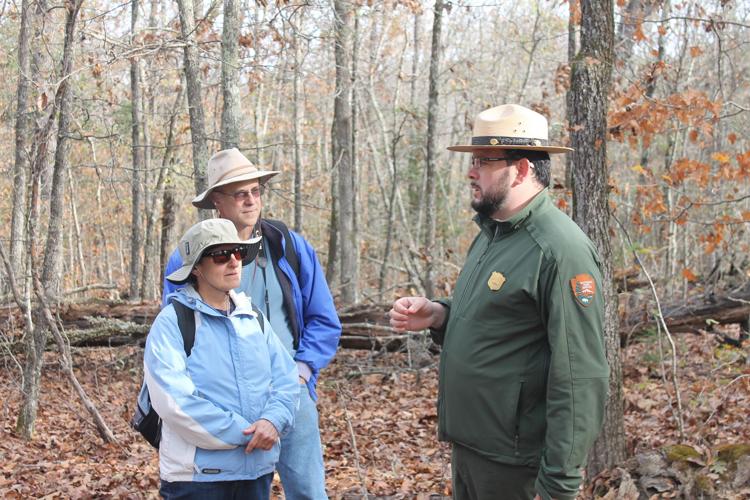
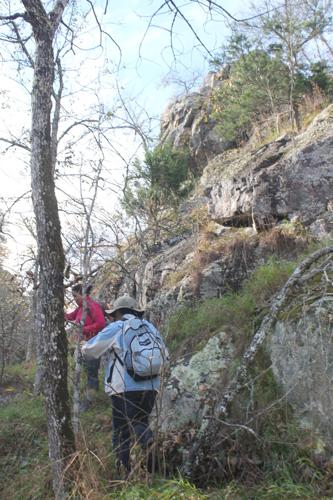
One of the most adventuresome destinations in the Ozark was on display earlier this month during a guided hike of Prairie Hollow Gorge in Shannon County. The hike was hosted by the Ozark National Scenic Riverways as part of the National Park Service’s ongoing 100th anniversary celebration. Park Ranger Josh Chilton led a group of 15 into the gorge, saying that it, and its surrounding natural area, are one of the region’s hidden gems.
“My family owns a cabin near the base of the gorge and I remember playing around and climbing in it as a kid,” Chilton said. “I didn’t know it then, but I was right in the middle of billions of years of geologic history and one of the highest concentrations of biodiversity in North America.”
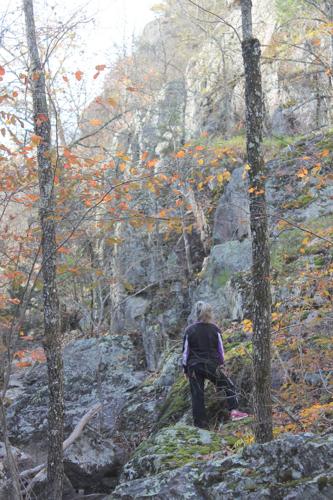
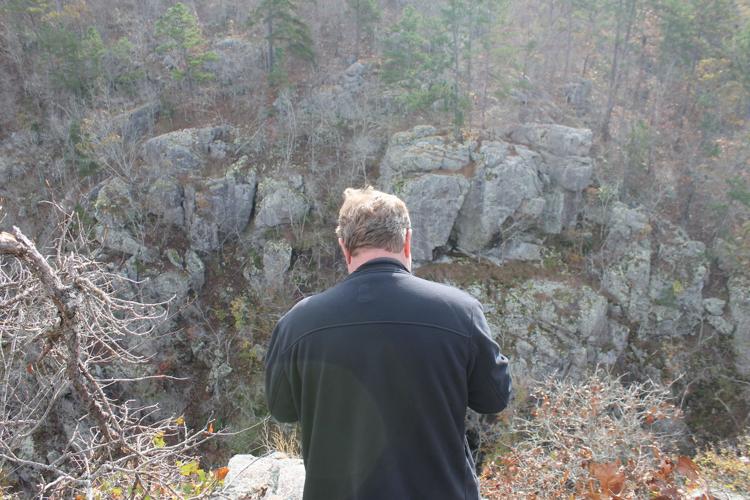
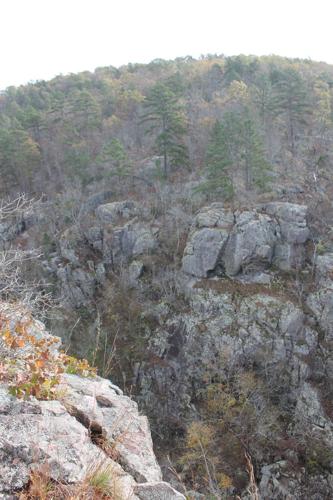
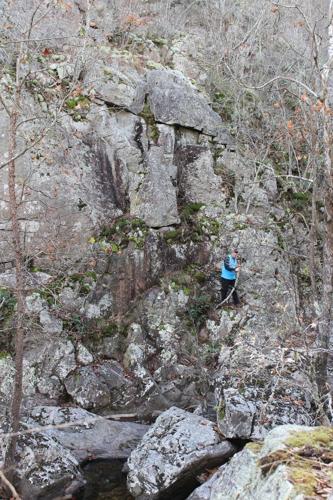
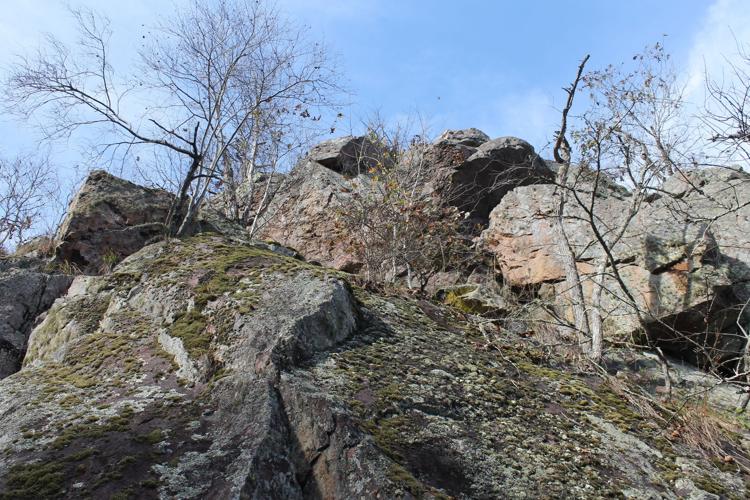
Prairie Hollow Gorge is a 300 foot deep cut in the Earth resembling a miniature canyon. From its edge, hikers can either stare down to waterfalls at the bottom, or look up to the summit of one of Shannon County’s highest points in Coot Mountain. Like the more famous Rocky Falls, Prairie Hollow Gorge is the remnant of a massive ancient volcanic eruption which poured a dense layer of rhyolite across the landscape billions of years ago. The gorge was carved out of the stone over eons by the humble Rocky Creek, which still today trickles through the pass.
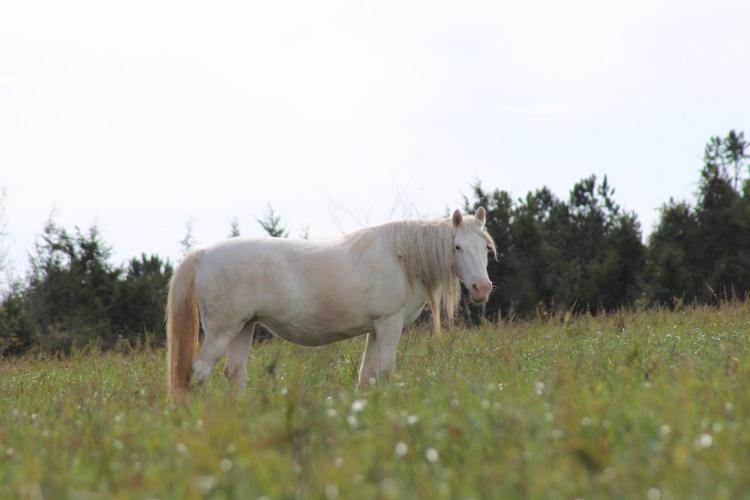
Surrounding the gorge is a patchwork concentration of hardwood forests, igneous glades and tall grass prairies all within a half-mile of each other. Each ecosystem boasts its own unique inhabitants. The most famous residents are a herd of Shannon County’s wild horses, who make frequent appearances in the gorge’s neighboring fields. Bald Eagles are also often seen in the vicinity and known to nest in the tall oaks and pines overlooking the gorge’s steep reliefs.
“This is a truly amazing place, many people have no idea that such a breathtaking view is nearby,” Chilton said. “I think Prairie Hollow Gorge is not very well-known outside of locals because best enjoyed in fall and winter when tourism on the rivers is at a lull. When all of the leaves are on the trees, you really don’t get the full effect of the grand vistas and views from the edge of the gorge.”
Chilton said local wildlife is another reason to avoid the gorge in the summer.
“During the summer months, snakes also love to lie on those rocks in the sun,” Chilton said. “We have a good population of rattle snakes here in the Ozarks, and a rattler is the last thing you want to bump into if you’re trying to maintain a three-point stance along the edge of the gorge to not fall in.”
Prairie Hollow Gorge is located off Highway V in Shannon County, south of the Two Rivers Campground at the confluence of the Current and Jack Fork Rivers. Its access road is unmarked and is the first right turn from northbound Highway V immediately after National Parks Service’s property marker. The gorge and the surrounding 74 acres are a designated Natural Area of the Missouri Department of Conservation. The site also falls within the easement of the Ozark National Scenic Riverways and it jointly administered by MDC and the National Park Service.
Visitors to the site have the ability to view its monumental features from either the top or bottom of the gorge by traversing two trails.
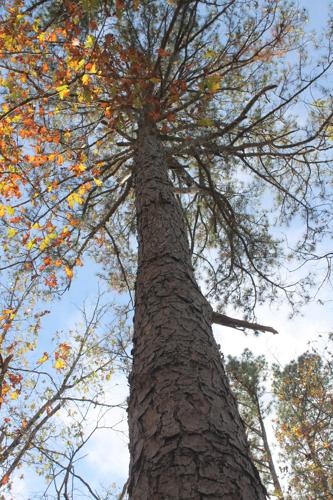
The trail to the gorge’s summit begins from the hilltop of the entrance road immediately after turning from Highway V. The path leads through the remnants of an old growth pine forest, with many of the towering short leafs thought to be survivors from before the widespread clearcutting of previous eras. Near the gorge, and forest transitions into an igneous glade, offering a setting of shrubs, grasses and wildflowers. Views from many vantage points are available from the gorge’s edge upon arrival, however, hikers should exercise extreme caution as the site is 100 percent natural and no handrails or other safety features are available to prevent potential spills.
The trailhead to the gorge’s bottom is a quarter-mile further down the entrance road and located immediately before the low-water crossing over Rocky Creek. Gnarled post oaks and cedar line the route under a patina of lichen, moss and fungi. The cool bottom of the gorge evidently presents the perfect climate for these specimens. Together they offer a one of a kind verdant collage ranging from dark forest green, to seafoam and chartreuse. Giant rhyolite boulders also litter the gorge’s bottom dwarfing hikers along the trail. A concentration of rocks in the center of the gorge crowd Rocky Creek’s flow of into several shut-ins. The creek’s trickle past these stones, and down short waterfalls, echoes against the gorge’s sheer rock face, filling the expanse with the relaxing sound of nature’s babbling.
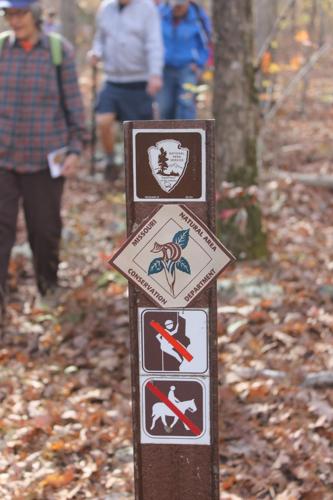
Prairie Hollow Gorge is open to the public, but its primary mission is conservation and not recreation. Horseback riding and rock climbing and not allowed within the natural area.