Hoping to grow the next generation of farmers, the Missouri House unanimously approved a bill Monday to create an optional agriculture education program for elementary schools.
“We need to educate and encourage growth in agriculture and spark that interest, both in rural and in urban areas,” the bill’s sponsor, state Rep. John Martin, a Republican from Columbia, said in a House debate last week.
The legislation would require the state’s education department to work alongside agricultural commodity groups to create instructional models and support schools that opt into the program.
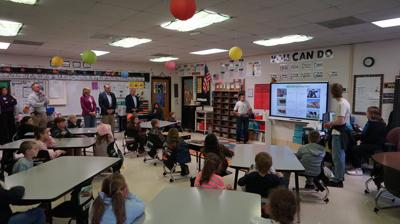
The idea builds on a pilot program that ran from 2020 to 2023, which gave teachers lesson plans and hands-on activities to teach students about growing crops and raising livestock. Groups like Missouri Farmers Care also run agriculture education programs in partnership with public schools.
The bill now heads to the Missouri Senate.
State Rep. Adrian Plank, a Columbia Democrat, has filed the bill since 2024, saying he hopes to get kids from “playing in the dirt” to “growing their own food” someday.
Plank said the bill will “combat” the loss of family farms, encouraging more children to take an interest in farming and join groups like 4H and Future Farmers of America.
State Rep. Willard Haley, a Republican from Eldon and former agriculture teacher, said he saw the decline in family farms through his students. At the beginning of his teaching career, “many of the students” had experience on the farm. But toward the end of his time in the classroom, students spoke more about their grandparents’ farms.
“With the student not being able to have that firsthand agriculture experience, (agriculture education) is more important than ever before,” he said.
State Rep. Yolanda Young, a Democrat from Kansas City, spoke about teaching kids in the city about growing produce. The children didn’t know where carrots came from, she said, so she helped them grow a garden.
“The joy on the faces of the children that actually got their hands in the dirt, planted seeds and saw their food grow,” she said. “It was just a wonder to see the kids eyes’ open, knowing where their food came from.”
The bill’s requirements are not subject to appropriation, meaning the state’s education department would be obligated to support the program even without state funds directed to it. The state’s fiscal note estimates that the program may not require any additional funds but could cost up to $119,000 annually for teacher training.