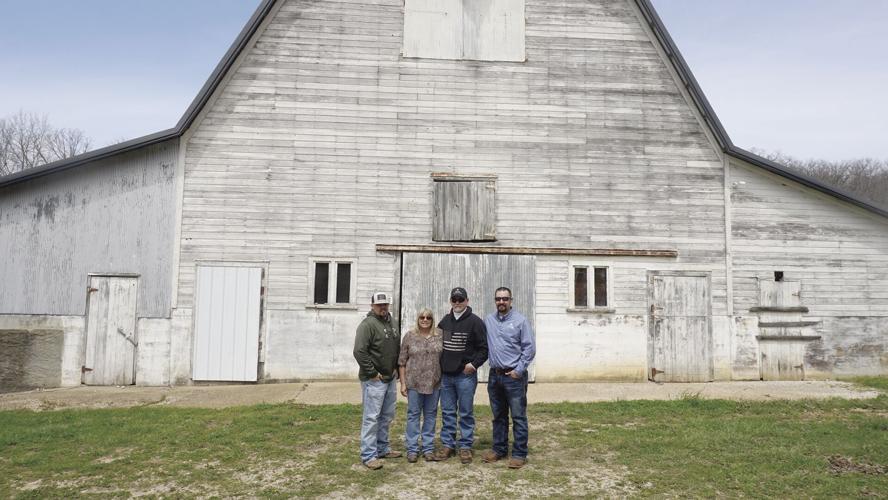
Josh Booker (son), Tana Booker (wife), Brent Booker and Nathan Booker (son) gathered together April 15 to honor Brent Booker’s final day managing the Wurdack Farm.
Wurdack Farm was one of the first places in the Midwest to adopt what is known in the academic world as “better grazing practices”, a form of field management designed to optimize the grazing capacity of land—sometimes making a single plot of land able to produce up to double the land’s carrying capacity compared to other common grazing practices.
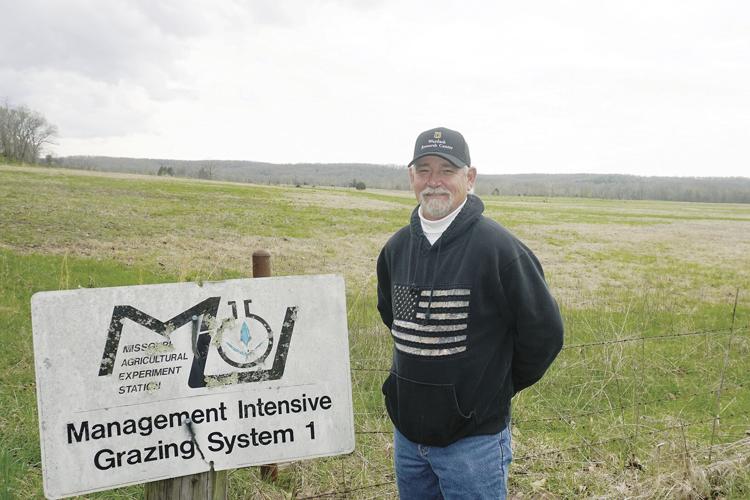
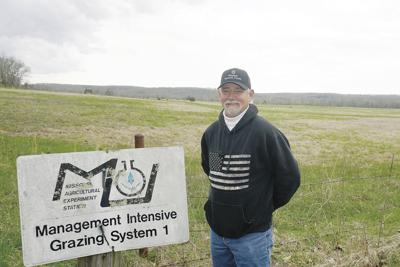
Brent Booker next to an old university sign—the branding used on the sign hasn’t been used by the university in decades and in many ways is a piece of history. Brent Booker was a big part of implementing “management intensive practices”.
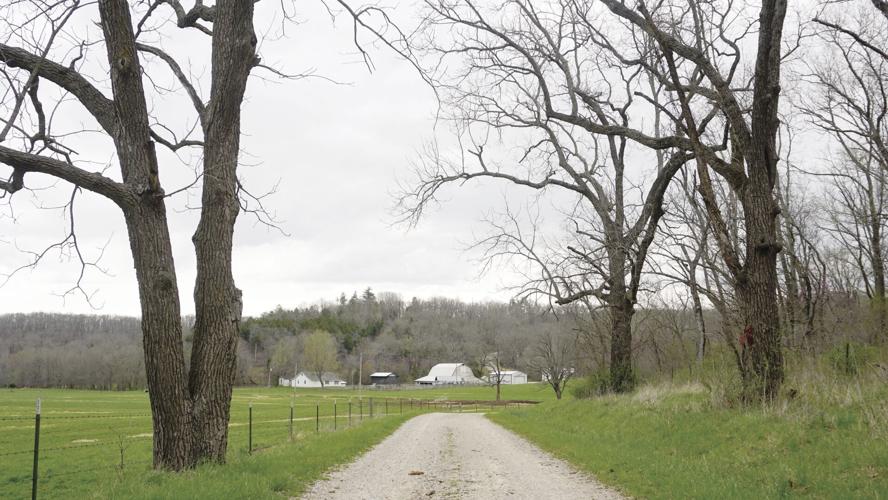
This view can be spotted when coming back from the fields on Wurdack Farm—Booker said that it will be strange to not have this view every day like he has over his many decades at the farm. “When you come down that hill, something grabs you,” said Brent Booker. “We see this place as a little piece of heaven,” said Tana Booker.
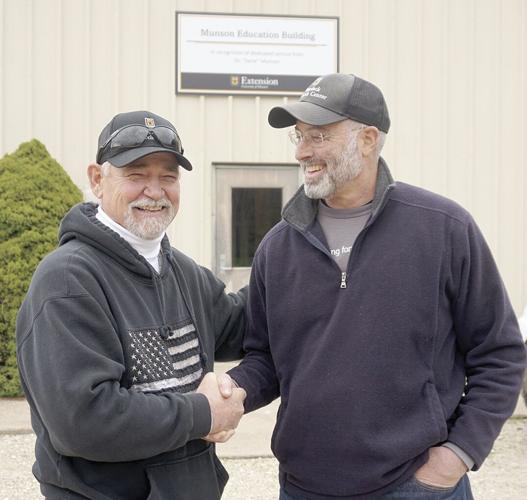
Wurdack Farm Manager Brent Booker and Wurdack Farm Superintendent Dusty Walter laughing together and saying their goodbyes to the farm and one another.
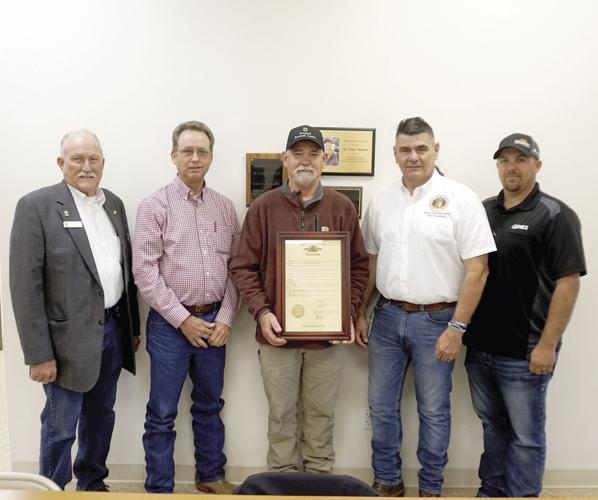
Retired Wurdack Farms manager, Brent Booker., was recently honored with a resolution. Attending the presentation were, from left, Leo Sanders, Crawford County presiding commissioner; Darrell Skiles, Dent County presiding commissioner; Booker; Ron Copeland, state representative; Wes Mobray, Dent County District One commissioner. You can find a feature story about Booker on thesalemnewsonline.com. Search for Booker retires from managing Wurdack Farm.
Brent Booker next to an old university sign—the branding used on the sign hasn’t been used by the university in decades and in many ways is a piece of history. Brent Booker was a big part of implementing “management intensive practices”.
This view can be spotted when coming back from the fields on Wurdack Farm—Booker said that it will be strange to not have this view every day like he has over his many decades at the farm. “When you come down that hill, something grabs you,” said Brent Booker. “We see this place as a little piece of heaven,” said Tana Booker.
Caleb Brubaker
Wurdack Farm has left an inescapable mark on the heart and soul of the man who was the heart and soul of the farm since 1986. Brent Booker never would have expected when he started at the farm in 1971 as a farmhand that it would have such a meaningful impact on him. Nor could he have predicted what sort of valuable impact that his management of the farm would have on the success of this experimental project.
The farm was acquired by the University of Missouri in 1962. Over the first 25 years, it was managed by a variety of different personnel and departments, largely for the purpose of animal sciences and, at one point, even serving as what Booker described as a retirement home for horses.
In 1986, the same year that Booker took over management of the farm, the aim shifted from animal sciences to a management committee composed of area extension and state extension/research faculties.
Booker’s ties to Wurdack largely began with his brother Vernon who worked on the farm in 1964 and later their brother, David, who managed the farm from 1969-73. Booker’s brothers each had some sort of tie to work on the farm. “It’s always been the university’s farm but, in a lot of ways, it’s kind of like a Booker farm,” said Booker wistfully, referencing the fact that not only has he invested decades of blood, sweat and tears to the farm, but it’s also the place that he and his wife, Tana, raised their two sons, Josh and Nathan.
Josh Booker (son), Tana Booker (wife), Brent Booker and Nathan Booker (son) gathered together April 15 to honor Brent Booker’s final day managing the Wurdack Farm.
Caleb Brubaker
When asked what it takes to do the sort of work that Booker did at the farm, Booker said, “This is not a job for just anybody, you’ve got to be a homebody,” he said, having only left the property when absolutely necessary over his more than 35 years managing the farm. “Something a lot of people don’t understand about Wurdack is that it operates just like any other farm,” said Booker. “If I want to buy a new tractor to work on the farm, I have to figure out how to pay for it using what I make for the farm,” said Booker.
“The farm manager position has been essential to Wurdack’s success,” said Dusty Walter, the Wurdack Farm superintendent. “[Booker] made this farm pretty self-sufficient,” he said. Booker spoke highly of Walter’s attentive involvement with Wurdack over their years. Walter made the trip down from Columbia to see Booker on his final day employed at Wurdack. Walter will also be stepping into a different role, so it was both he and Booker’s last day working at Wurdack.
As Booker drove around surveying the farm where he worked for most of his life, a bittersweet smile and a faraway look crept into his eyes. “This is the place where I learned it all,” he said, nodding matter-of-factly in a simple, yet profound way.
For Booker it’s been 24-hours a day, 365 days a year. He has been in charge of a litany of responsibilities and has had to be a jack-of-all-trades as he has done everything that needs doing over the years. “I didn’t look forward to weekends,” he said with a grin. “There’s always work to do on the farm.”
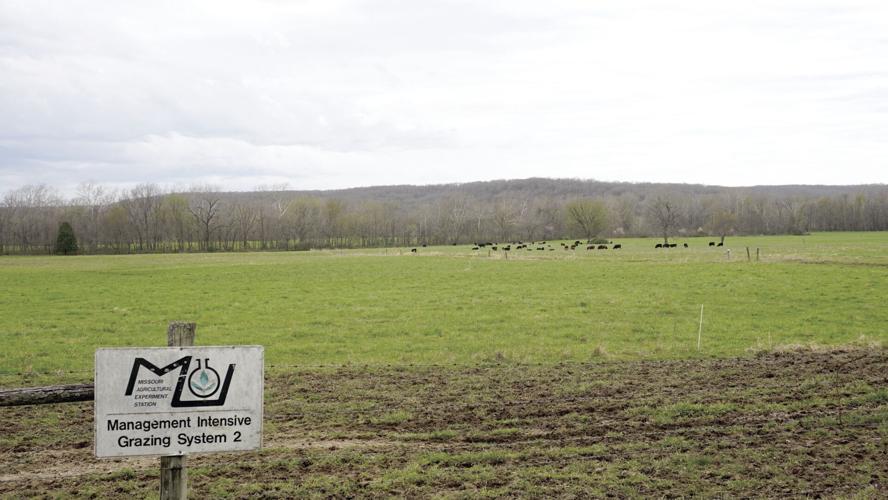
Wurdack Farm was one of the first places in the Midwest to adopt what is known in the academic world as “better grazing practices”, a form of field management designed to optimize the grazing capacity of land—sometimes making a single plot of land able to produce up to double the land’s carrying capacity compared to other common grazing practices.
Caleb Brubaker
Around the farm you can still spot old university signs sporting branding that hasn’t been used in decades. They show the history of work that Booker was a significant part of creating, including the implementations of “management intensive practices”.
Wurdack Farm Manager Brent Booker and Wurdack Farm Superintendent Dusty Walter laughing together and saying their goodbyes to the farm and one another.
Caleb Brubaker
“They started doing intensive grazing in New Zealand in 1983,” said Booker. It’s a practice where fields are partitioned off into smaller segments and herds are rotated to the best recovered field. “You double the carrying capacity by doing this,” said Booker. “This is what took this farm to another level,” said Booker’s son, Josh. Wurdack Farm was one of the first places in the Midwest to adopt what is known in the academic world as “better grazing practices”. This is a form of field management designed to optimize the grazing capacity of land—sometimes making a single plot of land able to produce up to double the land’s carrying capacity compared to other common grazing practices.
Booker said that he has gotten pretty efficient at moving the cows from one field to the next. “I can move these cows from one field to another faster than you can eat a hotdog,” said Booker. “That’s one of the things that always amazed me,” said Walter. “The cows know him and he knows them,” he said. “The farm and the Booker family have been a real blessing to me,” said Walter.
“We see this place as a little piece of heaven,” said Tana Booker of Wurdack. “It hurts to leave,” said Booker; a sentiment that Tana, Nathan and Josh all shared. Now, as the Dent County MU Extension takes over the farm, the idea is to use it to focus on applied demonstration of farming practices rather than the academic research pieces of the farm. According to Walter, this represents a sort of changing of the guard for Wurdack. “Wurdack has a lot of good history, and there’s a lot yet to be written,” said Walter. “This is a new chapter for Wurdack.”
Wurdack Farm Manager Brent Booker and Wurdack Farm Superintendent Dusty Walter laughing together and saying their goodbyes to the farm and one another.
Caleb Brubaker
Booker’s chapter at Wurdack has come to a close as his retirement leads him to his own property and projects on his own land; however, he will just a couple of miles away and his expertise on the farm will continue to be an invaluable resource in the chapters ahead. “He knows all of the little idiosyncrasies of the farm, and it’ll be a blessing to have him close by,” said Walter.
Retired Wurdack Farms manager, Brent Booker., was recently honored with a resolution. Attending the presentation were, from left, Leo Sanders, Crawford County presiding commissioner; Darrell Skiles, Dent County presiding commissioner; Booker; Ron Copeland, state representative; Wes Mobray, Dent County District One commissioner. You can find a feature story about Booker on thesalemnewsonline.com. Search for Booker retires from managing Wurdack Farm.
John Hewkin has been a sports fan since he was a kid. He’s played, coached and been a fan of sports. I was a sports writer for 15 years before moving back to Missouri, but to this day you will still find me in my man cave a lot of nights and weekends watching something that requires a ball.