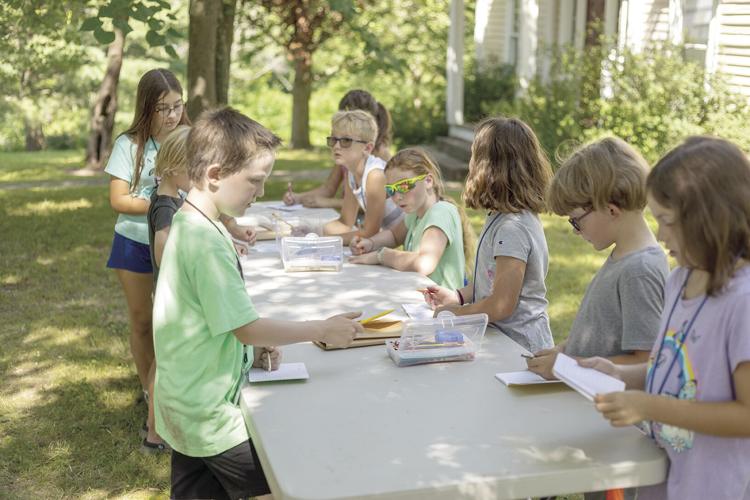
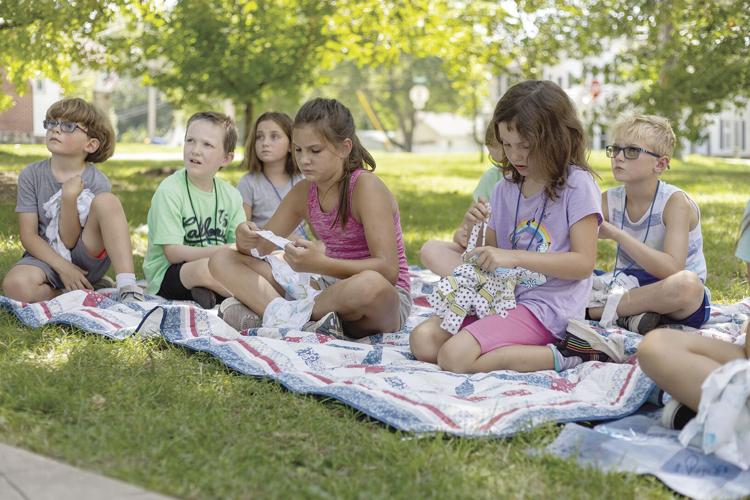
“If you corner a fox, give it a way out,” said the presenter. In the shade beneath the large trees in front of the historic Bonebrake Center of Nature and History in Salem, nine kids eagerly crowded around presenter Jim Dickerson as he pulled specimen after specimen from his storage tote. Dickerson, who works with the U.S. Army Corps of Engineers at Longview Lake, had brought a plethora of zoological specimens – from coyote skulls, to fox pelts, for kids to look at as he presented on the topic of mammals. He said many of the pieces were faithful anatomical replicas. The pieces that caused the most fervor amongst the young attendees were bat bones. Dickerson showed a bat wing, delicately attached to a board, before showing off the skull of a fruit bat, and comparing it to that of a vampire bat, which is smaller than one might expect. The kids crowded around him, eagerly examining the specimens, and asked questions.
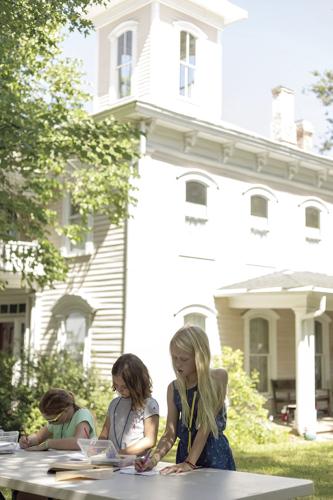
Dickerson’s high-excitement presentation was part of the Bonebrake Discovery Camp, which took place July 26-28 at the Center. A yearly program, Discovery Camp seeks to fulfill the mission of the Bonebrake Center, according to organizer Nancy Moenster.
“It’s cultural, historic, and nature, of course. The property itself is historic, the house was built in 1880, and it was part of a large property,” said Moenster. “[Discover Camp seeks] to follow our mission statement to educate, to give the kids an opportunity to learn about history, nature, and culture.”
Moenster praised the presenters for the program.
“We have wonderful people who will come and do programs,” she said. “[Bonebrake Board Member Janet Price] has a lot of contact with parks people to pull them in and do programs. And we’ve had some wonderful presentations here with the kids. They seem to have a good time, here.”
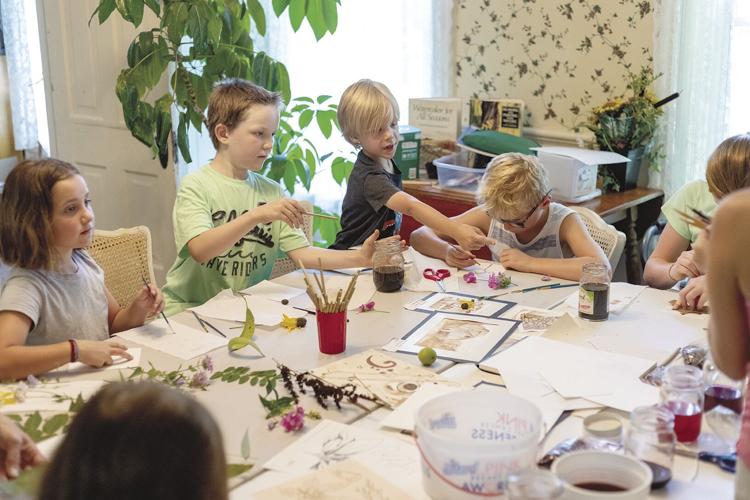
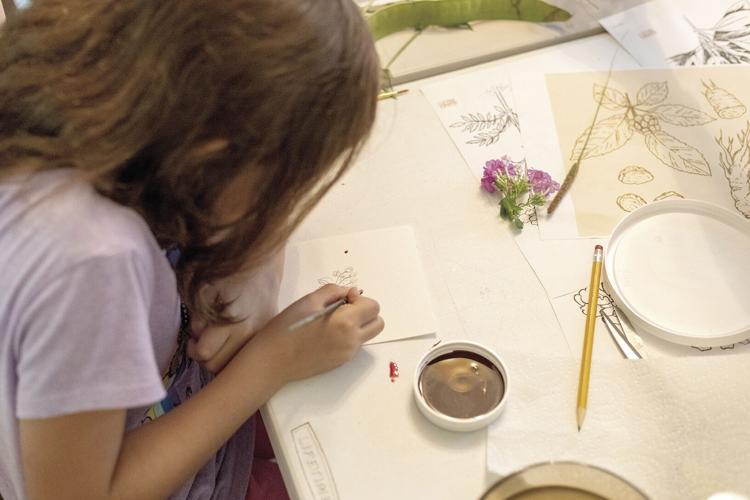
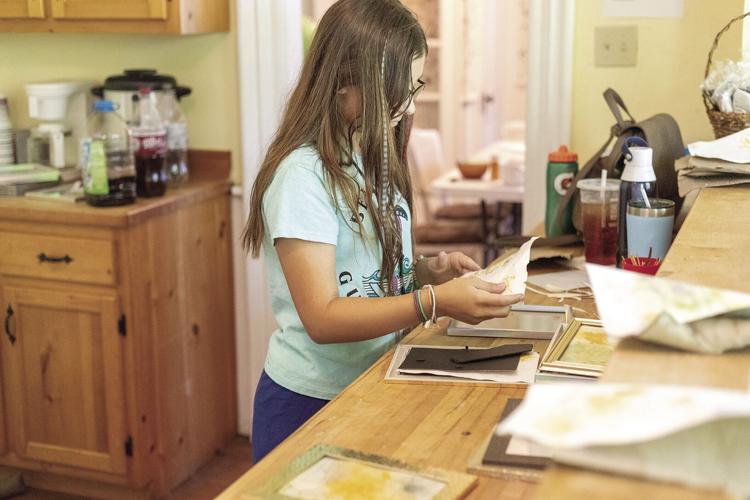
Throughout the week, kids took part in various activities, ranging from arts and crafts to music and even water gun fights to beat the heat. Presentations covered topics such as music, zoology, archaeology, and history. Kids had fun engaging with the subject matter. One presenter, Mike Duane, showed the kids how to make “rhythm sticks”. Using mostly natural components (mainly consisting of a stick), Duane showed the kids how to craft their own musical instruments, attaching bells and other accoutrements to their sticks as they wished.
Duane offered some advice to one attendee on how best to complete his instrument.
“You can’t have a rhythm stick with just one stick!” he said, smiling.
When the rhythm sticks were complete, Duane led the kids in a song about a duck that culminated in the kids yelling an enthusiastic “Quack, quack!” accompanied by their instruments.
Dickerson, who presented on mammals, traveled from near Kansas City. He said he could tell the difference in knowledge about the natural world between kids who grew up in the city and the kids in Dent County.
“Your kids know what I’m talking about. You can tell a difference between kids that are from the city core and the kids that are from the country a little bit. There’s a big difference in what they know and what somebody from the heart of the city knows,” said Dickerson. “Hopefully it gives them an appreciation for what’s around them.”
Another presenter, Cheri Low, who is a Seasonal Naturalist with Montauk State Park, had a special activity lined up for kids on July 27 – an archeological dig. Several authentic Civil War-era Minnie ball bullets had been buried for the kids to excavate. Sand flew and socks came off as the kids dug into the sandy spot, sifting for the elusive treasure with handheld screens. When the bullets had all been found, Low led a discussion about life during the Civil War – and how it differed from today.
“The goal of my presentation is to get kids to think that history is cool,” said Low. “History is important. I think the stories of histories are the most important for kids to grasp onto. Because that’s the part that they can relate to, that’s the part they’re going to understand, more than ‘the famous person that did the thing’. That’s usually what I’m trying to relate things back to. The stories of the lives, and how people lived, was different. Then, that gives context to the meaningful event,” said Low.