
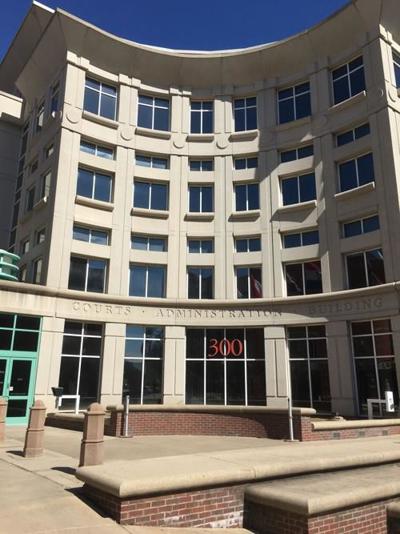
Three days of evidentiary hearings were convened in St. Charles last week as part of Donald “Doc” Nash’s habeas corpus petition to the Missouri Supreme Court. A jury in a Rolla trial found Nash guilty in 2009 of Judy Spencer’s 1982 murder in Dent County. Spencer was discovered strangled and shot by a shotgun at the old Bethlehem School site on March 11, 1982. Her Oldsmobile sedan was found later that day abandoned on State Route FF approximately 20 miles away.
Nash has since maintained his innocence while imprisoned in Bonne Terre, and his St. Louis-based legal team claims new evidence casts doubt on his guilt.
Nash was granted a preliminary writ of habeas corpus by the state supreme court last year so additional testimony could be taken to inform its decision whether to potentially vacate his 2009 conviction. The case reached the state supreme court after a 2018 evidentiary hearing was held in Farmington and similar habeas corpus petitions were denied at the circuit court and appeal court level. Nash’s preliminary writ is only the third time such an order has been issued by the high court in its modern history. Most recently, it ordered David Robinson released from prison in 2018 upon vacating his Audrain County murder conviction.
Retired 11th Circuit Judge Richard K. Zerr was appointed special master for the St. Charles proceedings and presided over the hearings March 3-5. Nash was represented by attorneys Charles A. Weiss, Steven Snodgrass and Jonathan B. Potts of Bryan, Cave, Leighton & Paisner. The state was represented by Assistant Attorney General Michael J. Spillane.
Family members from both the Nash and Spencer families attended the hearings and divided themselves on opposite sides of the courtroom. The Spencer family wore purple each day in remembrance of Judy Spencer and victims of domestic violence. Seated with the Nash family was Josh Kezer, who was previously convicted of murder in Scott County but later exonerated through efforts of the attorneys now representing Nash.
The question Zerr will ultimately weigh as a result of the evidentiary hearings is whether new evidence means it is more likely than not a jury would have reasonable doubt of Nash’s guilt. Zerr will next present a record of the hearings to the state supreme court along with findings of fact and recommendations. The state supreme court’s options include ordering its own briefing on the matter, agreeing with supplied recommendations, drafting its own recommendations or vacating Nash’s conviction. If Nash’s conviction is vacated, the state would have to refile criminal charges to bring the case back to trial.
Zerr ended the final hearing March 5 by saying he expected to forward his recommendations to the state supreme court in April.
Day One
The taped depositions of two highway patrol criminal investigators took center stage during the first day of the evidentiary hearings March 3. Their testimony focused primarily on forensic claims presented at Nash’s 2009 trial. Specifically, a hair washing theory presented to the jury which purported since traces of Nash’s DNA were found in fingernail samples taken from Spencer’s left hand he must be guilty of her murder given she’d washed her hair after last seeing Nash on March 10, 1982, and that would have removed any such foreign DNA from her fingernails.
The first appearance of that hair washing theory in the Nash case came in a probable cause statement developed by a three-member highway patrol investigation team. Played for the court March 3 were the taped depositions of Dorothy Taylor and Scott Mertens, who were each part of that team during its investigation into Nash. They testified the murder investigation was reinitiated in 2007 at the request of some of Spencer’s surviving family members. As part of their efforts, they said they conducted new interviews, developed a timeline, reviewed case reports and asked for the DNA testing of some evidence. After Nash’s DNA was found in the fingernail samples, he was arrested based on the probable cause statement drafted by the highway patrol team’s leader, Sgt. H. James Folsom.
Nash’s attorney Charles Weiss pointed to a key line from that probable cause statement which claims it was determined Spencer’s hair washing would have removed any foreign DNA from under her fingernails. Weiss asked Mertens and Taylor where that theory came from, how that determination was made and by whom. Neither could provide a definitive answer. Instead, they deferred to Folsom as the statement’s author and said they couldn’t recall specific details.
During the proceedings Nash’s attorney Steven Snodgrass explained Folsom’s absence from the hearing by saying he’d “dodged” a subpoena. After the March 3 hearing, Weiss told The Salem News that two different process servers were unable to present Folsom with court papers.
As part of the taped depositions, interviews of Mertens and Taylor were played which they recorded for the Paula Zahn CNN program “On the Record,” an episode of which focuses on the Spencer murder and subsequent Nash conviction. In her CNN interview, Taylor puts herself forward as originating the hair washing theory in saying “a light bulb went off” the moment she read a report detailing Spencer had washed her hair and that she had an epiphany that could have removed Nash’s DNA from her fingernails.
Taylor said she didn’t know what manner that hair washing took, but said her definition would not be a simple rinsing with water. Taylor affirmed she isn’t an expert in DNA analysis. She said she shared her idea with Folsom but didn’t know what Folsom based the determination in the probable cause statement on. Taylor said she didn’t believe the hair washing claim in the probable cause report was based solely on her idea. She said she felt the DNA evidence and hair washing theory were important to the case but also part of a greater whole of evidence against Nash.
Mertens is quoted in the CNN interview as saying the DNA evidence paired with the hair washing theory was “everything to the case.” In his deposition, Mertens described the other evidence against Nash as circumstantial in nature. When asked if Nash would have still been arrested without the DNA evidence, Mertens said he didn’t know.
Weiss also asked both Taylor and Mertens whether they coordinated their investigation with an investigation of the Spencer murder being conducted at the time by the Dent County Sheriff’s Office. Both said they couldn’t recall, but Folsom would have been responsible for any such coordination. Weiss told Taylor and Mertens the sheriff’s office had created a draft probable cause statement against Alfred “John” Heyer III, a person of interest whose fingerprint was found on Spencer’s abandoned vehicle. Both said they were unaware of that document but were aware of Heyer as generally being a person of interest for the case. Both also said they were unaware an unidentified male DNA profile has also been recovered from a shoe Spencer was wearing when she was murdered. Weiss said Nash was been eliminated from matching the DNA, as has the trooper who recovered it from the crime scene.
A memorandum by Mertens stating a DNA sample of Heyer was collected by Darla Spencer and Jeanne Paris in Illinois also came in focus March 3. It says the two told Mertens that Heyer said he was concerned a beer can or bottle he’d threw into Spencer’s car as trash may have his DNA on it. Paris, a sister of Judy Spencer listening from the audience, was called to the stand by Assistant Attorney General Michal J. Spillane soon after. She testified she did not recall such a statement being made to Mertens, and if so, she felt she would have remembered given its gravity to the case.
Former Dent County Chief Deputy Tim Bell was also called to the stand March 3 to present evidence he felt implicated another person of interest and lead him to believe Nash innocent.
Bell testified drag marks from Spencer’s body overlap tire tread impressions at the crime scene at the old Bethlehem School site. He said those tire treads are not consistent with Nash or Spencer’s vehicle and should be investigated further.
Bell also put forward a timeline of the day Spencer was murdered. He testified he didn’t believe Nash could not have pulled Spencer from her abandoned vehicle on State Route FF, murdered her and dumped her body at the schoolhouse miles away and then return to his apartment to make a phone call all within the one-hour timeframe required.
Bell further testified he believed the primary suspect should be Lambert Anthony Feldman III, then a UMR student working at a Rolla gas station. Bell said Feldman’s fingerprint was also on Spencer’s abandoned car and he had a criminal history which included arrests for stalking, sexual assault, exposing himself at Busch Stadium and drilling a peephole into a women’s bathroom. Feldman has since committed suicide in Quincy, Illinois.
Spillane entered a continuing objection to Bell’s testimony as hearsay and said the tire tracks may have simply come from the farmers who discovered the scene.
Nash’s daughter, brother and ex-wife also testified March 3 they never knew Nash to possess, own or fire a shotgun nor ever go hunting. Spencer was shot by a shotgun during her 1982 murder.
Day Two
Donald “Doc” Nash and an expert witness who helped convict him of murder took the stand March 4 during the week’s second hearing.
First called to the stand was Criminologist Supervisor Ruth Montgomery of the Missouri State Highway Patrol’s crime lab in Jefferson City. During the 2009 trial, Montgomery added credence to the prosecution’s hair washing theory that Nash’s DNA being found under Spencer’s fingernails was evidence of his guilt. Specifically, Montgomery testified hair washing would have had great effect on removing any foreign DNA from under Spencer’s fingernails. The prosecution later told the jury during its closing arguments that Montgomery testified all foreign DNA would have been removed by hair washing.
When questioned by Nash’s attorney Steven Snodgrass on March 4, Montgomery reaffirmed revisions she’s made to her 2009 testimony during a previous sworn deposition and 2018 evidentiary hearing in Farmington. Montgomery said she now believes hair washing would have some effect on removing foreign DNA or greater than no effect. She added her new opinion is more informed than her previous assertion and based on forensic research completed since the 2009 trial.
Montgomery said the presence of Nash’s DNA under Spencer’s fingernails was itself not significant given they were living together and romantic partners at the time. She said she could not say as to how much DNA would be removed by hair washing but enough could be present afterwards to identify Nash.
Montgomery said although she is an expert in DNA analysis she is unaware of research specifically into whether hair washing removes foreign DNA from under fingernails and hasn’t completed any such research herself. She said her trial testimony was based on her professional experience and in response to hypothetical questions. She said she was also unaware of what manner Spencer washed her hair, and only knows it took place at a kitchen sink.
Montgomery agreed with Snodgrass the prosecution misrepresented her testimony in 2009 by saying she claimed all foreign DNA would have been removed from under Spencer’s fingernails by her hair washing.
Montgomery said she could not recall how she learned Spencer had washed her hair. She added she could not account for how claims that hair washing would remove all foreign DNA from under fingernails came to be included in the probable cause report which led to Nash’s arrest. Montgomery said she could not recall any such conversations with the probable cause statement’s author, Sgt. H. James Folsom of the highway patrol. She said that assertion is inconsistent her opinion or her trial testimony.
During cross examination Assistant Attorney General Michael J. Spillane asked Montgomery whether the 2.5 nanograms of Nash’s DNA recovered from Spencer’s fingernails was a level expected from casual contact. Montgomery said that level was actually 10 times that of typical causal contact. On redirect, Montgomery told Snodgrass 2.5 nanograms is a level is consistent with romantic partners and could accumulate from repeated casual contact overtime.
Following Montgomery, a taped deposition was played from attorney Frank Carlson, who represented Nash during his 2009 trial and subsequent appeal. Carlson said at the time it didn’t register with him the opening and closing statements given by the prosecution put forth opinions different than what Montgomery gave in her pre-trial deposition or testimony. Carlson said he didn’t challenge Montgomery’s expertise because “junk science” was allowed in courtrooms all over Missouri and he wanted to instead impeach her on the stand. He said he could not recall whether he considered challenging Montgomery’s hair washing forensics expertise during the trial or subsequently appeal.
Spillane challenged the deposition by saying the 2009 jury had been properly instructed that attorney comments were themselves not evidence.
Nash himself took the stand to close the March 4 hearing. His testimony mostly focused on a highway patrol report documenting activity from the day Spencer disappeared. It states Nash told a trooper he went home after an initial search for Spencer and didn’t go back out. That report was later used as evidence against Nash as witnesses reported seeing Nash in Salem past the time the report states he stayed in. On the stand March 4, Nash told Weiss that report is false and he had continued searching for Spencer past the time the report says he stayed in, and that activity likely accounts for his being seen by witnesses.
Nash also disputed assertions in Folsom’s 2008 probable cause report that his hands were shaking when a DNA sample was taken and later when he was placed under arrest.
During cross examination, Spillane pressed Nash how the information he’d stayed in the night Spencer disappeared came to be included in the trooper’s report. After several back and forth interactions with Spillane, Nash said he didn’t recall saying such a statement but “it’s possible, but I don’t think I did.”
When asked directly by Weiss whether he killed Spencer, Nash’s response was “No, sir.”
Day Three
The final March 5 hearing focused almost exclusively on an alternative person of interest in the Spencer murder case. The day’s lone witness was Steven Lawhead, who investigated the Spencer murder on behalf of the Dent County Sheriff’s Office and who is veteran of the US Army’s Criminal Investigation Division at Fort Leonard Wood.
Lawhead said based on his investigation he didn’t believe there was probable cause to justify murder charges against Nash. He cited there was no evidence Nash owned a shotgun and he felt it was not likely Nash could have traveled to the site of Spencer’s abandoned car, committed the murder at the old Bethlehem School site and gotten back to his apartment in time to make a phone call within the one-hour timeframe required.
Lawhead said at the time the highway patrol arrested Nash in 2008 he was developing probable cause against Alfred “John” Heyer III, who at the time lived adjacent to where Spencer’s abandoned car was found on State Route FF. Lawhead said there were four pieces of evidence designating Heyer as a person of interest. He cited a primary piece of evidence is through his investigation a fingerprint found on the driver’s side window of Spencer’s car was matched to Heyer.
Lawhead later testified a theoretical psychological profile of Spencer’s murderer completed by the FBI’s behavior science unit has similarities to Heyer. Specifically, the profile stating the murderer had likely already spoken to law enforcement and left the area after the incident. Lawhead said after Spencer’s car was found on State Route FF, Heyer was observed by officers as watching the scene from his residence and told law enforcement he was unaware Spencer’s car had been abandoned nearby. A missing persons report was also filed for Heyer not long after Spencer’s murder indicating he’d left behind a wife, child and extended family members. Heyer was later discovered living in Illinois.
During a telephone interview, Lawhead said Heyer told him he didn’t go near Spencer’s car. Since Heyer’s fingerprint was recovered from the vehicle, Lawhead said he felt that inconsistency was a red flag. Lawhead added he felt statements made by Heyer during that interview could also be taken as admissions of guilt, such as investigators would need to “send a hitman” if they wanted to eliminate Heyer as a suspect, and they would have to “deploy a dragnet” if they wanted to see him during one of his visits to Salem.
Lawhead said he additionally interviewed a neighbor of Heyer who told him she believed he’d killed Spencer. Lawhead said that neighbor claimed she knew Heyer owned a shotgun because he’d used one to shoot a dog in her backyard. Lawhead said she also claimed Heyer would inquire if the murder was being discussed on a police scanner her husband possessed.
Lawhead concluded he was told by his superiors to cease his investigation into Heyer after Nash was arrested in 2008.
Spillane entered his strongest objection of the day when Weiss began questioning Lawhead about a newly resurfaced highway patrol investigation report which purports that upon retrieving a DNA sample from Heyer in Illinois, Darla Spencer and Jeanne Paris told an investigator that Heyer expressed concern to them his DNA may be on a beer can or bottle he threw in Spencer’s car as trash. Spillane pointed out Paris herself disputed that on the witness stand during an earlier hearing. Weiss responded he was entitled to question Lawhead about that report’s implications. Zerr allowed the questioning citing his mandate was to collect new information for the supreme court to weigh. Lawhead subsequently responded if he’d known of that report during his investigation he would have included its information in his draft probable cause report.
When questioned by Weiss, Lawhead said it was unthorough that a beer can and beer bottle recovered from within Spencer’s car weren’t seized as evidence or tested for fingerprints in 1982, nor five other beer cans found at the scene of the murder.
Spillane entered a continuing objection to Lawhead’s testimony as hearsay and not relevant. He also won several sustained objections for leading questions.
During cross examination, Lawhead told Spillane he did not have probable cause to arrest Heyer for the Spencer murder. Spillane further asserted there was no new evidence presented during the March 5 hearing, only the resurfaced report which he said was full of hearsay and not relevant.


