

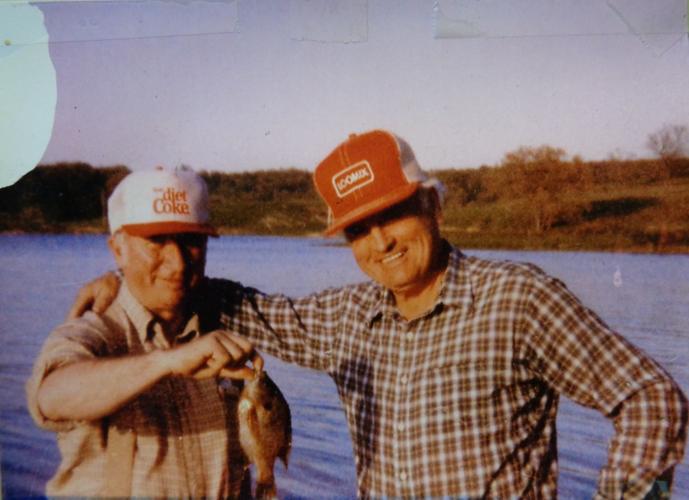

Not many individuals in life can say they’ve moved mountains or made history, but at least one Dent Countian can claim to have built a dam and spawned a legacy of fishing and recreation that will last generations.
Dr. Ted Ziske’s name now and forever will be tied to Ziske’s Lake, currently one of two in the Shawnee Mac Lakes Conservation Area, just a couple miles northwest of Salem off the old Dent’s Ford Road. The lake is 35 acres and serves as the foundation of the popular MDC site. Nearly everyone in these parts is familiar with the lakes, and enjoys their fine waters, however, lesser known is the inside story of how the lakes first came into being.
Ziske is always ready to share his namesake’s history. Today, he’s more than 90 years old, but remembers the lake’s pioneer days like they were yesterday. This profile is dedicated to preserving his memories.
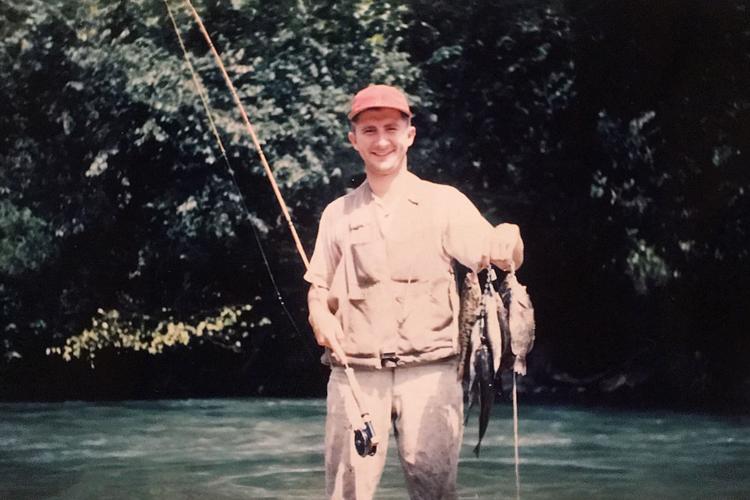
“I was different than most children. I sort of earned my living as a youth up and down Spring Creek,” Ziske says, remembering his first experiences growing up in the area around where the lake now sits. “I had a fishing business, a frog business, a turtle-collection business. Charles Grosse and I spent all of our time on Spring Creek. We probably didn't know a football from a basketball.”
From these humble beginnings, Ziske learned the lessons of life that have allowed him to thrive. After graduating from Salem High School in 1944, Ziske found his career in dentistry while assigned to the navy’s Dental Corps during World War II. Thereafter, he came home to open a professional dental clinic.
"When I came here, I was the only dentist in this town,” Ziske says laughing. “And there was no dentist in Shannon or Texas County. So I ran a field hospital. And was busy 10 hours a day, out there just working as hard as I could. I was so happy to be a dentist, but sometimes I didn't even have time to charge people. And they're not at all that way anymore.”
After many successful years, Ziske looked to reacquaint himself with the Ozark wilderness of his youth and purchased 94 acres of land on which the Wingfield Branch flows into Spring Creek. Three men sold him the land: Lewis Rogers, Tommy Jones and Jim Hodges.
“It was like a Garden of Eden,” Ziske says. “This beautiful little spring came up with a living creek. It was sort of a maze of little pools of water and lots of frogs, fish and everything else.”
Ziske enjoyed many fond hours of recreation and hunting on his new land, however, he then had an epiphany in the form of a quail hunt.
“I was out there quail hunting with Clark Wines, who was an earth-moving contractor,” Ziske says. “No one around here would ever build a dam or do anything unless they asked Clark Wines. And he and I were hunting out there and I asked him, I said, ‘Clark, I wonder if we could build a dam here.’ So he walked up to the bank, and there was a groundhog hole there. He stuck his arm down in the groundhog hole, pulled out a handful of red clay and said, ‘Ted, this would be a perfect place to build a dam!’”
At that moment, Ziske was struck by a big dam dream. Constructing the dam cost about $20,000 at that time. The work was completed by Wines as well as David Smith and Earl Dean Smith. Willy Frizzell removed the trees with a crosscut saw along with Ziske’s help. Ziske also helped Wilson Young harvest the cordwood. The dentist further became an amateur forester, planting many of the pine trees that still to this day shade the lake's edges.
“They dug a 10-foot deep trench, right where the dam was going to be. Cleaned it all out,” Ziske says. “Then (they) hauled that clay in there and built a wall of clay right up in the middle of it. That's THE way to do it. It can't leak. When they were digging that 10-foot trench, they had a dragline. You know what a dragline is? It's a device that throws a bucket out on a cable and pulls in the dirt. See, in that trench, they couldn't get a bulldozer in there because it would've torn it up and the water would have gotten in. So they used a dragline. What did they find in the bottom of that trench, but a six-inch Clovis point (ancient spear point). And I was there when they pulled it out. It was 10 feet under the surface.”
As for the lake.
“I always point out that God brought us the lake with rain, all I did was build the dam. It took about a year to fill up. Then there we were with a 35-acre lake,” Ziske says.
After its construction, Ziske’s Lake boasted bass and large bluegill that already existed in several spring pools on the property. They were later joined by crappie brought in from Bull Shoals Lake.
“Some fish pulled out of the lake have been weighed to be more than 10 pounds,” Ziske says. “The largest catch I am aware of belongs to Sandy Ball – who reeled in an 11-pound, four-ounce bass around 1970.”
Throughout the 1970s, the area became a popular destination with anglers and local youth.
“I see some little kids running around sometimes and I think, that child might have been conceived out at my ex-lake,” Ziske says.
In the late 1970s, Pete Turner bought land just west of Ziske’s Lake and built another dam that created a second 20-acre lake, now called Turner Lake.
In 1982, the Missouri Department of Conservation acquired both lakes and the surrounding area to christen the Shawnee Mac Conservation Area. Ziske opted to donate his share of the land. He also sold a second parcel to MDC years later.
Ziske says throughout the years he’s been asked many questions about the lakes.
“To answer the most common inquiry – the lake is 16 feet deep,” Ziske says.
As for Ziske Lake’s lone island, Ziske says it was built for duck hunting. Its structure is his children’s old swing set which was used as a blind.
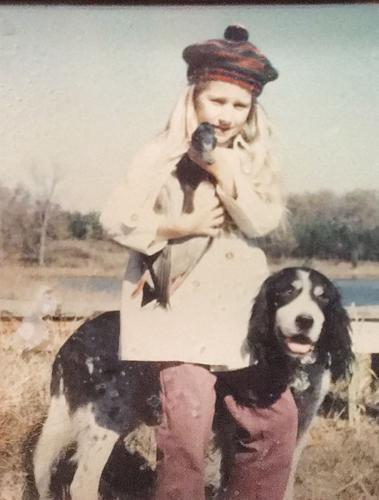
“One question I get a lot is, ‘Why the name?’ Well, it’s after Mac, the best birddog I ever had,” Ziske says. “When the conservation department took it over we discussed what to name it, and we decided to name it after Mac, my bird dog, and after the Shawnee, who I am told were the Indians who used to live there.”
Today, Mac is buried at a peaceful location on the property, but he’s not the only good soul finding serenity there. The Shawnee Mac Lakes are, and thanks to the gorgeous walking trails surrounding them, sure to remain a popular nature getaway for Salem and Dent County residents for years to come. Maybe even a few younger boys will take up Doc’s ol’ crawdad and frog business enterprise yet again.


