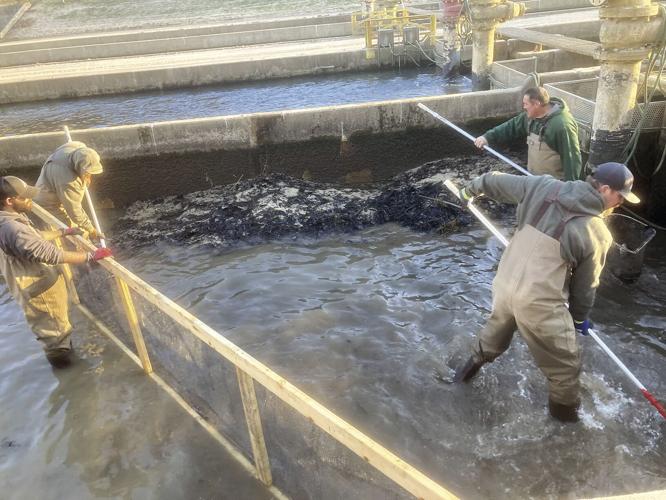
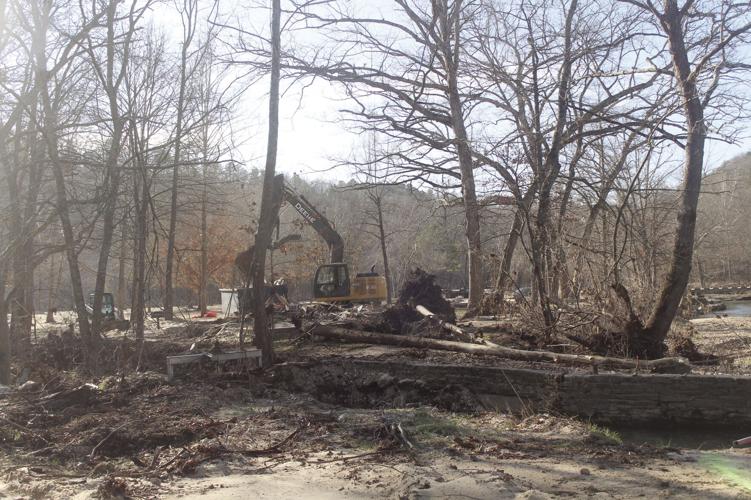
When presented with a disaster of this magnitude, hatchery staff were intimidated but knew there was a job to do. Since the day of the flood, daytime and nighttime workers began the long process of cleaning up debris and repairing the infrastructure of the hatchery.
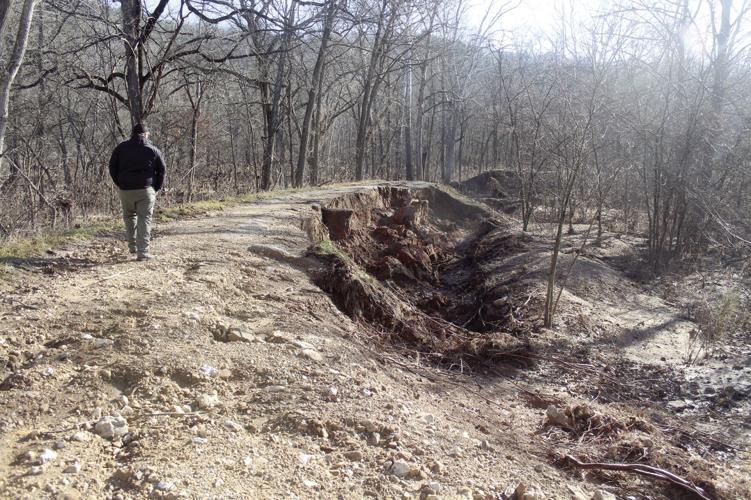
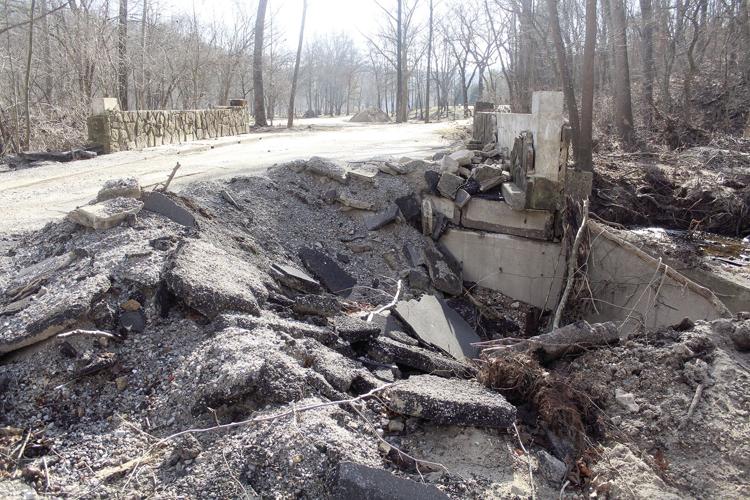
The Lake Loop Trail was originally built as a levee to help in case of flooding and served as both a walking trail and service road. It was severely modified by the flood—causing the levee to cave-in on itself, as seen here. More chunks of rock have fallen off since the flood.
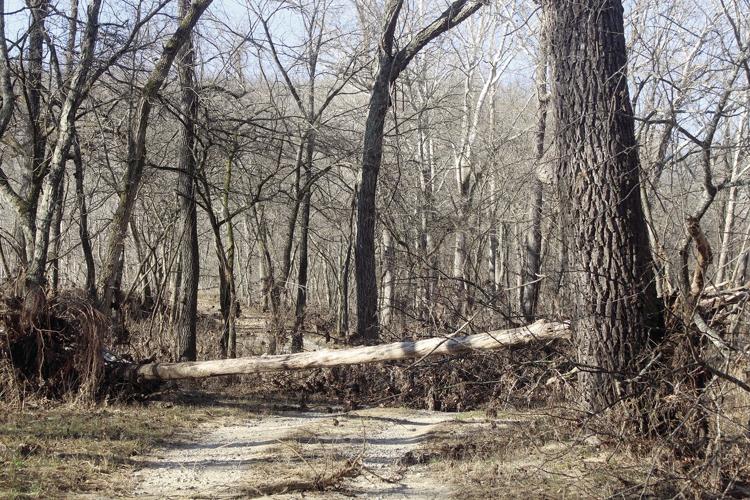
Trees are downed throughout the park, blocking what used to be clear hiking trails and service roads. The velocity of the floodwater completely uprooted trees.
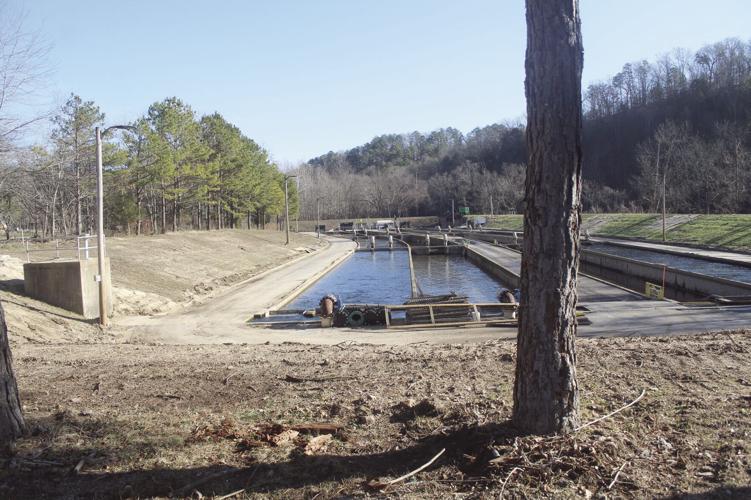
There’s a chain link fence that’s missing from this photograph. It used to line the entirety of the hatchery here, but it was balled up like aluminum foil by the strength of the flood.
The sight of Cabin 7 and 8 being demolished was difficult to witness but understood as necessary. Both cabins were beyond repair—the flood had stripped them of everything but fragments of roof and studs.
Bridge collapses aren’t a rare sight throughout the park following the flood and only adds on to the amount of repairs needing completed to ensure infrastructure is ready for visitors. This bridge connects loop three to loop four of the park.
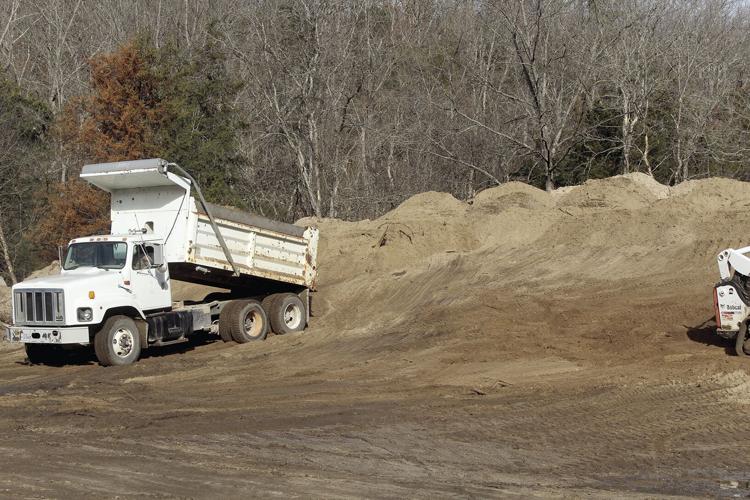
Wonder where all the sand went off to? The sand deposited by the floodwaters is being painstakingly gathered by staff and relocated deep in the park next to other gathered flood debris. Ideas for what to do with the giant pile of sand is still being discussed by staff, with some floating ideas of using the sand in winter weather events.
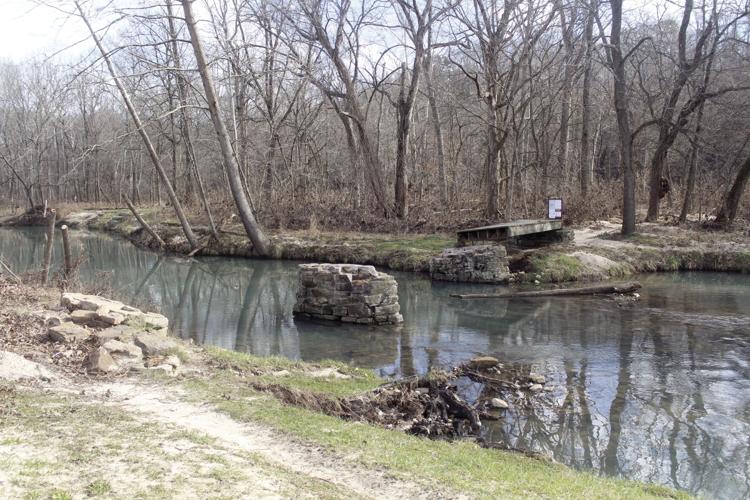
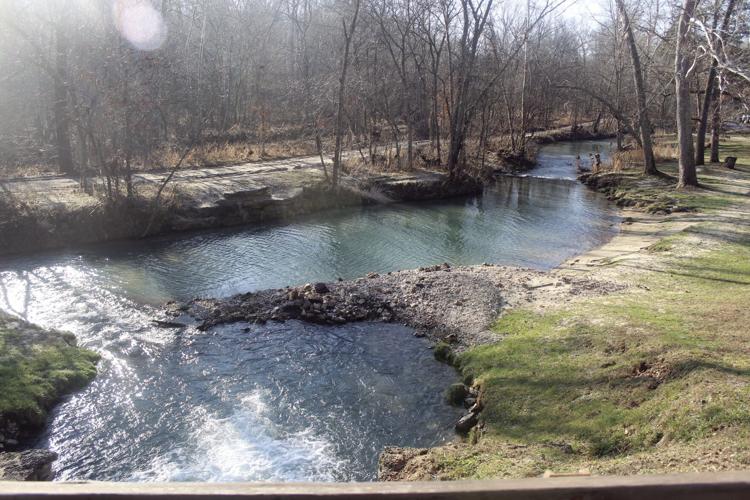
The long familiar sight of Montauk’s springs have been altered with the shifting of gravel and sand from the flood. The gravel bar here at the CCC Spillway, for example, is new. Future visitors to the park are advised to watch their step, as water depths have drastically shifted.
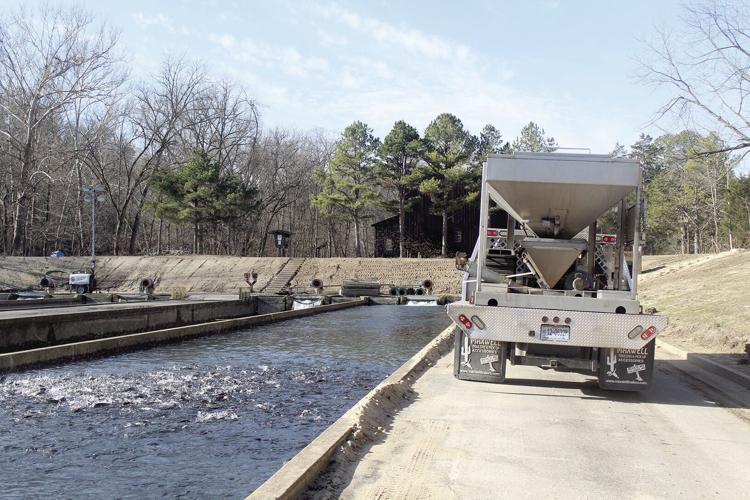
As the job of grading the trout is still underway by park staff, the exact number of fish in the hatchery is only a guess. What is typically a mathematical process to ensure fish are given the exact amount of feed to ensure their health is now an estimation until the number of fish at the hatchery is known.
When presented with a disaster of this magnitude, hatchery staff were intimidated but knew there was a job to do. Since the day of the flood, daytime and nighttime workers began the long process of cleaning up debris and repairing the infrastructure of the hatchery.
Submitted photo
Trees are downed throughout the park, blocking what used to be clear hiking trails and service roads. The velocity of the floodwater completely uprooted trees.
Photo by Nick Stogdill
The sight of Cabin 7 and 8 being demolished was difficult to witness but understood as necessary. Both cabins were beyond repair—the flood had stripped them of everything but fragments of roof and studs.
Photo by Nick Stogdill
The long familiar sight of Montauk’s springs have been altered with the shifting of gravel and sand from the flood. The gravel bar here at the CCC Spillway, for example, is new. Future visitors to the park are advised to watch their step, as water depths have drastically shifted.
Photo by Nick Stogdill
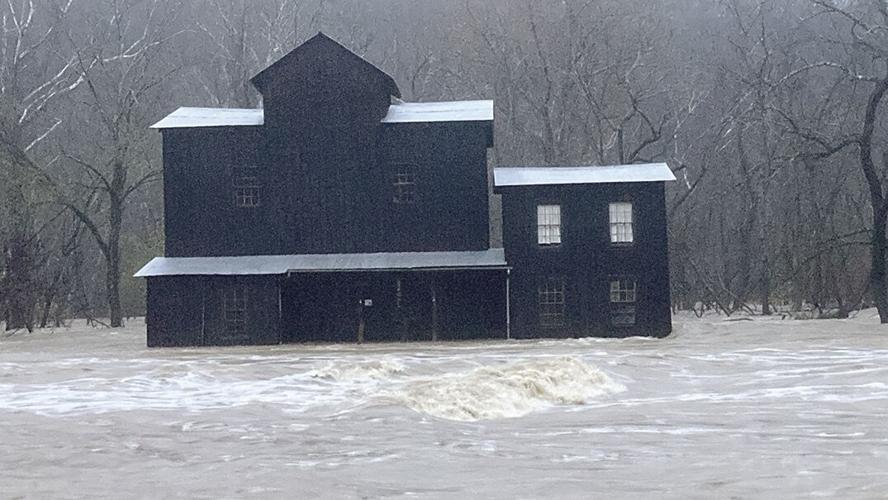
The Montauk Mill has stood the test of time, indeed. It stood against the flood of 2017, and the flood of 2024.
After a surprisingly dry October, November came—and it was like all the rain that was meant to be released over the course of October had built up in a bucket and was finally poured all at once over Dent County—and Montauk State Park. That evening of Monday, Nov. 4, 2024, freshly appointed hatchery manager, Kyle Case, was thrown into a storm never seen before, not even comparable to the storm of 2017. The total height for the 2017 flood was 13.85 feet. For the flood of November, the river’s total height was 19.58 feet, according to the USGS.
The night of the flood
That night of Nov. 4, Case was at the park when things took a turn for the worst. Five hatchery staff members were present when the floodwater came, recalled Case. Two of them were at the hatchery’s main office, and three were at the Mill’s rearing pools, including himself.
When it’s predicted to rain over two inches, park staff monitor the main drainage every hour. Not only are they monitoring the main drainage, but they’re also monitoring weather satellites and rain gauges, all to ensure staff and visitors’ safety, as well as to ensure fish’ health. Montauk’s drainage is up C Highway about seven miles north of Licking—staff, both hatchery and DNR, have to physically check the drainage every hour so they know exactly how high the water is and how high the water will be when it eventually gets to the park during a heavy rain event.
One staff member was sent home after working from 2 p.m. Nov. 4 to 2 a.m. Nov. 5. On his way home, he went to check the rain gauge to discover it was completely underwater. It was then that Case and the other staff began to suspect that something even worse than what had hit in 2017 was coming.
The Mill’s rearing pool system was completely lost at 4 a.m. Nov. 5. Three different pumps had been running overtime to manage the rainfall and runoff but were overwhelmed, due to how fast and how hard the rain was coming down. Before staff could think, the river rushed through the chain link fence surrounding the Mill’s pools. As the fence was breached, Case activated one last pump—a 24-inch diesel pump. In that moment, the water had rose rapidly from ankle-deep to knee-deep, forcing the team to jump in their trucks and evacuate to the park office.
Pumps were left running as conditions became too dangerous with power still live in the water. By 4:25 a.m., recalled Case, the river had overtopped nearby levees, and at its peak at 5:30 a.m., the floodwater rose three feet above the levees. Staff were stuck at Montauk from midnight to 3:30 p.m. Tuesday afternoon.
Immediate aftermath
That morning, staff discovered mountains of sand, debris, and ruined infrastructure throughout the entirety of the park. If roads weren’t covered in debris, asphalt had been torn off from the velocity of the water.
Bridge collapses aren’t a rare sight throughout the park following the flood and only adds on to the amount of repairs needing completed to ensure infrastructure is ready for visitors. This bridge connects loop three to loop four of the park.
Photo by Nick Stogdill
During the storm, the hatchery office was completely flooded. The brood stock even took a field trip through the building—Case showed videos of them swimming through the breakroom. Everything staff were able to salvage from the office, supplies and gear, were moved into a container that now sits outside of the main hatchery office building. Everything else was completely lost and had to be discarded.
The basement of the building, where staff used to be able to raise thousands of eggs to three-inch fish, went completely underwater during the flood. Staff are unable to do anything in the basement due to how much of the infrastructure needs replaced, including wiring. Hatchery staff were unable to enter the office due to a previous inspection, even before the flood, revealing asbestos in the insulation, which was already slotted for removal.
Many roads that staff would utilize for nightly stocking or visitors would use for hiking were washed away. If a trail did survive, trees were uprooted and downed over the path. One such road, the Lake Loop Trail, was severely altered—large chunks were washed away, leaving several deep gorges along the path, one even filled with water. Since the flood, more chunks of the trail have fallen, reported Case.
The Lake Loop Trail was originally built as a levee to help in case of flooding and served as both a walking trail and service road. It was severely modified by the flood—causing the levee to cave-in on itself, as seen here. More chunks of rock have fallen off since the flood.
Photo by Nick Stogdill
Many preventative protections were lost during the flood, such as the water pumps. Rental pumps have been brought in since.
Work has been consistent throughout the day and night. Staff have since hauled over 200 dump truck loads of gravel and sand from the rearing pools, deposited by the floodwater. Cleanup efforts do not quit when the sun goes down—night shift staff continue the efforts of the day, with floodlights brought in for them to continue cleanup.
Wonder where all the sand went off to? The sand deposited by the floodwaters is being painstakingly gathered by staff and relocated deep in the park next to other gathered flood debris. Ideas for what to do with the giant pile of sand is still being discussed by staff, with some floating ideas of using the sand in winter weather events.
Photo by Nick Stogdill
The day after the flood, staff had to shift gears from rearing fish to cleaning up the pools. Staff had to focus on what was most important first to tackle the task laid before them—getting the rearing pools back was number one on that list. They began cleaning them out and returning normal water flow.
“It’s like eating a whale,” said Case, on cleaning the hatchery. “One bite at a time.”
As of Dec. 27, shared Case, all of the Mill’s rearing pools are completely free of flood debris. Staff are now at the point where they can focus cleanup efforts on washing down the roads rather than getting the pools back into working order.
There’s a chain link fence that’s missing from this photograph. It used to line the entirety of the hatchery here, but it was balled up like aluminum foil by the strength of the flood.
Photo by Nick Stogdill
Effects on the statewide hatchery system
In a normal year without any surprise historical flooding events, hatchery staff would be spawning fish in December. Winter is also a time for staff to do much-needed maintenance throughout the hatchery. Even if it’s 5-degree weather, the fish still need fed, and the pools still need cleaned. The work doesn’t end for hatchery staff.
“We spawn our own brood stock here from September through the middle part of December,” said Case.
They raise fish from itty-bitty eggs to stocking-sized trout which is a year-long process—not seasonal, despite what some may think. There are staff at the hatchery 24 hours a day, 365 days a year working around the clock to raise trout for stocking statewide.
In fact, staff had just sent out 12 trucks that had over 10,000 fish to areas across the state in October. On Nov. 1, four more trucks were sent out with approximately 5,000 fish on them.
Montauk is the hatchery that normally stocks the St. Louis winter trout lakes. Bennett Spring would stock the lakes in the KC area. Bennett Spring, at the time of the storm, was shut down for major renovations; thus, Montauk was appointed to stock the lakes in KC, as well.
“That’s where we, as a hatchery system, work really, really well as a statewide system,” emphasized Case. “The fish that are raised at Montauk don’t just go to Montauk—they’re raised for the people of the state of Missouri, for the waters of the state of Missouri.”
When you have a hatchery that’s shut down for renovations, like Bennett Spring, or a hatchery that gets hit with a major flood, like Montauk and Meramec, the statewide system really comes into play. The fish are still on hand, they just come from a different source. Montauk’s role in that system was completely halted due to the flood’s magnitude.
After the water finally receded to “normal”, fish were swimming every which way to find freshwater. The ones that were still alive in stagnant water were salvaged by staff, if they could get to them before the eagles took advantage of the disaster. Fish that were normally separated by size were all intermingling.
Staff are currently completing the process of counting the fish they have on site, a long and arduous process, in order for the hatchery to fully grasp the role it can play in the statewide hatchery system.
In the meantime, that staff is without a hatchery room, warmwater facilities in Warsaw and Mount Vernon are raising trout eggs that were originally intended to come to Montauk. Those eggs are being raised to three-inch fish, which are then being brought back to Montauk to be raised further. Just recently, Montauk was able to take in 220,000 three-inch fish; 120,000 were taken in from Lost Valley and 100,000 were taken in from Shepard of the Hills. Another benefit of a statewide hatchery system that all work together to keep Missouri’s waters stocked.
Biologists of the park assisted in recapturing smaller fish that had traveled outside of their regular pools. Staff have done seining, normal netting, electrofishing, and have even brought specialized boats to recapture all the fish lost. Thousands have been brought back, but efforts are ongoing.
Since the pools are back in order, staff are currently in the process of grading fish. Water forces the fish to swim upstream, where they’ll find their path obstructed by screens with gaps that allow the smaller fish to pass through while holding back the larger fish. This allows the fish to separate by sizes passively as the fish naturally swim against the current. Staff may push the fish to encourage the upstream swim, but if they push the fish too much it may stress the fish out, resulting in death. In the interest of preserving what stock they have, staff don’t want to rush the process—meaning the grading process requires a whole lot of patience.
After the fish are graded according to size, a truck will be brought in with a crane scale and net. A basket of fish will be weighed and, according to that weight, the fish are counted. A pool of 30,000 fish may take up to three days to grade. After all fish have been graded and counted, the hatchery will finally be able to tell exactly how many fish they still have on site and how many were lost.
Before the flood, the hatchery had approximately 850,000 fish, reported Case. It’s still unknown how many fish are left remaining in the hatchery production systems after the flood.
As the job of grading the trout is still underway by park staff, the exact number of fish in the hatchery is only a guess. What is typically a mathematical process to ensure fish are given the exact amount of feed to ensure their health is now an estimation until the number of fish at the hatchery is known.
Photo by Nick Stogdill
Future recovery
Montauk has submitted a flood assessment packet containing hundreds of pictures to determine what was damaged, needs replaced, and what all of it may cost to SEMA/FEMA. Just the hatchery portion of the flood assessment packet, revealed Case, was 240 pages. With this level of damage, it’s to be expected that there are processes to go through to make repairs. It’s taxpayer dollars, so all the T’s and I’s must be crossed and dotted, accordingly.
“There's a lot of folks that are upset that the park is closed—that they can't come down, walk around the park, see the bald eagles and fish, or go to the Lodge and have supper,” said Case. “I know that there's a lot of folks that are upset about that. But I think one of the biggest things that we looked at— us, DNR, and the folks at the Lodge—is the safety of the public.”
All of the roads coming into the park are closed. To ensure that the staff are able to completely focus on the efforts of repairing and recovery, do not enter into the park. Barricades should not be moved unless by authorized staff.
“As far as the hatchery crew is concerned, we’ve got a really good group of folks that have worked hard to get to where we are,” shared Case. “If we didn't have their motivation or passion, we wouldn't be as far as we are. And I think DNR could say the same as well for their maintenance staff.”
What’s normally a familiar sight for visitors of the park is now gone. Two-thirds of the bridge was swept away by water.
Photo by Nick Stogdill
As Case drove around the park, pointing out where the park has changed, where it remains the same— something to note is that it’s just as beautiful as it’s always been. The Montauk Mill, built in 1896, has stood the test of two floods and stands just as tall as it did 128 years ago. As do the birds, the deer, and the trees—all in abundance, despite the destruction. Despite everything, Montauk is still here, as are its dedicated workers toiling around the clock to bring it back to its long-loved state. Be patient and let them work. The park is in good hands. Continue to monitor the park website https://mostateparks.com/park/montauk-state-park and Facebook page at https://www.facebook.com/montaukstateparkofficial/ for updates and information about reopening.
The park is officially closed through Feb. 21; the exact opening date is yet to be determined, as are what amenities will be available for park guests at that time. Park staff will be reevaluating as the date approaches.