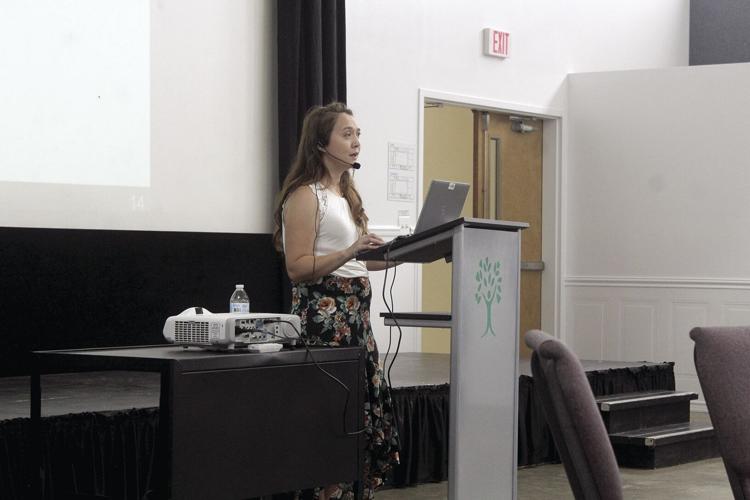
Marie Blankenship, a representative with the Environmental Protection Agency (EPA), led an important conversation on lead exposure at a town hall on Thursday, Aug. 1 at Dent County’s Community Center.
Blankenship came to Dent County representing EPA’s Region 7, which serves Iowa, Kansas, Missouri, and Nebraska. She’s the section supervisor for the lead-based paint program and the underground storage tanks program.
Given Dent, Phelps and Pulaski counties proximity to the lead mining districts of Missouri, especially that of the Southeast Missouri Lead District and the employment of many by Doe Run, Blankenship advocated for local residents education on lead exposure. Her presentation to attendees included potential sources of lead exposure, populations most vulnerable to lead exposure, impacts and effects of lead exposure, and the actions one can take to reduce and prevent exposure to lead.
Blankenship first asked the crowd if they knew if their home or apartment was built before 1978, the year lead paint was banned in the U.S., with the majority of the crowd raising their hands.
“The information I’m going to share this evening may seem alarming,” warned Blankenship. “But I want you to be aware of and educated on this subject. Once you know about the potential effects of lead, how to reduce your exposure to lead, you can then be empowered to take actions to reduce that exposure.”
Lead, defined Blankenship, is a naturally occurring bluish, gray metal found in small amounts in the earth’s crust. Historically, lead has been mined and used in products to make them more durable. Once lead is used in a product, it’s nearly impossible to identify with your naked eye, and it does not biodegrade or disappear from the environment over time. Lead can be found almost everywhere, from soil, to air, to water, and the inside of homes.
Much of our exposure comes from human activities that involve the use of fossil fuels; leaded gasoline, which was used in the past; some types of industrial facilities, such as mining; manufacturing; lead in aviation fuel; and then the past use of lead-based paint in homes.
Lead was added to paint, shared Blankenship, because it enhances the color, reduces corrosion, and shortens the drying time of the paint. Lead-based paint can be present in homes that were built prior to 1978, and it can be a major source of exposure to people who live there. When the painted surfaces are not properly maintained, it can lead to people’s exposure through the deteriorating paint that may be peeling, chipping, chalking, or cracking.
One of the most common ways that children are exposed is through contact with lead-based paint chips or dust in buildings or homes. Due to children’s hand-to-mouth habit, they’re frequently putting their toys, fingers, or other objects to their mouths. Lead based paint has a sweet taste, warned Blankenship, so it is attractive to children.
Childhood lead exposure and poisoning is preventable. The important thing to do is keep children from coming into contact with lead.
Children under the age of six are especially vulnerable to lead as their bodies can absorb it rapidly due to how fast their bodies, brain, and nervous systems develop. Even very small amounts of lead in children can result in behavioral learning problems, a lowered IQ, hyperactivity, slow growth, hearing problems, and anemia. Missouri recommends testing children for lead at the age of one, two, and three.
Blankenship advocated for testing children for lead. Lead exposure can occur with no obvious symptoms. The blood test is the only way to know for sure if a child has lead in their blood, stated Blankenship. This test can be done with a finger stick. She recommended that adults be tested, as well. Once you know if you or your child has been exposed, you can begin coming up with a plan of action to identify the source of lead.
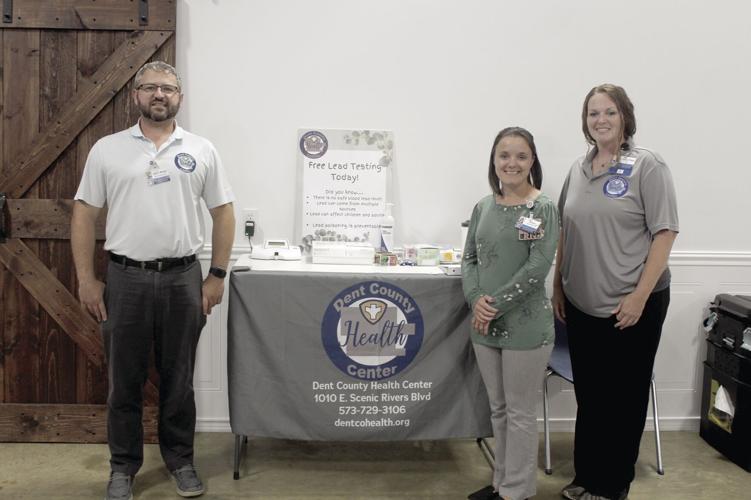
Zachary Moser, administrator for Dent County Health Center, added that Dent County Health Center offers lead testing for kids under six, but it doesn’t limit testing to just children. It offers lead testing to adults. If adults in a home are exposed, children are likely to have been exposed, as well, said Moser.
Lead exposure can also lead to issues in adults, such as nerve disorders, increased blood pressure, a decrease in kidney function, reproductive problems, and memory and concentration problems, further stated Blankenship.
Pregnant women are also susceptible to lead. Maternal calcium is important. Lead, however, can accumulate over time in the human body and is stored in the bones, often replacing that calcium. Maternal calcium is taken from the woman’s bones, so if the mother is exposed to lead, she can pass it on to her child. If nursing, warned Blankenship, lead can also be passed through breast milk.
Potential sources of lead exposure can include painted farm equipment, imported pottery, imported plastic toys, ceramic ware, solar batteries, ammunition, cosmetics, renovation projects, drinking water, industrial sources, contaminated sites, and abandoned mines.
Natural resources or imported materials such as spices, like cinnamon and basil, may also be high in lead. Knowing the exact sources of spices and ingredients can help in minimizing lead exposure.
Traditional pottery that’s been imported may be labeled as “lead free,” but they may still contain lead within the glazes or decorations on the surface. If clay pieces are not manufactured properly, lead may leech into stored food and drinks. Certain antique plates or serve ware may also leech lead into food or drink.
Leaded ammunition can be another source of exposure, as well. Discharging a firearm in a poorly ventilated area can lead to exposure. When a lead bullet is expelled, fragments and pieces are released into the environment.
Blankenship recommended some steps one can take to minimize lead exposure:
• Clean your home once a week with a clean wet, or damp cloth to minimize dust that may contain lead. If you use a vacuum, make sure to use a vacuum with a HEPA filter.
• Eat a well-balanced diet containing iron, calcium, and vitamin C. Foods high in these can help reduce lead absorption in your body.
• Wash foods prior to eating—this is to remove dirt that may have lead.
• Use soap and water, cold or warm, to wash your hands several times a day, especially children who may have been playing in dirt or with animals.
• Encouraging children to play in grass and not dirt, which may be contaminated with lead.
• Use designated camping and hiking areas.
• Hire a certified lead professional when doing renovation work that may disturb paint surfaces in homes built prior to 1978. Keep family members away from areas being renovated until properly cleaned.
• If working in an area that could expose you to lead, remember to change and wash work clothes and work shoes. Shower to avoid tracking lead into your home from soil, work sites, or certain hobbies.
• If you have pets, wipe off their paws to avoid tracking in contaminated dust or dirt
• Wash daily any items a child will use regularly, such as pacifiers or toys, to minimize exposure to dust.
• Flush your home’s pipes by running a tap, taking a shower, or doing a load of laundry before you drink or cook with your water. Use a water filter that’s certified to remove lead and check faucet screens regularly.
• Use cold water to minimize corrosion to lead pipes.
• Check government fish advisories or recommendations on fish consumption
• Stay aware of local construction as it could disturb your service line.
At the end of the town hall, Blankenship thanked the Dent County Health Center for inviting her to come out and educate the public.
“I also want to acknowledge Bobbi Kuczynski, who is our Lead Project Manager and also one of our nurses at the health center,” acknowledged Moser. “[Bobbi] helped put this on along with EPA, so I really appreciate the work that she did. We also have Trisha O’Neil, who is our communicable disease nurse—which is basically epidemiologist for us. She gets to handle a lot of our lead cases whenever they come in. Two very important employees doing very important work for Dent County.”