Tragic things happen. It’s a fact of life. You’ll see it in the news and wish you could help, but you might not have the resources or funds or mental capacity to do so. You’ll wonder if there are enough people out there helping—if anyone can afford to help.
A famous quote from Fred Rogers, the PBS show host of Mister Rogers’ Neighborhood (for those not born before the year 2000), might help bring us some comfort: “When I was a boy and I would see scary things on the news, my mother would say to me, ‘Look for the helpers. You will always find people who are helping.”
I remember one day traveling on Interstate 44 just outside of St. Louis and passing a car accident. There was a van with its entire front bumper caved in—nearby, a car was overturned and smoke billowing in the air from its engine. Despite how busy this interstate was on a Monday at 3 p.m., there were cars parked along the interstate’s shoulder with people running to the overturned vehicle. One man was running while removing his shirt and using it to cover his mouth to get into the vehicle and retrieve whoever was inside. He didn’t know who it was. All he probably knew was that someone needed his help, and he was going to provide it.
The point is this: no matter what happens, always remember that someone is doing the right thing. Someone out there is helping. Maybe that someone is you, or maybe it’s someone nearby.
During late September, most of us were tuned into the news showing footage of Hurricane Helene affecting North Carolina. Floodwaters were floating homes away and tearing apart infrastructure that had held for decades. The weight of the devastation was immense, with cities reporting they’ll need years to recover.
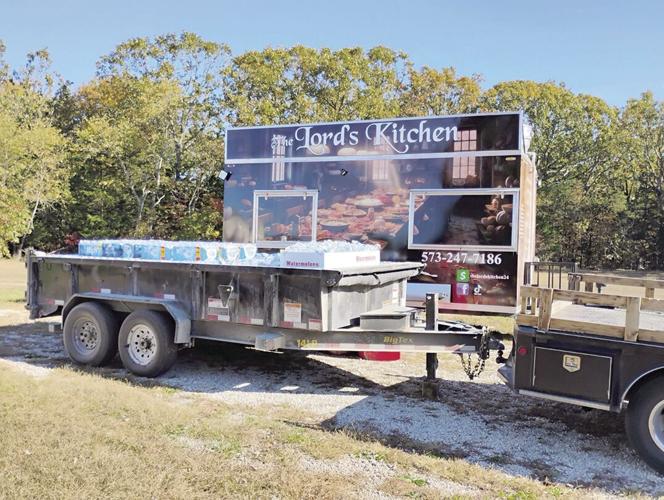
Almost 700 miles away, Daulton Ray, a citizen of Dent County, was struggling to decide what to do while waiting for his food truck, The Lord’s Kitchen, to receive maintenance. After praying in his living room asking God to help him decide how to spend his time, he was hit by the urge to take relief to western North Carolina—although he did not have the funds to do so. God, believed Daulton, instructed him to be bold and ask for help to support the trip.
And that help was received in full.
Originally, Ray’s plan was only to bring his food trailer to feed people and bring water, but he received more donations than he could haul inside it. Ray was able to put together an entire truck bed and trailer load of supplies with the assistance he received from the community of Salem. The supplies included water, clothes, food, charcoal, and fuel. Ray received help gathering the supplies from churches including First Baptist Church, Church of Christ, Salem Full Gospel; businesses including Dollar General, Walmart, Country Mart, and Tater’s Sporting Goods; and directly from individuals.
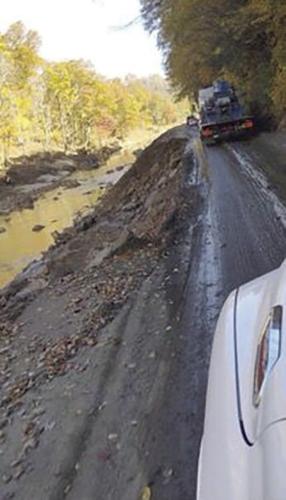
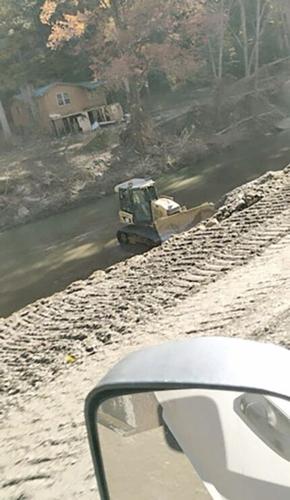
When Ray and volunteer Lemme Pitts officially began their trek toward Burnsville, North Carolina, about a 40-minute drive north of Asheville, they observed infrastructure damages along the route. The route was borderline impassable, with bulldozers in operation, pushing gravel to build roads for the traffic to travel around a mountain. Ray spoke with the locals that were directly affected by the flood and was surprised to learn that acres where there was nothing but three feet of mud were once immense cornfields. Where only one house was barely standing on a hill, there used to be a neighborhood. Mudslides had blocked driveways and roads with people unable to get in or out, and there was no access for assistance until a road could be cobbled together by bulldozers.
Outside of the distribution point in the city set-up by the National Guard, Ray observed farmers with sheds in their fields for people to drop-off supplies. He was able to drop off all of the donated supplies from Dent County directly to farmers and communities in need, as well as directly to individuals who requested necessities.
“One farmer was taking fuel. Another farmer had room for water, and then random people were needing charcoal,” described Ray. “When I first pulled into the [distribution center] parking lot, there were a few older women who needed clothes.”
Samaritan’s Purse, the organization behind Operation Christmas Child, also had operations in Burnsville and were allowing the community to walk through and grab whatever they needed from relief bases. Before setting out for his journey, Ray initially called Samaritans Purse to begin, who provided him with an emergency relief number to call for more directions.
“I saw Samaritan’s Purse everywhere down there, doing everything they could,” shared Ray.
Ray warned that those wanting to go into disaster relief or volunteer efforts need to keep an open heart, open mind, and be prepared to witness devastation. Ray shared that he was mentally prepared for the trip to North Carolina due to his experience in Iraq. Those not mentally prepared to see disasters, or interact with those directly affected by them, may find these events difficult to understand, as the emotional impact of the destruction can feel incredibly overwhelming, urged Ray.
The experience in Burnsville reinforced Ray’s commitment to disaster relief and volunteer work. He was amazed by the collaborative effort of the people working together to assist those affected, noting that the volunteers and community members were always ready and willing to provide advice, directions, or help of any kind.
It’s easy to feel helpless in the face of tragedy —especially when needs seem so vast. Be assured—each person contributing in whatever way they can helps make a difference. Whether offering supplies, lending an ear, or simply showing up, we can all help communities heal and rebuild after disaster strikes.