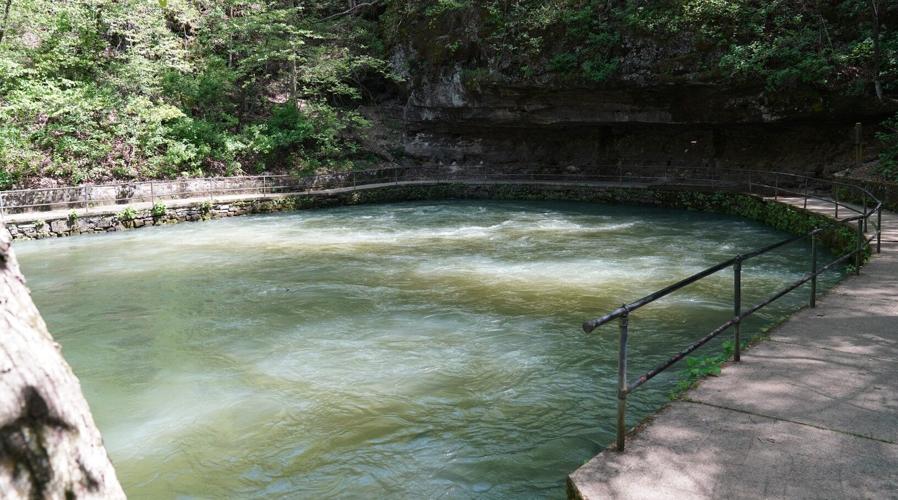
Two-hundred years ago this summer, a rugged group of American settlers arrived to the Ozarks and built the foundation on which today’s mid-Missouri rose. Maramec Spring Park this year is celebrating the bicentennial since Thomas James and Samuel Massey established a pioneering ironworks next to one of Missouri’s largest springs. During its years in operation, the Maramec Iron Works was a landmark providing the iron needed for westward expansion and later also helped the Union win the Civil War. It remains significant to the state today as one of the Ozarks’ most enduring destinations.
“Iron from here not only built the surrounding area, it traveled the Santa Fe Trail, and there was species silver from Mexico coming back to the ironworks because our iron was being traded across the border,” said Kendra Swee, Maramec Spring Park’s Interpretive Services Coordinator. “Our iron traveled in the wagons to the gold rush, and up into Washington on the Oregon Trail. As people were moving west, our iron went with them, and so our importance wasn’t just here in Missouri, we were part of the entire westward expansion.”
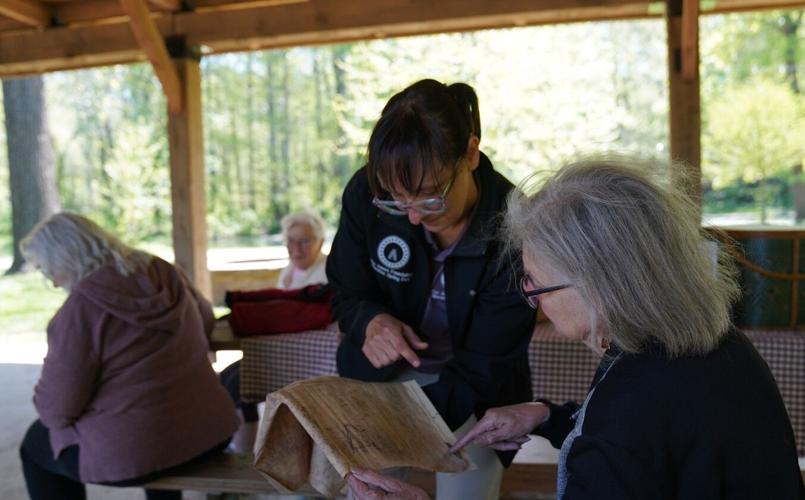
Swee shared the history of Maramec Spring Park and its ironworks during an April 19 program for the Phelps County Historical Society. She said the story of Maramec Spring goes back to 1640 when the ancestors of Thomas James immigrated to America from Wales, where they had roots in mining and industry. Although from a family of ironmongers, Swee said James made his own fortune operating saltworks and also became a renowned bareknuckle fighter before becoming one of the wealthiest men in Ohio. That fortune allowed James to capitalize upon exciting news coming back from the Ozarks.
“In the 1820s, Missouri was now a newly founded state, and it was being advertised across the East Coast as the state of plenty with mineral resources piled so high you could make your fortune,” Swee said. “That drew a lot of people this way, and in 1824, the U.S. Geological Survey did a survey of this area, and noted the spring, the dense Ozark woodlands and forests and also the pit mine that contained hematite.”
Swee said James invested two-thirds of his personal wealth into founding the Maramec Ironworks and enlisted his friend Samuel Massey to run the operation.
“They knew that many people were moving to Missouri and that these people did not have the resources and the things they had when they lived back east,” Swee said. “James realized if he got out here and he was able to produce iron, he would be on the forefront, and as American moved west, he could be the supplier for all these people moving into Missouri.”
In May of 1826, Swee said Massey departed Ohio with 20 men to find Maramec Spring. They arrived the following month, and Maramec Spring and the surrounding land were formally purchased on June 14, 1826. The original deed remains in the possession of Maramec Spring Park today. Even with the adventure over, Swee said it was another three years of toil before the first iron was produced.
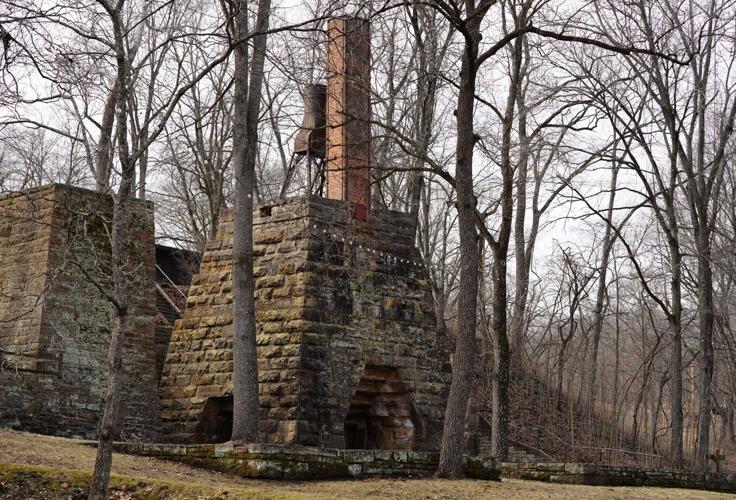
The centerpiece of the ironworks Massey built was a gigantic charcoal blast furnace, the edifice of which serves as Maramec Spring Park’s primary logo. In time, the ironworks was surrounded by a community of around 500 people with a school, grist mill, post office, boarding house, lodge hall and many homes. Dozens of employees directly worked at the ironworks with even more taking on supporting roles in various trades. Enslaved people were forced to work in the pit mine. James’ land holdings around the spring also grew to eventually encompass around 10,000 acres.
“A single charge for the blast furnace consumed 640 pounds of hematite, 40 pounds of limestone and 18 bushels of charcoal,” Swee said. “During the 1860s, they were charging that furnace every 15 minutes during a 12-hour shift. It ran 24 hours a day, seven days a week and 365 days.”
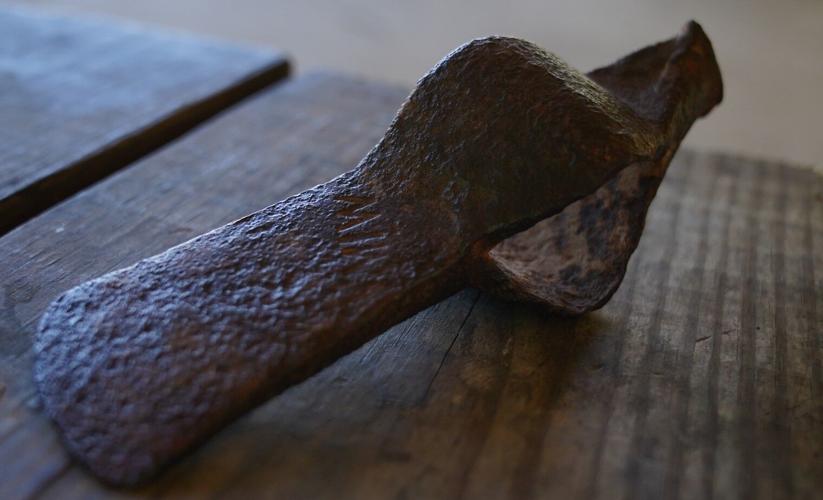
Swee said a reputation for superior quality fueled the Maramec ironworks growth and made its MIW stamp a valuable brand. During the Civil War, this trait was decisive for the Union, which used this iron to build six ironclads to patrol the Mississippi River. Swee said only one of these ironclads remains and is on display at Vicksburg National Military Park in Mississippi.
“The iron was about 18 inches thick on these ships,” Swee said. “The reason Maramec iron was the favorite iron was because it was very high quality and our men produced it very well. They would roll it into sheets and place it on the ironclads, and so when a cannonball struck these ironclads, the iron did not break. It wasn't brittle. It wouldn't punch a hole in it. It just dented it.”
For Rolla, Swee said Maramec Spring played a key role in the Missouri S&T being placed in the city.
“In the 1840s, Senator [Ellis] Evans was a carpenter here with his brother,” Swee said. “They built our grist mill, some houses and other buildings. After he left, he moved down to Steeleville, eventually he got into politics and became the senator for the area. When the land grant institutions were starting, the University of Missouri was actually going to have two university campuses in Boone County, but Senator Evans went on the floor and asked why would you stick both colleges in Boone County with the whole mining area down here in southeast Missouri and south-central Missouri. He fought his fellow senators to separate those, and so that’s partly why we have the School of Mines/Missouri S&T in Rolla, because Senator Evans fought to have that because of his tie to the Maramec Iron Works.”
The glory years of the Maramec Iron Works eventually faded by the latter half of the 19th century. After 50 years in operation, cheaper sources of iron became available and the ironworks closed 1876. Thereafter, the descendants of Thomas James formed the Maramec Spring Park Company to manage the land as a local picnicking destination.
“Most of the James family members did not live here, but out east in New York and places like that, so many of them decided they really didn't want to have to keep managing this property in Missouri,” Swee said. “Lucy Wortham James was one of the shareholders the Maramec Spring Park Company, and around the time that they were selling off the old property, her great uncle R.G. Dun passed away and left her his fortune. If you've ever heard of Dun & Bradstreet, that financial reporting firm out of New York, that is R.G. Dun. He is the Dun of Dun & Bradstreet, and she used part of those funds to buy out every single family member to become the sole owner of what is now Maramec Spring Park because she wanted to preserve her family's legacy and this heritage. She was born here. She spent her summers here with her grandparents, and so because of her dedication is why we have the remnants of the ironworks.”
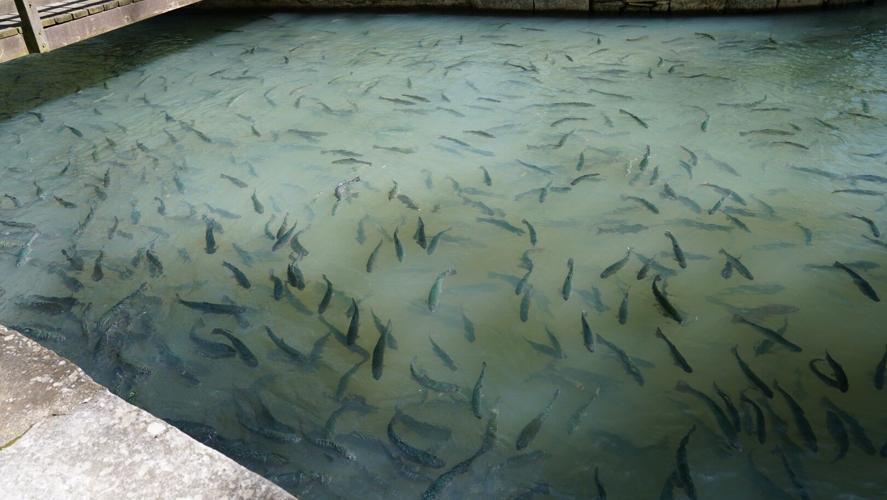
Today, it is the James Foundation that maintains Maramec Spring Park, which is an 1,800- acre park home to a Missouri Department of Conservation trout hatchery, a network of hiking and mountain biking trails, a history and nature museum, and more. Swee said the park will be hosting several events open to the public this bicentennial year including its summer concert series, the Folky Fish Festival May 29-30 and Old Ironworks Day Oct. 8-11. There is also a monthly educational scavenger hunt.
“We are doing something a little bit different, which is something called ‘Goose Chase,’” Swee said. “Goose Chase is an app that you can put on your phone, and it's a virtual scavenger hunt. Every month we have a different themed scavenger hunt, and you can upload your pictures, when you find something. In January, we talked about geology, so we had people visit the pit mine, and if you took a picture of something up there, you get points. We also had people visit S&T to learn a little bit about that history and our ties there, and we had people visit the rock shop out on an interstate. Every month, the high point earner wins some kind of prize for the month. Last month’s theme was water and the month before was forestry. I think next month is transportation.”
Maramec Spring Park is located at 21880 Maramec Spring Drive southeast of St. James. The entry fee is $7 per vehicle. Visitwww.maramecspringpark.com to learn more information.