
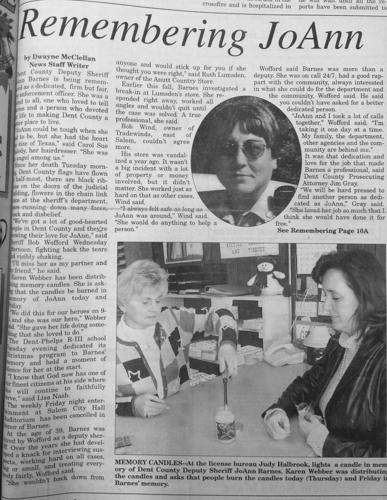
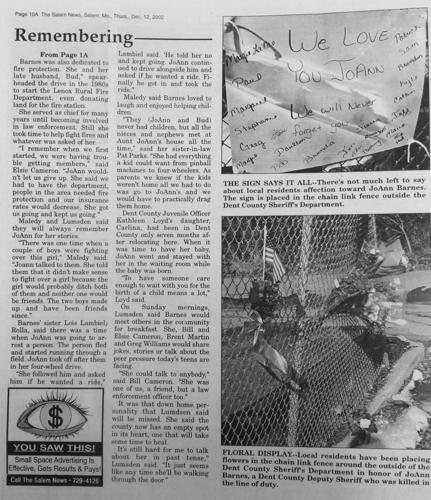
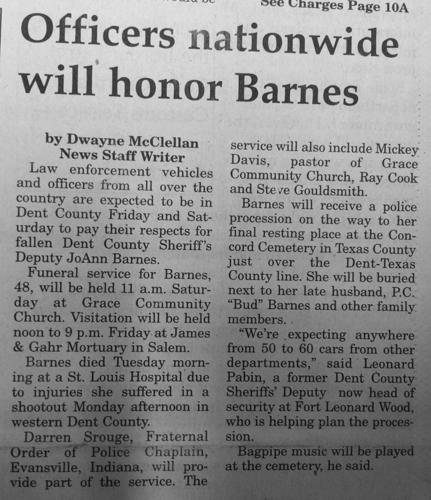
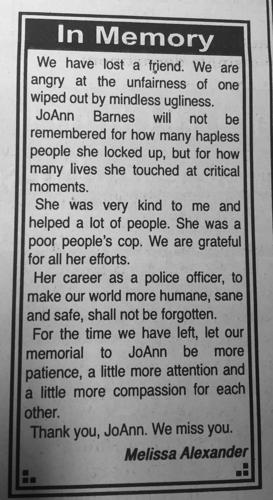
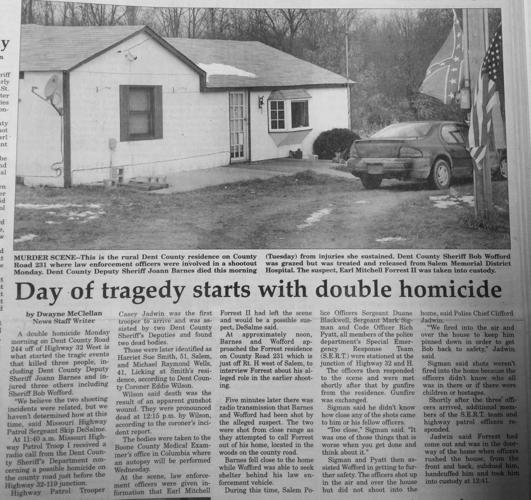
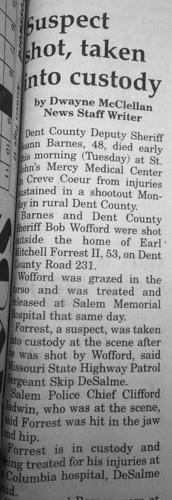
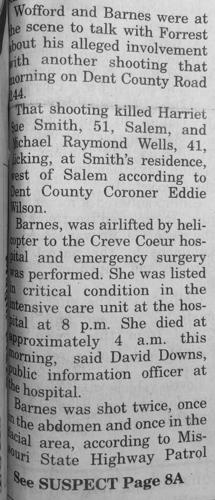
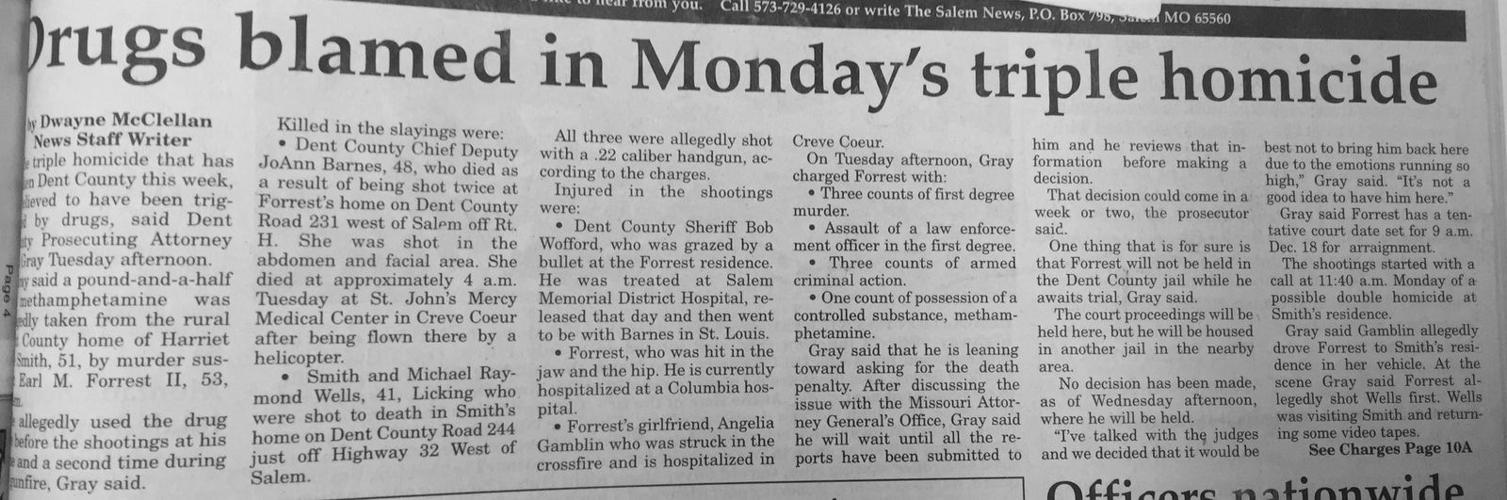
Earl Mitchell Forrest II is due for execution by lethal injection May 11 for the meth-fueled 2002 murder spree which claimed the lives of Michael Wells, Harriett “Tottie” Smith and Dent County Deputy Sheriff JoAnn Barnes.
The incident is one of the darkest chapters of Dent County’s history, and Forrest in every way embodies the unleashed demons which still haunt our community.
In a 2013 interview with A&E’s The Killer Speaks, Forrest spoke brazenly of the incident. He declared he was a fallen kingpin, and Smith was ultimately to blame for the triple homicide. Forrest claimed Smith didn’t hold up her end of a drug deal in which he would connect her with a meth supplier in exchange for a riding lawnmower. Smith never delivered on the promise. That betrayal, Forrest says, is what led him to get drunk the morning of Dec. 9, 2002, drive to her home and gun her down in cold blood.
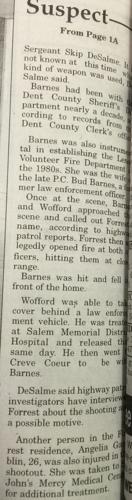
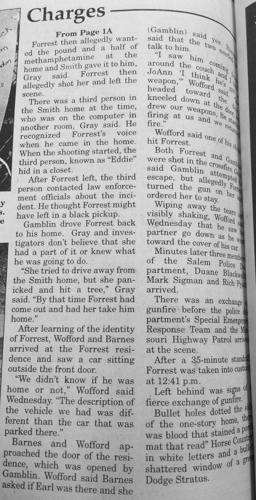
Wells was also killed at Smith’s residence, for no other reason than being in the wrong place at the wrong time. Forrest then left with the meth and injected it back at his place on Dent County Road 2313. After shooting up, Forrest killed Barnes when she arrived on scene with Sheriff Bob Wofford to investigate the two murders. Wofford was shot but not fatally injured in the ensuing gunfire. Forrest was apprehended after being shot twice during the ensuing standoff with authorities and has been incarcerated ever since.
Many people believe Forrest doesn’t deserve any more attention than he’s already gotten. He was selfish in his substance abuse and greedy in his dealing. At the height of the meth epidemic he conspired to import pounds of the drug. Worst of all he was reckless with violence, and willing to kill if it meant protecting his macho image.
Every story has an end, and the burden of ending this dark tale has fallen on those sharing this moment in time. The Salem News went to speak with Forrest in April to find out whether his years on death row had blunted the brazenness of his tone, and if the looming specter of death had changed his soul.
•••••
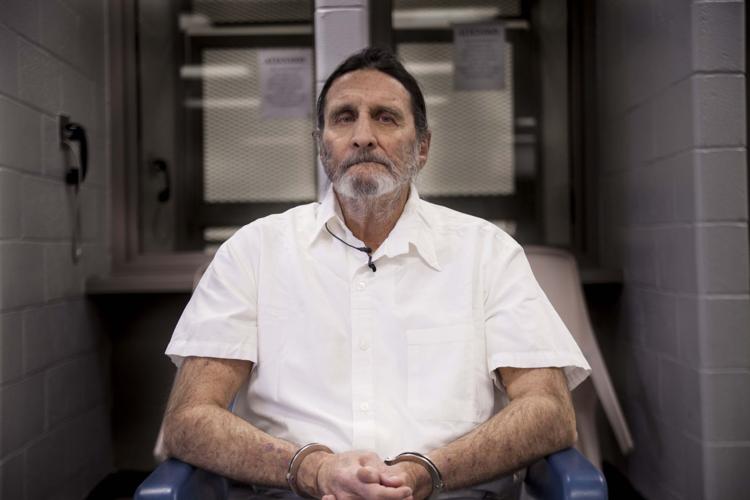
Earl Forrest, 66, was interviewed deep within the Potosi Correctional Center, past three separate security check points. Forrest remained shackled throughout the conversation. He walked into the visitors room hobbled with a cane. His eyes were sunken. His arms pockmarked and purple with lentigo. He was already dying with heart disease.
“Hey, look, it’s done, you know, I’m just being honest, it’s done, and I never saw the point in beating myself up over it,” Forrest said when asked if he now had any remorse for the killings.
He went on to say he still blames Smith for the murders.
“She knew what the deal was,” he said. “I was really mad about having to go over and do that. I’m still mad about it. She knew better.”
The killing was about more than not getting his end of a deal, Forrest said.
“It wasn’t even about a lawnmower, it was about that fact that I felt she was disrespecting me in the worst way, you know, to get something from me and think, ehh, he ain’t going to do nothing,” Forrest said. “I got fed up with being pissed. It’s like I turned 50 years old, and she decided I was a punk.”
As to the motive for killing Wells, Forrest said it was “because he was there.”
Barnes was shot because she “wore a badge and was paid to carry a gun.”
Forrest spoke at length about his life and gave insight into how it came to its impending demise. He began dealing drugs in high school when he wanted to be the popular renegade. By his early 20s, he’d graduated to selling speed and meth up and down the West Coast.
“I sold drugs for a lot of years, the money is really good and you’re your own boss,” Forrest said. “It fit me. It put me around the kind of people I liked to be around.”
The violence of the drug war never fazed him.
“It always seemed to work,” Forrest said. “The people who do this kind of business, they know what time it is.”
The black market’s violence came to define Forrest’s life and identity. His allegiance to the felon’s code, and vain loyalty to a macho image, mixed with the gall and gore of substance abuse to unleash the rash of death which erupted 13 years ago.
“I just got too hung up with being in the fast lane, the girls, the money. It just seemed like that’s where I belonged,” Forrest said. “Those who know me, they understand, people from the old times, they get it, why this happened. She owed me, and she didn’t do what she was supposed to do. Selling marijuana and LSD, that fuels a completely different person than meth. You’re supposed to do what you say.”
When asked if killing Smith to uphold this outlaw code was worth sacrificing his own life, Forrest said, “I guess so, I don’t know.”
He also said he thought execution was an appropriate punishment for his crime.
“For the time and place, yeah, I guess so. I’m not going to say the death penalty is wrong because I’m not in a position to judge.”
Forrest said he’s accepted that he’ll soon no longer be living.
“It gets closer and closer every day. I think I’m good with it,” Forrest said. “That date (May 11) pops up all the time in my head. I’ve accepted it. As a matter of fact from the day I woke up in the hospital, I knew I screwed up, and what was going to happen, and I pretty much accepted it then.”
Forrest said he doesn’t know what his last words will be and doesn’t care what people will think of him after he’s gone.
“They’ve already come to the conclusions they want, and probably most of them are right,” Forrest said.
When asked if he felt there was anything that could be learned from his execution, Forrest said, “don’t let your kids do drugs.”
•••••
For more than 13 years Forrest has awaited execution behind concrete walls. On May 11, he will be transferred for the last time to the Eastern Reception, Diagnostic and Correctional Center in Bonne Terre. The end will come in its execution chamber when a needle, not unlike the many others he’s used in his life, will be inserted into the same veins from which he once mainlined meth.
Forrest lived his life wanting to be called a kingpin and getting respect for his tough attitude to the world. His goal was for others to label him “a badass,” and he was willing to kill to uphold that persona. If there is any hope to be found with this story’s end it’s in not fulfilling this desire of his. Forrest must be recognized for what he truly was, a fool, too simple and too stupid to know right from wrong. As long as our society embraces the spectacle of violence, and spotlights its purveyors as worthy of awe, Forrest and people like him will continue to haunt fringes of our community, taking the lives of people guilty of nothing more than desperation, being at the wrong place or trying to protect their neighbors.