
Most locals are familiar with Spring Creek. But many aren’t aware of Josh and Kayla Wisdom’s farm. They strive to raise high quality meat, and Kayla trains livestock guardian dogs. Their property was, in fact, one of the most pivotal locations in the region as settlers flocked to the Ozarks nearly 200 years ago.
The meat
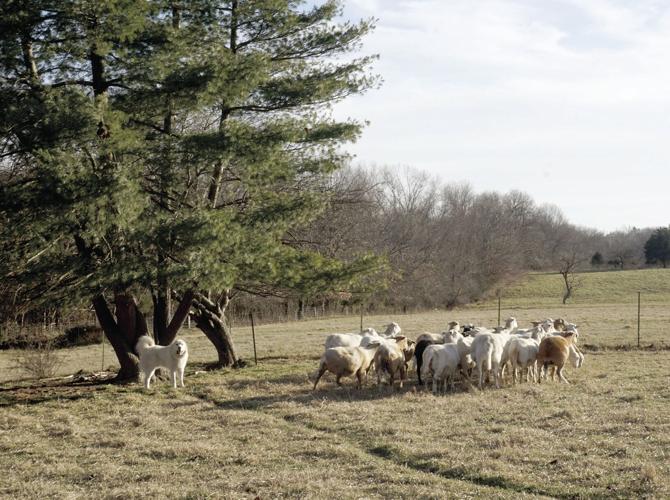
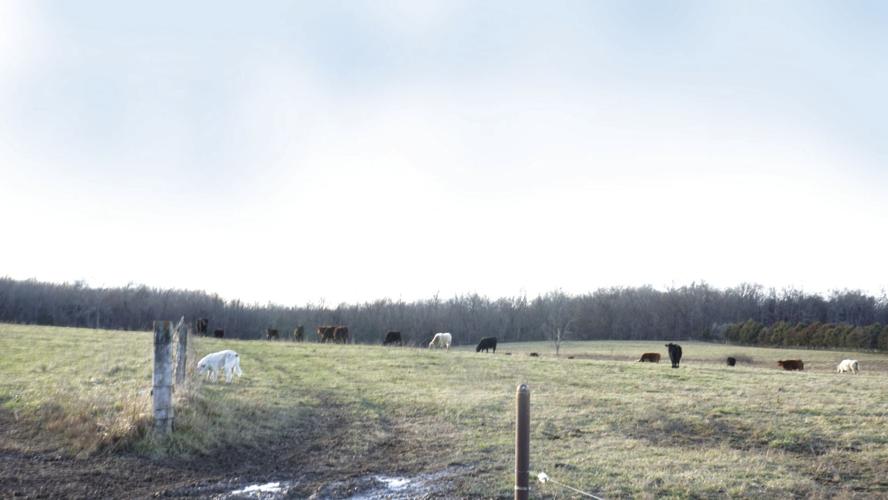
The Wisdoms have a 200-acre farm located less than three miles north of Salem. On the property they raise grass-fed beef and lamb, pasture raised pork and free-range chicken.
“We strive for growing the highest quality meat we can,” Kayla Wisdom told The Salem News.
Right now they are keeping 45-50 heifers, 35-40 calves, one bull and 10 steers. They raise hogs in batches of 10 (they don’t keep any sows). According to Wisdom, they usually get three batches of hogs a year. Right now they also have 24 ewes, 30 lambs and one ram. Spring through fall they raise chickens, a few hundred a year.
“We do PHARO genetics,” said Wisdom regarding the beef. Which means that they are smaller framed and meatier.
“Something that is really important to us is to produce high quality and grass-fed finished meat,” said Wisdom regarding the beef and the mutton.
All of their meat is sold through direct sales, through their website or at a farmer’s market.
“We get up every Saturday and go to the Tower Grove farmers market in St. Louis,” she said.
The Wisdoms first started selling their product in 2017 and have been doing so in an official capacity since 2019.
Wisdom said that they began focusing on creating high-quality meat a few years ago because they noticed that there is a market for that sort of product, and they already had the land to do it.
“I didn’t think it was right that we had all this land that we didn’t use to grow high-quality meat when there are people looking for it,” said Wisdom.
The dogs
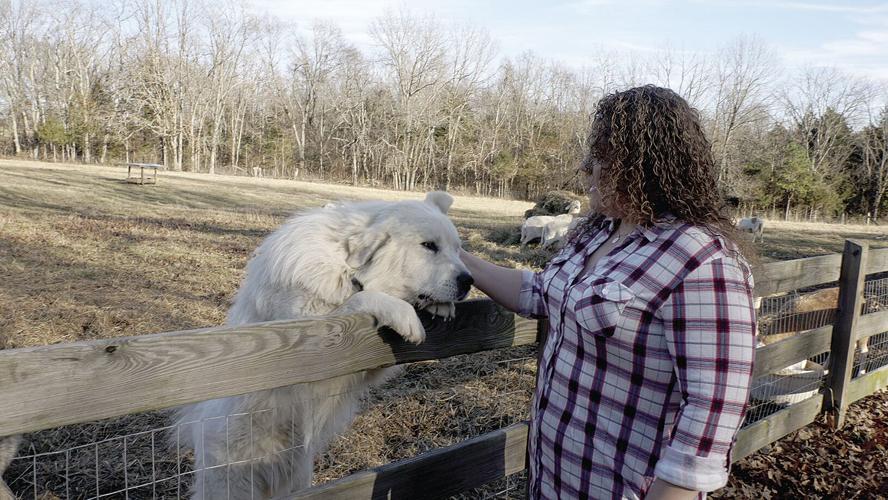
An interesting facet of Kayla Wisdom’s work at the farm is her work with training livestock guardian dogs.
Wisdom said while planning their farming practices, something occurred to them.
“We started realizing that we would need a dog to guard our sheep,” she said. According to Wisdom the area around their farm can swarm with coyotes.
Wisdom said that she first started getting into breeding and training livestock guardian dogs after buying Yukon five years ago. Yukon is a cross between an Anatolian Shepherd and a Great Pyrenees. Now Wisdom also has a full-blooded Great Pyrenees named Kenai, a full-blooded Anatolian Shepherd named Nukka, and Homer (Yukon’s son), who is the same cross as Yukon. Yukon has sired three litters for Wisdom and has since been retired.
“The thing that sets my dogs apart is wanting to do first-generation crosses,” said Wisdom. Currently, Wisdom has been breeding Kenai and Nukka.
“My dogs are all health certified, and that’s not typically seen,” she said. “It takes extra time and money to get the quality of dog that I have.”
Wisdom is proud of the quality of dog she breeds and trains.
“There are a lot of breeders that breed full-blooded,” she said. Which according to Wisdom is a good way to get the exact qualities that you expect, but Wisdom said that she is confident in the crosses that she has bred between the Anatolian Shepherd and the Great Pyrenees. Her intentionality provides an ideal combination of traits for protecting livestock: qualities like being big, strong and appropriately gentle or ferocious as the situation requires.
According to Wisdom, the same caliber of dog that she breeds can sell for more than $1,500, but she sells hers for a fraction of that price.
“I want to be able to provide an extremely high quality dog for not quite as big of a price tag,” she said.
“I love keeping all of these animals, but my biggest passion over them all is these dogs,” Wisdom said, looking fondly down at Yukon who stood casually nearby.
The history
The 200 acres that comprise Spring Creek Farms where Josh and Kayla Wisdom live and work with their children was once part of a larger 1,600-acre property owned by Ephraim F. Bressie, one of the original founders of Dent County.
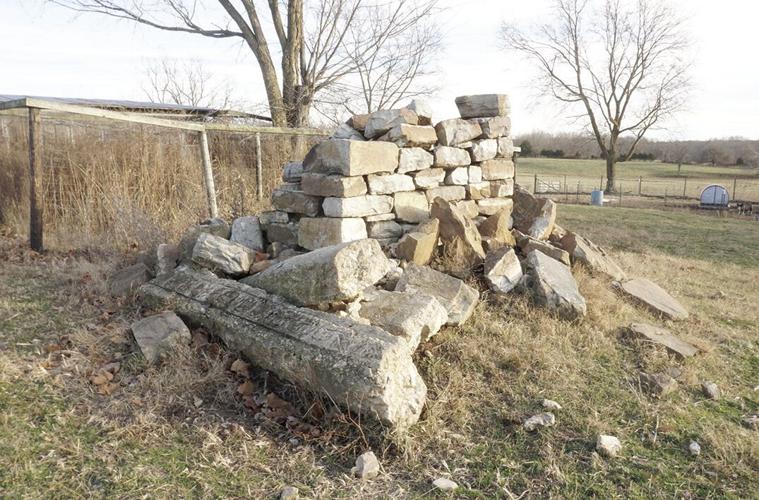
Bressie first acquired the property in 1840, according to information compiled by Genealogy Trails History Group. On the property are the ruins of Bressie’s store, now reduced by time and weather to a chimney and a collapsed foundation.
The first store within the limits of the present county was that of Ephraim Bressie (sometimes spelled Ephriam or Ephrahim), on Spring Creek, early in the 1840s, and it was here that the first courts were held, states those same records.
In fact, Bressie’s farm was the meeting place at which the county was formed. It served as the second post office called Montauk (entirely separate from Montauk south of town) before later being “moved to Salem and called the Dent Post Office, located, I believe, in the Court House in 1853,” according to a 2010 article in The Salem News written by J.J. Tune in observance of Salem's sesquicentennial.
Bressie’s store was a stopping point on one of the major trails used to settle the Ozarks called The White River Trail, named for the river in Arkansas where the trail arguably ends.
It was also in the running for being the location for the City of Salem before its present location was selected, said Tune’s article.
One of the best descriptions of the White River Trail’s path through Dent County is by Margaret Vickery of The Salem Newa in the spring 1971 edition of White River Valley Historical Quarterly.
She wrote, “The White River Trail entered Dent County near Sligo, (Mrs. Lloyd Varah says that it crossed their property…the trail then came in around Short Bend at Springer’s Mill. The fields near Short Bend and Big Wolf Cave have many arrowheads and indications are that the Native Americans camped at these places. Several Native American graves have been found in the Big Wolf Cave. From Short Bend the trail winds around old Highway 19, which pretty well followed the old trail, crisscrossing Highway 19 many times until it crossed Highway 68 near the Dr. Martin Hart property and then it wound down the lane to the Bressie Store and Trading Post. The Native Americans and wagon trails often used this trail across Missouri. They stopped to camp at Bressie’s before continuing their journey.”
Vickery described Bressie’s farm as maintaining a large barn and blacksmith shop where settlers could get repairs.
“They could swap pelts for merchandise, and camp by the big spring of pure cold water. As late as 1840 Mr. Bressie was in business. Sanford Inman now owns the property where the store was, and in the graveyard nearby—Mr. Bressie and members of his family and slaves are buried beside him.”
The White River trail then proceeded across the county going about midway across D highway from Salem and Lenox and on out toward Maples on its way to Licking.
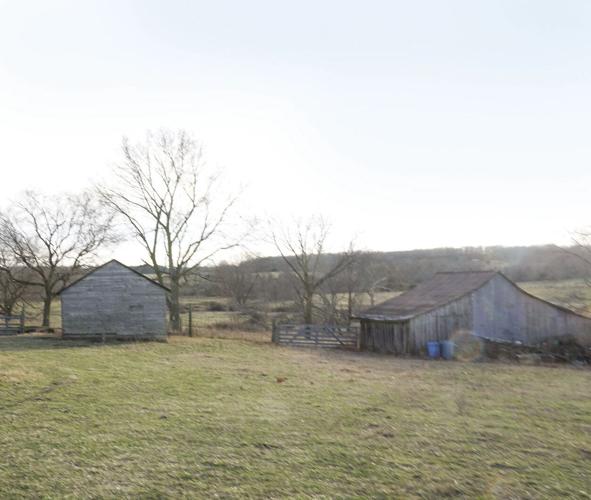
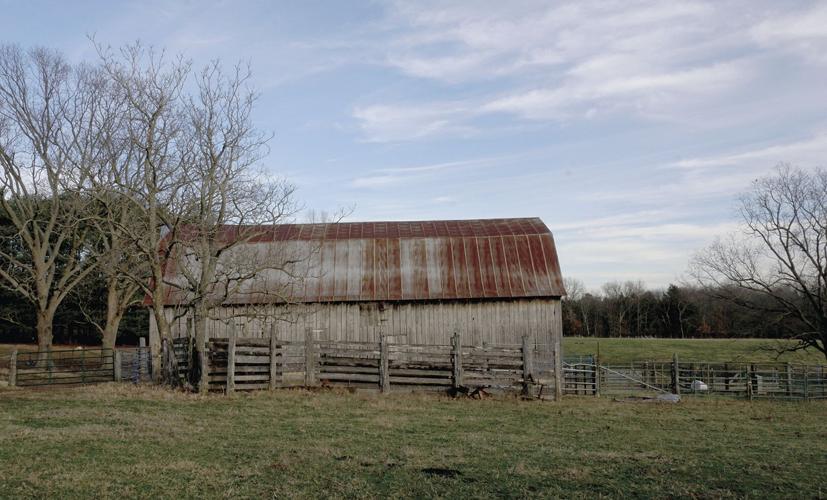
The Wisdoms still utilize two of the outbuildings that they believe date back to when Bressie owned the property before he passed away a few years after Dent County was formed from pieces of Crawford and Shannon County in 1851.
William P. Elmer wrote about the property in the 93rd installment of his History of Dent County. Elmer cited the property as one of the “most famous campgrounds of this county in its time.”
Elmer stated that he visited the property in October of 1950 when Sanford Inman owned it. At that time, the store itself was still standing.
“The big fireplace and chimney rises in majesty on the west side of the house high towards the sky and looks like it will never fall,” Elmer remarked.
But fall it did. Now it is but a ruin, a strange monument to the early settlers of these hills.
Elmer also remarked on the sweetness of the water.
“Below the house were the famous seven springs of the Bressie plantation,” he said.
At that time, the springs had not been used for many years and trees and debris cluttered them. “I took a drink of the cold water and it was good,” said Elmer.
“Ben Ray, who tested all of the springs near Salem, said this was the coldest of all.”
“No wonder Bressie’s store was known from one end of the White River Trail to the other. It afforded rest and food for humans and cattle at a most pleasant picnic ground,” said Elmer.
The present that we have here in the Ozarks owes a great deal to the past. In the same way, the future will owe much to the present.
In the words of Margaret Vickery, “Let us hope that we, as Dent Countians can be as graceful in adjusting our lives to today’s ever changing times, as our ancestors.”
Special thanks to local historian Jay Anderson who was instrumental in guiding my research through an immense body of works to find some of the most relevant and interesting details relating to the Bressie Farm and the White River Trail.


