
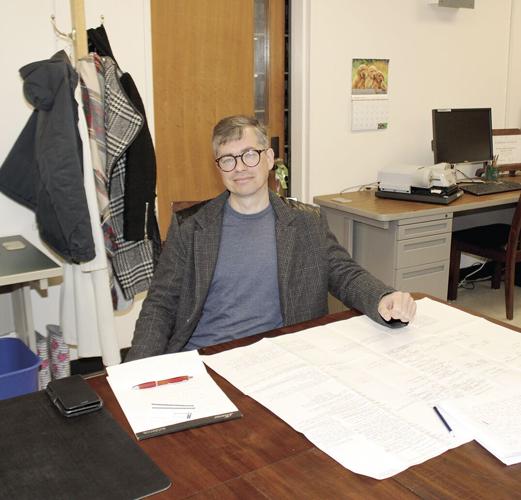
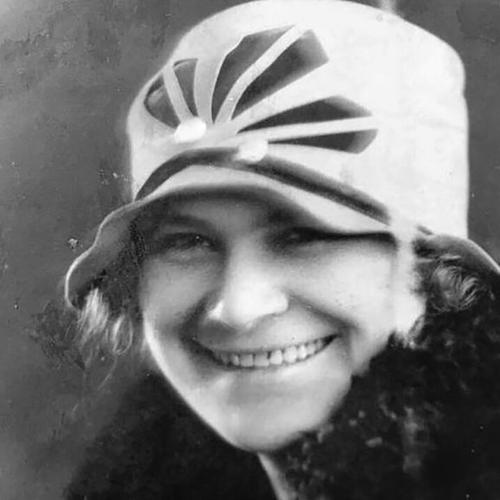
Mary Goggins was for years just a distant childhood memory for Mads Faber Henriksen and his family in Denmark. He and his five siblings could recall receiving Christmas gifts from her delivered from America back in the 1960s and early 1970s. However, time and adulthood eventually faded that connection. By the 2000s, Goggins and her American life was only family lore and a lingering mystery.
“We didn’t know how she fit in,” Henriksen tells Phelps County Focus. “She had a different last name and we didn't know there were actually relatives living here. It wasn’t talked about, and never clear why she came to the United States.”
Goggins and her connection to Denmark may have been yet another lost artifact of the 20th Century if it weren’t for a classic American road trip. Henriksen and his daughter went on an adventure through the United States in 2017 to celebrate her high school graduation. Maybe it was intuition, or just pure happenstance, but Henriksen decided on their way to Memphis they’d stop to place flowers on Mary’s grave in rural Reynolds County, Missouri.
“I’d heard all these stories about her from my childhood, not really good stories, but interesting stories, and I thought, why not; she is my only connection to the United States,” Henriksen says of visiting’s Goggins’ final resting place. “We found her grave on the ‘Find A Grave’ website, put the coordinates into a GPS and drove there. I didn’t know anything about the Ozarks at the time.”
The Reynolds County seat of Centerville was the first stop.
“I went into the courthouse without really knowing what a courthouse is,” Henriksen says. “They were so nice inside. I told them what my purpose was, and it was apparently the most interesting thing to happen that day.”
Local directions soon brought Henriksen and his daughter to the Corridon-Reynolds Memorial Park Cemetery. There, they placed native wildflowers onto Goggins’ grave. At their nearby Lesterville bed and breakfast, they also learned a living in-law relative was still in the area. A meeting was then arranged, and Bobbie Jo Goggins arrived soon after.
“She came with a suitcase filled with 200 letters from Denmark, written (in Danish) by my family from the 1930s to around the 1960s,” Henriksen says. “It also contained Mary’s memoirs, her diaries, and other writings because she wrote columns for almost all the local newspapers as well as letters to the editor sent across the state.”
It turns out Mary Goggins was no anonymous immigrant. She was better known in her era under the byline “Magog.” For more than 50 years she developed into one of the strongest and most popular voices in print through regular columns and writings on the Ozarks and current events. She was even summed up as “the indestructible, unsinkable Mary Goggins, gadfly, poet and columnist” in a 1988 profile published in the St. Louis Post-Dispatch.
“During our road trip, the next stop was Graceland, and suddenly that wasn’t the interesting part,” Henriksen says. “Among these many letters were letters from my grandmother, and even letters from my father. I was quite amazed. I sat in Graceland reading my father’s letters and I was totally blown away. I read things I’d never heard about. There were things I didn’t know about my father.”
Goggins’ life and adventures have since become the subject of intense study by Henriksen, who has discovered many new family connections in Denmark and the United States through genealogical research.
“The story in my family was basically there was something wrong with her and she was sent away here,” Henriksen says. “What I’ve learned is that it was really because they wanted to give her a better future.”
Henriksen has learned Goggins was born to an unwed mother in Denmark in 1898, became orphaned as a child and was raised by her grandparents. The identity of her father was an issue of controversy. Goggins believed she was the daughter of a Danish nobleman.
“Denmark back then was like a feudal society, you couldn't buy land and there weren’t many opportunities,” Henriksen says. “There was no future for a girl like her at that time. Already she was very outspoken when young and had difficulties fitting in. She describes that very well in her letters. You had to do what you were told, even if it was stupid.”
Goggins immigrated to the United States in July 1916 and first settled in Iowa as an indentured farmworker. On her 21st birthday, she married World War I veteran Arleigh Clare Goggins. Together, they prospered operating a restaurant in Lincoln, Nebraska. Unfortunately, PTSD eventually blighted Arleigh’s life and they fell into relative ruin during the Great Depression. They then moved to the Ozarks and built a new life in Reynolds County. Arleigh died there in 1964. Mary passed away in 1990.
“Mary herself didn’t feel like she was sent away, but given an opportunity in America,” Henriksen says. “I think she really felt freedom here, and she could be who she wanted to be.”
Beginning at least as early as 1940, Goggins began publishing columns in the Reynolds County Courier, The Salem News, the Iron County Register and other regional newspapers. More broadly, Goggins also wrote to politicians and publications across the state advocating for new developments and investments be made into the Ozarks.
Goggins often signed these under the byline of “Magog” – a portmanteau of her first and last name. Creative prose was her trademark. In describing the 1953 drought she wrote, “Gaunt cows hunting the muddy water holes. Razorback hogs wobbling on unsteady feet. Some only skin and bones. Children dusty and dry. No water to waste for laundry or much to drink. Potato harvest the size of walnuts, a few like pullet eggs rotting in the hot soil. Other vegetables just standing there, blooming but not fruiting.”
Cutting sardonic wit was another hallmark. For example, in one 1940 letter to the Kansas City Star she wrote: “One thing about the Ozarks, one learns to go very slowly. You just simply cannot hurry anyone here, least of all the ‘courthouse gang.’ You have to dig just like a drop of water on a stone to even dent the languor.”
Beyond politics, a constant theme of Goggins writing is appreciation for the United States.
“Mary loved the Ozarks, she loved the people, and she loved the culture here,” Henriksen says. “She often praises America and how much she values the freedoms. That's what America is about. It wasn't like America gave her a whole lot, but she used her opportunities not only for her own benefit, but her local community.”
Henriksen has returned to the United States twice more to research Goggins’ life. Most recently, he passed through Rolla in early March while putting the final touches on a book about Goggins and his adventures learning more about her legacy. He will be submitting a manuscript for publication later this year. Copies of Goggins personal writings from the old family suitcase have also now been donated for preservation at the State Historical Society of Missouri’s Rolla Research Center.
“I'm not doing this alone, my whole family has become part of it,” Henriksen says. “I think Mary’s story about becoming an American is also a story about becoming yourself. That's what inspires me.”


